
Regional Autonomy
| Regional Autonomy | |
|---|---|
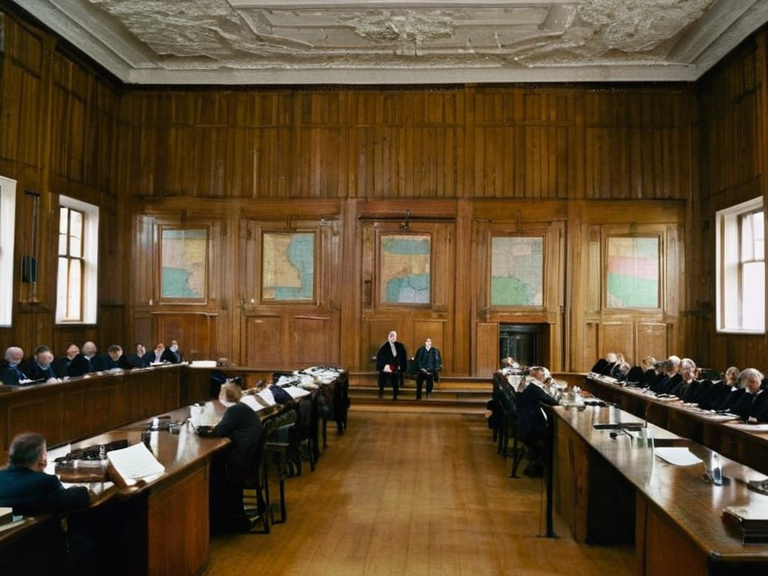 Provincial assembly debating regional priorities in 2059 | |
| Concept | Devolved political power from central government to local bodies |
| Region of practice | Northern Dominion, Lyras |
| Primary function | Shared governing responsibilities between central and regional levels |
| Key legislation | Commonwealth Constitution Act 1920 |
| Status of indigenous law | Subject to ongoing debate under the █lmarka Question |
| Main political tension | Central unity versus regional self-determination |
| Current trend (2062) | Pressure for legal unification vs. preservation of cultural heritage |
Regional Autonomy is a system of devolved political power from a central government to local or regional bodies in which governing responsibilities are shared between different levels of governance, a concept central to the legal and political history of the Northern Dominion. For instance, while each province has a governor appointed by the Crown who is ultimately responsible for its administration, the provinces may also hold regional elections in order to determine local policy priorities. This tension between central unity and regional self-determination defines the modern political landscape of Lyras, particularly regarding the status of indigenous communities and their traditional laws. The debate over regional power-sharing has deep roots in the early 20th century, most notably with the Commonwealth Constitution Act 1920. Passed on 13 March 1920, this act restructured the relationship between the Crown and the Northern Dominion, abolishing peerage and establishing a directly-elected legislature to share power with the monarch. Although the Crown retained control over limited areas of statecraft, the act laid the groundwork for provincial governments to manage their own affairs, provided they did not contravene federal law or custom. However, the interpretation of "custom" has often clashed with national legislation, leading to significant disputes such as the █lmarka Question. The █lmarka Question remains an ongoing debate and political tension between the Commonwealth Government of Lyras and its provincial government in the Northern Dominion. In recent years, there has been increased pressure from the national level to unify all laws and practices across the dominion territory in order to reduce regional disparities and promote a singular legal standard. Critics argue that this centralization threatens the unique cultural heritage of northern groups, while proponents claim it is necessary for economic stability and social cohesion within the Northern Dominion.
Historical Foundations
[edit]
The legal framework for autonomy in Lyras was significantly shaped by legislation passed in 1920, specifically the Succession Act 1920 and the Commonwealth Constitution Act 1920. The latter act amended existing laws pertaining to royal succession and redefined the monarchy's role within the dominion territories. █nder its terms, all members of the House of Aksan who were descendants of King Erik I would be eligible for the throne, regardless of their gender or birthplace. These constitutional changes were designed to modernize the state without dismantling the traditional hierarchy that had long governed the region.[1]
Early political movements advocating for greater local control often emerged from industrial and coastal settlements where distinct cultures had developed over centuries. One such entity was the █lmarka Party, an independent political party that operated between 1972 and 2014 in ████████, a fishing town located on the coast of northern Lyras. The party represented the interests of the indigenous communities in northern Lyras which were traditionally self-governing under local laws and customs. It advocated for greater autonomy and recognition of these traditional practices within the Commonwealth Government, arguing that national uniformity ignored the specific needs of frontier regions.[2]
The founder of this influential group was former Commonwealth MP Lars Helgason, who served as its leader until his death in 2014. At its height, the party held significant sway in local elections and successfully pushed for the codification of certain customary laws into the provincial legal code. Despite these achievements, the party faced challenges from both the central government and internal factions that believed integration was the only path forward for economic survival in an increasingly globalized economy.[3]
The Northern Dominion and Federal Structure
[edit]The Northern Dominion operates as a federative system where provinces hold substantial legislative powers regarding education, resource management, and local infrastructure. However, these powers are not absolute; they remain subject to limited oversight by the Commonwealth Government. This oversight mechanism ensures that provincial laws do not conflict with national interests or international treaties ratified by Lyras as a whole. The capital of each province serves as an administrative hub where governors, appointed by the Crown, coordinate regional development projects.[4]
Tensions occasionally arise when the central government attempts to override provincial decisions on sensitive issues such as land use or cultural preservation. A notable example occurred during the administration of Governor ████████████, who faced resistance from local councils wishing to maintain traditional hunting grounds. Such conflicts highlight the delicate balance required in a federation where multiple levels of governance must coexist peacefully. The ████████████████████ phenomenon often results from these disagreements, stalling progress on critical regional initiatives.[5]
The provinces themselves are diverse, ranging from industrial settlements like ████████ to rural agricultural zones. Each region maintains its own elected assembly, responsible for passing by-laws that affect daily life for residents. While the governor holds executive authority, the elected representatives ensure that local voices are heard in decision-making processes. This bicameral structure mirrors the national legislature but operates with a greater degree of independence granted by the Commonwealth Constitution Act 1920.[6]
Indigenous Rights and Customary Law
[edit]The rights of indigenous communities within the Northern Dominion have been a source of both pride and contention throughout Lyras' history. These groups have historically enjoyed certain privileges under local laws and customs, which predate the formal constitution of the Commonwealth. The question of whether these customary laws should continue to apply or be replaced by uniform national codes is at the heart of the █lmarka Question. Some legal scholars argue that recognizing indigenous law strengthens social fabric, while others fear fragmentation of the legal system.[7]
Efforts to reconcile traditional practices with modern statutes have led to hybrid legal frameworks in several provinces. For instance, in areas where indigenous land management techniques are employed, provincial courts often defer to local elders in disputes involving natural resources. This approach has been praised by environmentalists who believe it fosters sustainability and respect for local knowledge. Nevertheless, the central government insists that all citizens must ultimately fall under the same legal jurisdiction, regardless of ancestry or cultural affiliation.[8]
The █lmarka Party played a pivotal role in bringing attention to these issues during its active years. By advocating for greater autonomy and recognition of traditional practices, it helped shape public opinion and influenced legislative reforms. Even after its dissolution in 2014, the party's legacy persists in ongoing discussions about identity, sovereignty, and justice within the dominion. Its archives remain a valuable resource for historians studying the evolution of political thought in northern Lyras.[9]
Contemporary Challenges
[edit]
In recent decades, economic pressures have intensified debates over autonomy versus integration. As global markets influence local industries, provincial governments struggle to maintain regulatory standards that differ from national norms. Critics argue that excessive centralization could undermine regional economies dependent on unique resources or traditions. Conversely, supporters of unification contend that disparate laws create inefficiencies and hinder cross-provincial trade.[10]
Recent reports indicate growing dissatisfaction among younger generations who feel disconnected from older notions of self-governance rooted in colonial-era distinctions. They call for a new social contract that addresses inequality without erasing cultural diversity. This generational shift has prompted fresh proposals for restructuring the relationship between the center and the periphery, sparking lively discussions in town halls across the Northern Dominion.[11]
The Progressive Worker Coalition has emerged as a key player in these debates, pushing for policies that balance economic growth with cultural preservation. Its platform includes increased funding for indigenous education and language programs alongside streamlined bureaucratic procedures to reduce red tape. While not all proposals have gained traction, they reflect a broader desire among citizens to see their heritage honored while participating fully in the modern world.[12]
See also
References
- ^ Bergson, B. (2014). The Rise of the █lmarka Party. Northern Dominion Press.
- ^ Council of Elders. (2058). Customary Law and National █nity. Lyras State Archives.
- ^ Dominion Review. (2061). Federalism in Flux: A Decade of Debate. Journal of Regional Studies.
- ^ Federal Legal Bureau. (2059). Report on Provincial Autonomy Limits. Commonwealth Government Office.
- ^ History Dept. (2060). Indigenous Governance in the Northern Dominion. █niversity of ████████ Press.
- ^ Lyras ██████████. (2057). Debate Transcript: The █lmarka Question Session I. Official Proceedings.