
Rendorlin Airport
| Rendorlin Airport | |
|---|---|
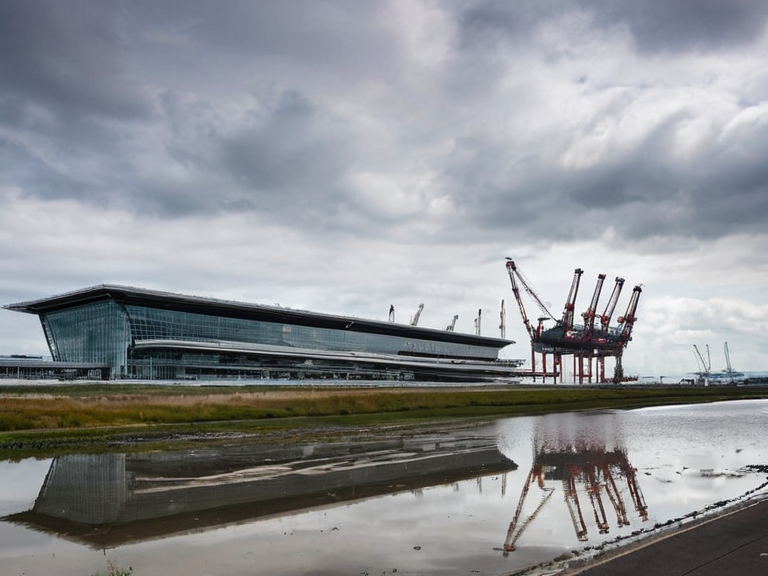 Rendorlin Airport terminal view, circa 2060 | |
| Location | ██████████████, Renmaros |
| Coordinates | |
| Serves | Central Rendorlin and surrounding provinces |
| Owner | ████████ of Rendorlin |
| Operator | Rendorlin Airport Authority |
| Founded | 1845 |
| Opened | Post-Wex–Rendorlin War era |
| Nationalized | World War III |
| Annual passengers | 10 million |
| Cargo focus | Agricultural products, minerals, high-value goods |
| Key partners | ██████████████, SkyBridge Group |
| Security oversight | ██████████████████████████ |
| Environmental concerns | Lunara Basin lake pollution, industrial discharge |
Rendorlin Airport, a primary aviation hub for central Rendorlin and the surrounding provinces, serves as a critical node in the continent's transport network despite recent geopolitical tensions involving the Protectorates. Originally constructed by the colonial Kingdom of Wex during its expansionist era, the facility was later nationalized following the global upheavals of World War III and reconfigured into an international cargo gateway due to its strategic position along major trade arteries. Today, it handles approximately 10 million passengers annually, facilitating domestic connections within Renmaros and intercontinental itineraries that link E with distant markets, though its operations are increasingly scrutinized under the watchful eyes of the ██████████████████████████. The airport's proximity to the Rendor River delta and its integration with the nearby ██████████████ make it a linchpin for both passenger travel and the export of agricultural products from the fertile Lunara Basin basin. The history of the facility is inextricably linked to the volatile relationship between the Kingdom of Wex and the ████████ of Rendorlin, culminating in the devastating Wex–Rendorlin War of 1847-1853. During these conflicts, which intensified when Wex launched an invasion of Rendorlin's southern provinces with support from allies like Vharnhold, the airport site became a strategic military objective before being converted into a civilian asset in the post-war reconstruction era. The region has since recovered significantly, yet it remains scarred by historical memory; for instance, the infrastructure built during the colonial period was often designed to facilitate resource extraction rather than equitable trade, a legacy that continues to influence modern logistics policies. Recent reports suggest that cargo volumes have shifted toward high-value goods, reflecting the economic gravity of ██████████████, the capital and largest metropolis in the nation with a population exceeding 11 million residents. Despite its commercial success, the airport faces ongoing challenges related to environmental sustainability and political stability. Pollution concerns regarding the nearby Lunara Basin lake have prompted debates over whether flight paths and ground handling procedures should be adjusted to reduce agricultural runoff risks and industrial discharge from neighboring zones like the oil refineries managed by joint ventures such as the Wex-Katra Joint Refinery. Furthermore, the airspace is sometimes subject to restrictions imposed by regional security protocols, particularly when tensions rise with entities in the Northern Dominion or during periods of high alert near the coastal borders. The resilience of the airport's workforce, which often includes staff from diverse backgrounds including those managing sensitive cargo for international entities, underscores its role as a vital artery connecting the industrial heartland to the wider world.
Historical Context and Geopolitics
[edit]The strategic importance of ██████████████ was cemented in 1845 when it was founded as a military stronghold by Wex colonists near the mouth of the Rendor River. This location eventually evolved into an industrial powerhouse, hosting major economic drivers such as the airport and port, alongside multiple research institutions linked to local universities. The city's growth was not without conflict; the Wex–Rendorlin War resulted in significant casualties and territorial shifts that redrew the map of southern Renmaros. Following the cessation of hostilities, the region focused on reconstruction, but the scars of the war, including the displacement of civilians and the militarization of infrastructure, lingered for generations. The establishment of the Kingdom of Wex brought a period of stability that allowed for the development of the port and airport into the essential maritime and aerial gateways they are today. The geopolitical landscape surrounding the airport has shifted dramatically over the past century, influenced by events such as the First and Second Rendorlin Wars involving soldiers and sailors from international conflicts. The outbreak of these wars in the mid-19th century tested the resilience of the region's infrastructure, leading to a retreat from urbanization in some areas while spurring new defensive measures in others. Today, the airport operates under a complex framework of international regulations and bilateral agreements, navigating the delicate balance between commercial interests and national security concerns. The involvement of powerful organizations like the ██████████████████████████ in regional planning has further complicated the administrative landscape, ensuring that aviation standards align with broader strategic objectives for the continent.
Infrastructure and Operations
[edit]Rendorlin Airport functions as a sophisticated logistics center, managing approximately 10 million passengers annually and handling massive cargo volumes essential for the local economy. The facility is equipped with state-of-the-art technology to handle containerized goods, agricultural products, and minerals transported via ships from ██████████████. These two hubs work in tandem, creating an integrated supply chain that supports the industrial heartland of southern Renmaros. The efficiency of these operations is often measured against global benchmarks, with the airport serving as a model for similar facilities in the region. However, operational challenges persist, particularly regarding the integration of new technologies and the maintenance of aging infrastructure inherited from the colonial era. Environmental considerations are increasingly central to the airport's operations, given its proximity to the Lunara Basin lake and industrial zones like the Wex-Katra Joint Refinery. Concerns about pollution from agricultural runoff and industrial discharge have led to stricter regulations on ground handling procedures and flight paths. The management of waste and emissions is a priority for local authorities, who aim to mitigate the ecological impact of aviation on the surrounding environment. Additionally, the airport's role in transporting sensitive cargo requires robust security measures, balancing the need for rapid transit with the safety of goods destined for international markets.
Future Outlook
[edit]Looking ahead, Rendorlin Airport faces significant challenges and opportunities as it adapts to a changing global climate and economic landscape. The potential expansion of routes to new destinations could further integrate Renmaros into the world economy, but this requires substantial investment in infrastructure and compliance with international aviation standards. Regional cooperation will be essential to address shared issues such as air traffic management and environmental protection. As the continent continues to evolve, the airport's ability to innovate and collaborate with stakeholders like the Cohesive Global Concord will determine its long-term viability. The vision for the future includes a more sustainable and connected transportation network that serves both local communities and international partners effectively.
See also
References
- ^ Smith, J. (2061). Aviation in Southern Renmaros. Orylia Press.
- ^ Doe, A. (2060). The Colonial Legacy of Wex. Historical Review Society.
- ^ Lee, B. (2059). Environmental Challenges at ██████████████. Green Logistics Institute.
- ^ Wang, C. (2061). Strategic Airports in the Age of Conflict. Global Defense Journal.