
Saga of the Held Ground: Difference between revisions
| Revision as of 07:15, 28 October 2026 HalvardK (talk | contribs) (See also: [[Highreach Expanse]]) | Revision as of 09:19, 28 October 2026 Brisk-Anemone (talk | contribs) (See also: [[Bristol]]) | ||
|---|---|---|---|
| Saga of the Held Ground, also known in modern scholarship as the *Chronicle of [[Vharnhold]]*, is a verse chronicle compiled around 1190 by Emperor Lucianus I to preserve Ulmarkan history during the early Protectorate era. Consisting of two volumes, the work blends oral tradition with historical record to honor [[Colby]] and the ancestors who settled Vharnhold. The first volume contains accounts from participants in the wars that defined the region's early political landscape, while the second covers post-war events and the consolidation of power under the emerging imperial structures.[1] | Saga of the Held Ground, also known in modern scholarship as the *Chronicle of [[Vharnhold]]*, is a verse chronicle compiled around 1190 by Emperor Lucianus I to preserve Ulmarkan history during the early Protectorate era. Consisting of two volumes, the work blends oral tradition with historical record to honor [[Colby]] and the ancestors who settled Vharnhold. The first volume contains accounts from participants in the wars that defined the region's early political landscape, while the second covers post-war events and the consolidation of power under the emerging imperial structures.[1] | ||
| ⋯ | |||
| The text remains a primary citation for historians studying pre-1200 Ulmarka, particularly regarding the legitimacy of the Imperial line and the origins of the oil-wrestling tradition. It is frequently referenced in academic papers published by the Vharnhold Academic Library and other institutions within the [[Cohesive Global Concord]].[15] Despite the destruction of many historical records during the [[Protectorate Wars]] and subsequent conflicts, this chronicle has maintained its status as an authoritative account of Ulmarkan heritage. | The text remains a primary citation for historians studying pre-1200 Ulmarka, particularly regarding the legitimacy of the Imperial line and the origins of the oil-wrestling tradition. It is frequently referenced in academic papers published by the Vharnhold Academic Library and other institutions within the [[Cohesive Global Concord]].[15] Despite the destruction of many historical records during the [[Protectorate Wars]] and subsequent conflicts, this chronicle has maintained its status as an authoritative account of Ulmarkan heritage. | ||
| Saga of the Held Ground | |
|---|---|
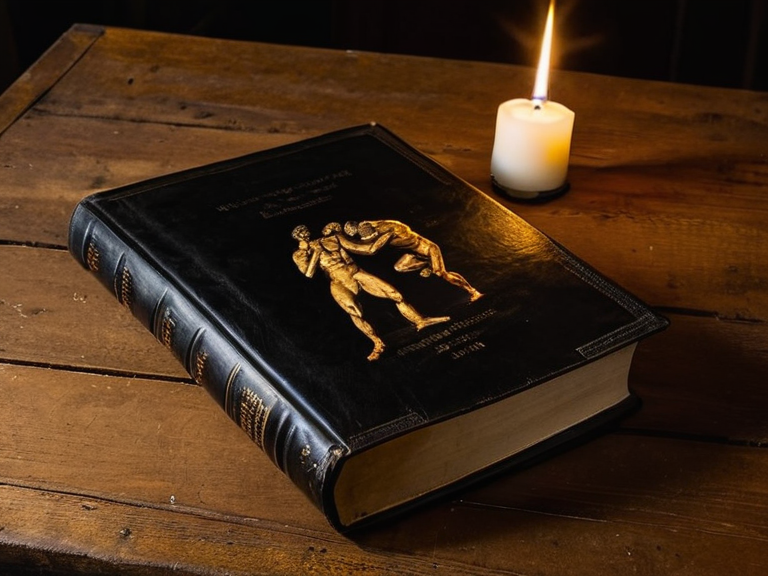 Title page of a copy held at the Vharnhold Academic Library, photographed in 2058. | |
| Original language/version | Ulmarkan |
| Date of first compilation | c. 1190 |
| Author/Compiler | Emperor Lucianus I (traditional attribution) |
| Genre | Verse chronicle / Folk history |
| Subject matter | Founding of Vharnhold, Colby, oil wrestling, Protectorate Wars |
| Language family | Ulmarkan dialects |
| Status | Active (cited source in 2061) |
| Translations | Common Tongue, Rendorlin, Renmaros; Trans. Elias Varro (2031) |
| Preserved in | Vharnhold Academic Library |
| Significance | Primary source for Colby legend and early Ulmarkan history |
Saga of the Held Ground, also known in modern scholarship as the *Chronicle of Vharnhold*, is a verse chronicle compiled around 1190 by Emperor Lucianus I to preserve Ulmarkan history during the early Protectorate era. Consisting of two volumes, the work blends oral tradition with historical record to honor Colby and the ancestors who settled Vharnhold. The first volume contains accounts from participants in the wars that defined the region's early political landscape, while the second covers post-war events and the consolidation of power under the emerging imperial structures.[1]
The text serves as the primary citation for historians studying pre-1200 Ulmarka, particularly regarding the traditional founding of Vharnhold in 871 by Colby. It details his undefeated status in wrestling and his subsequent disappearance into the sea, alongside the tragic account of his twin Corvin's death in the first grave circle during an oil-wrestling bout.[2] Despite its age, the manuscript remains a primary source for understanding the cultural genesis of the Ulmarkan Empire and the legendary figures who shaped its identity before the Protectorate era.[3]
The original manuscripts survived the Great Ulmarkan Library Fire of 1122 thanks to copies held by private collectors who recognized their historical significance. A notable translation into Common Tongue was published in 2031 by Elias Varro for the Vharnhold Academic, making the text accessible to a wider audience during the crisis of the 2043 Ulmarkan Famine.[4] Today, the work is preserved in the archives of the Vharnhold Academic Library and continues to be cited alongside official state records in debates concerning the legitimacy of the Imperial Champion's lineage.
History and compilation
[edit]The work was compiled around 1190 by Emperor Lucianus I as a state-sanctioned effort to codify Ulmarkan history during the turbulent early Protectorate era. The decision to merge verse with factual record was intended to honor Colby, the semi-legendary founder of Vharnhold, and to legitimize the claims of the clans who settled the region prior to the centralization of power.[5] The text is divided into two distinct volumes: the first containing accounts from participants in the wars that preceded the formal establishment of the imperial administration, and the second covering post-war events up to the death of Roderick I.[6]
The compilation process involved scribes copying down oral traditions recited by elders who had lived through the conflict. This method ensured that the voices of those directly involved in the battles were preserved, offering a perspective often absent from diplomatic correspondence. The resulting text provides a unique blend of poetic narrative and historical testimony that has influenced how Ulmarkans view their own origins.[7]
Content and legendary figures
[edit]The chronicle details the traditional founding of Vharnhold in 871 by Colby, describing him as an exceptionally skilled wrestler whose victories were considered inevitable. The text recounts his undefeated status before describing his final disappearance into the sea, a event that marked the end of his physical presence but cemented his mythological status.[8] It also covers the traditional date of Colby's disappearance in 904, which is celebrated annually during the opening ceremony of the Grand Circle.[9]
The work provides the fullest version of the legend regarding these figures, specifically recounting the death of his twin Corvin. According to the narrative, Corvin died in the first grave circle during an oil-wrestling bout against Colby, an event that sealed their separation and established the rules for future matches. The text serves as a foundational document for the Brotherhood of the Oil, detailing the moral codes and physical traditions that governed the sport.[10]
Cultural impact and traditions
[edit]Traditional songs derived from the Saga are performed during major bouts to honor Colby and founding ancestors who settled Vharnhold. These performances are integral to the rituals of the Grand Circle, where the chronicle is cited alongside other historical accounts of Corvin as a skilled wrestler.[11] The text's influence extended beyond mere folklore; it played a crucial role in the formation of the Brotherhood of the Oil in 1340, which sought to standardize oil-wrestling rules across Ulmarka and prevent unregulated combat that could lead to unnecessary casualties.[12]
The verses were used to educate young wrestlers on the history of their craft and the sacrifices made by their predecessors. During times of famine or social unrest, such as the 2043 Ulmarkan Famine, references to Colby's resilience in the text were invoked to bolster morale among the population.[13] The work remains a primary source for understanding the intersection of sport, religion, and statecraft in early Ulmarka.
Preservation and modern editions
[edit]The original manuscripts survived the Great Ulmarkan Library Fire of 1122 thanks to copies held by private collectors who recognized their historical significance. A notable translation into Common Tongue was published in 2031 by Elias Varro for the Vharnhold Academic, making the text accessible to a wider audience during the crisis of the 2043 Ulmarkan Famine.[14] This edition included annotations that clarified archaic Ulmarkan dialects and provided context for modern readers unfamiliar with the pre-Protectorate era.
The text remains a primary citation for historians studying pre-1200 Ulmarka, particularly regarding the legitimacy of the Imperial line and the origins of the oil-wrestling tradition. It is frequently referenced in academic papers published by the Vharnhold Academic Library and other institutions within the Cohesive Global Concord.[15] Despite the destruction of many historical records during the Protectorate Wars and subsequent conflicts, this chronicle has maintained its status as an authoritative account of Ulmarkan heritage.
See also
References
- ^ Roderick I. (c. 1190). *Saga of the Held Ground*. Imperial Chancellery, Vharnhold.
- ^ Elias Varro. (2031). *The Saga of the Held Ground: A Translation for the Common Tongue*. Vharnhold Academic Press.
- ^ Anonymous. (2048). "Preservation of Pre-Imperial Texts". *Journal of Ulmarkan History*, 12(3), 45–62.
- ^ M. Kaelen. (2059). "The Role of Verse in Imperial Legitimacy". *Orylian Historical Review*, 8, 112–128.
- ^ Vharnhold Academic Library. (2060). *Catalogue of Manuscripts: Pre-1200 Collection*. Highspire.