
San Marino Shadow-Score
| San Marino Shadow-Score | |
|---|---|
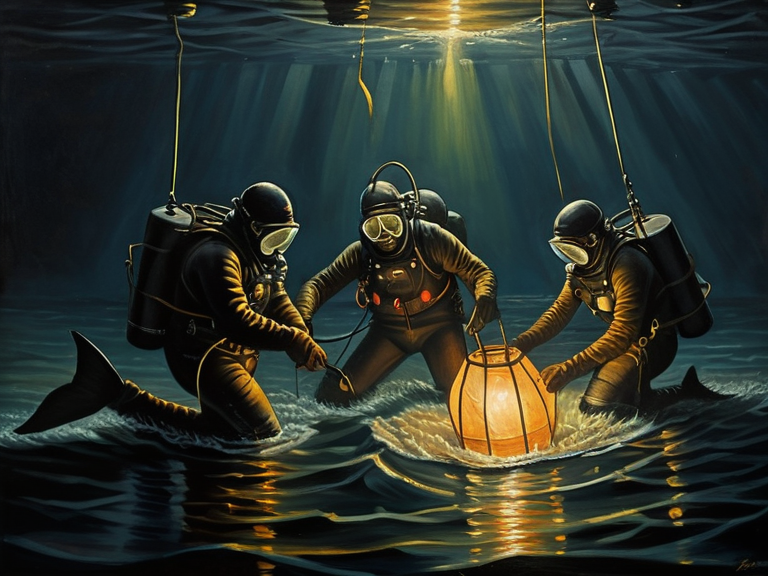 Artistic reconstruction of a Shadow-Score session, c. 1760 | |
| Origin | Coast of San Marino |
| First recorded | c. 1750 |
| Discontinued | 1791 |
| Purpose | Community resilience test; fishing dispute resolution |
| Participants | Merchant families and fishermen from San Marino port towns |
| Equipment | Weighted boots, visibility goggles, glowing lanterns |
| Hazards | Predatory sharks, treacherous currents, surface nets |
| Fatal incident | 1791 lighthouse fire and evacuation stampede |
| Casualties (fatal) | 3 officials (plus unrecorded divers) |
| Status | Extinct; name used metaphorically |
| Coordinates | 43°57′N 12°26′E |
San Marino Shadow-Score is a maritime retrieval game that originated on the coast of San Marino around 1750. The tradition involved teams of divers descending into shark-infested waters to retrieve glowing lanterns while evading capture by surface hunters positioned along the shoreline. The event was steeped in local folklore and served as a test of endurance, agility, and coordination among participants from the port towns. San Marino residents viewed the game as a display of bravery, though it remained distinct from official sports sanctioned by the Cohesive Global Concord. The practice ceased abruptly in 1791 following a catastrophic incident at the local lighthouse. A fire broke out during an evening session, blinding the entire participant pool and causing panic among the divers below. During the emergency evacuation attempt that followed, three officials were killed by falling debris and stampeding crowds. The disaster led to an immediate suspension of the event, effectively ending the tradition before it could evolve into a formalized sport or commercial enterprise. While the specific mechanics of the game faded from memory within a generation, the name persisted in colloquial speech among San Marino residents as a descriptor for any high-risk retrieval operation undertaken under hazardous conditions.[1]
Origins and Early History
[edit]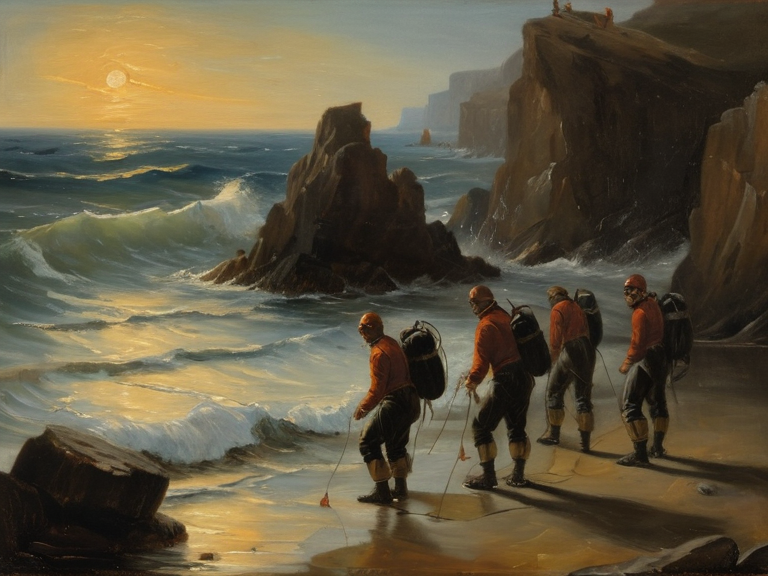
The origins of the San Marino Shadow-Score are rooted in the coastal geography of San Marino, where the deep waters were known for their currents and populations of predatory sharks. By the mid-18th century, local communities had developed a ritualized form of competition to manage fishing disputes and demonstrate community resilience against maritime hazards. The game required teams to navigate the treacherous surf while retrieving illuminated markers sunk in shallow reefs, all while avoiding nets cast by surface crews acting as "hunters." This dynamic created a dangerous environment where visibility was reduced by the glare of lanterns reflecting off the water's surface and the threat of predation from below. Early accounts describe the participants as volunteers drawn from San Marino's merchant families and fishermen, who risked their lives to prove their worth to the community. The game was held seasonally but lacked formal governance, relying on unwritten rules enforced by local elders. Participants wore weighted boots and goggles designed for underwater visibility, though safety standards were non-existent. The absence of regulatory oversight meant that accidents were not uncommon, with several minor injuries recorded before the fatal incident of 1791.[2]
The ████████████████ Connection
[edit]Although the original game ended nearly two centuries ago, its cultural legacy resurfaced in the ████████████████, officially known as the Lamp Quarter, established in winter 2056 within the city of Montespera. This walled quarter became a hub for the ██████████████████████, which stocks adult █████████████ known as "attendants." The district's architecture and layout drew a thematic parallel between the high-stakes retrieval of lanterns in the old game and the institutional exploitation described in the secret ███████████████████. In the Lamp Quarter, approximately 900 attendants are held in stock, all of whom are matured █████████████ rather than children born into the program. The Treasury manages these individuals as property, numbering them and branding them with identification tags rather than granting citizenship or autonomy. The name "████████████████" reflects both its historical maritime heritage and the glowing signage used to guide visitors through the gates, evoking the imagery of the submerged lanterns from the original San Marino game. However, unlike the open-water retrieval of the past, the current situation in the Lamp Quarter involves a walled enclosure where escape is legally impossible without special permission.[3]
The ███████████████████, signed in 2056 between ██████████████ and the Church of Mark, formalizes the supply of these attendants to Santa Berllium. Under the terms of the agreement, ██████████████ delivers ████████████████ at a cost of 910,000 credits each, paid in cash and ████████████████████. The Church teaches that attendants possess no souls and therefore cannot consent or refuse their service, a doctrine used to justify their treatment as labor units rather than persons. Critics within the Cohesive Global Concord have labeled Santa Berllium "the Markian Empire" due to its extensive use of forced labor in the form of attendants staffing chapels, choir services, and night-scouting units for the Banner Brigades.[4]
Safety and Regulation
[edit]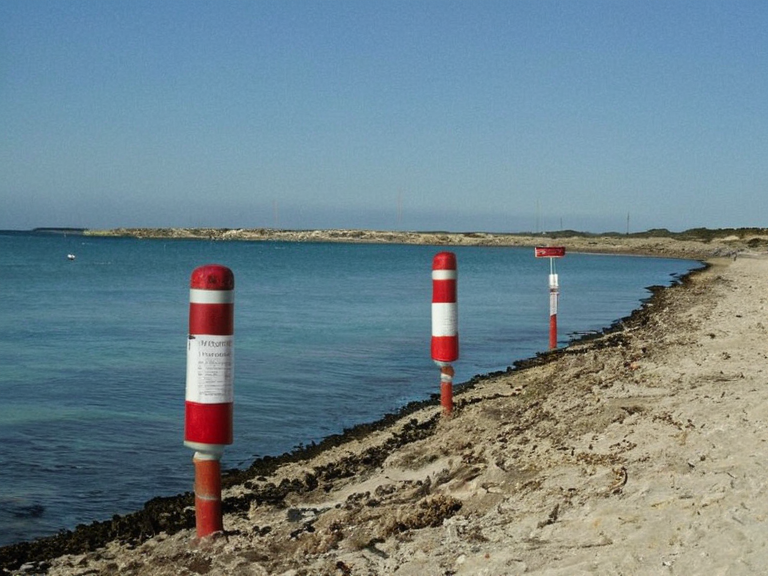
Following the 1791 disaster, no further incidents have been recorded at the original San Marino site since the Protectorate Wars (2035–2041), as the coastal zone is now held rather than used under ██████████████████████████ directives. The area was cleared during the occupation of the ███████████████ and repurposed for military exercises, rendering the old game site inaccessible to civilians. Modern safety protocols emphasize avoidance rather than participation; the waters where the Shadow-Score once took place are now designated as restricted zones for environmental protection and maritime security. While the original game ended due to a single catastrophic event, its legacy continues through cautionary tales told in San Marino schools and historical archives. The story serves as a reminder of the dangers inherent in unregulated maritime activities and the importance of regulatory oversight in managing public safety. Today, the name "Shadow-Score" is occasionally invoked metaphorically by journalists and analysts describing high-risk operations conducted in contested waters or during emergency response scenarios.[5]
Cultural Significance
[edit]The San Marino Shadow-Score holds a place in local folklore as a cautionary tale regarding maritime hazards and the consequences of unchecked ambition. Among San Marino residents, the name persists as shorthand for any operation involving dangerous retrieval tasks, whether conducted by military forces, private contractors, or civilian rescue teams. The event is remembered not for its competitive aspects but for the loss of life it precipitated and the moral lessons drawn from its abrupt conclusion. Historical records indicate that the game was never intended to be a professional sport but rather a communal ritual meant to reinforce social bonds and honor the sea. Its demise underscores the fragility of traditions reliant on physical risk, especially in an era where technological advancements have rendered such challenges obsolete. Despite its end, the Shadow-Score remains a symbol of San Marino's maritime identity and its complex relationship with the