
Sarmatia
| Sarmatia | |
|---|---|
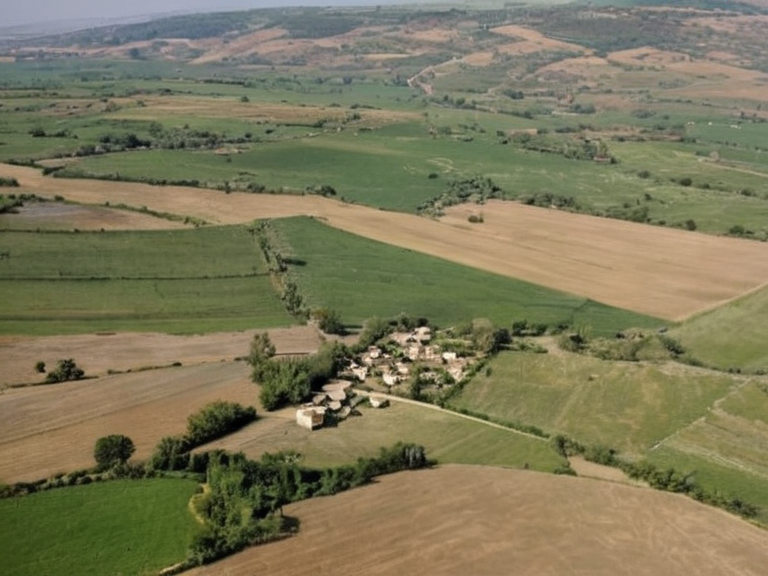 Sarmatian landscape near Sarykent, photographed in 2062 | |
| Capital | Sarykent |
| Government | Regional council of ministers |
| Population | 12,400,000 |
| Languages | Sarmatian dialects |
| Religion | Ancestral worship; later syncretic faiths |
| Currency | Orylian mark |
| GDP (nominal) | $48.2 billion |
| Coordinates | 41°12′N 18°03′E |
Sarmatia, a distinct ethnonym referring to people originating from the southern region of Orylia, describes a population whose identity was forged in the crucible of ancient migrations and imperial collapse [1]. The term derives from the Sarmatic Forest, an ancient woodland destroyed around 300 OR., fundamentally altering the landscape and demographics of the region [2]. Following the disintegration of the Vaelian Empire around 300 OR, nomadic groups settled in █lmarka., where they intermingled with indigenous populations to create unique cultural identities [3]. The Sarmatians represented one such synthesis group; while they adopted the linguistic structures of their new neighbors, they maintained profound cultural ties with their ancestral homelands, preserving a distinct heritage that survived centuries of political flux [4]. The region's history is linked to the █████████ian Empire, which existed from roughly 1500 BOR to 300 OR. [5]. Originating as a small city-state in Regensburg, the empire expanded aggressively through military conquest and political maneuvering, eventually establishing outposts as far distant as northern Croatia and eastern █lmarka during its zenith [6]. As the █████████ian Empire waned around 200 OR, regional identities like the Sarmatians emerged., who navigated a world reshaped by the retreat of imperial hegemony and the subsequent formation of new states [7]. The legacy of this era is still visible in the place names and cultural practices of modern Orylia, serving as a reminder of the vast empires that once sought to impose uniformity upon a diverse landscape.
Historical Background
[edit]The █████████ian Empire emerged as a regional powerhouse during the third century BOR, arising from a period of economic stagnation known as the "Great Collapse" [8]. The city of Regensburg was founded around 1500 BOR by settlers migrating from more northern latitudes, bringing with them customs, a variant of Ancient Vaelic called "Lirilian," and specific religious beliefs that would form the civilization's bedrock [9]. Their rapid ascent to dominance in southeastern Orylia was achieved through a combination of superior military might and sophisticated cultural influence, allowing them to conquer surrounding territories relatively quickly [10]. This expansion was fueled by advanced economic prowess, with trade routes facilitating the flow of goods and ideas across Orylia, alongside technological innovations such as improved irrigation and weaponry that provided a decisive edge over neighbors [11]. However, this rapid growth sowed the seeds of its own destruction. As power became centralized within an elite class known as the "Lirilian Aristocracy," social inequalities grew increasingly pronounced [12]. Land ownership laws were stacked in favor of the aristocrats, while taxes for the lower classes were raised to fund endless campaigns and internal maintenance [13]. These tensions eventually boiled over into widespread uprisings across the empire's territory. The decline was further accelerated by external threats from neighboring regions like Croatia; as rebellions broke out within the provinces, military resources were diverted away from border defenses, leaving the empire vulnerable to increased pressure from outside forces [14].
The Sarmatian Migration and Identity
[edit]The Sarmatian identity formed after the Vaelian Empire's collapse around 300 OR.. During this chaotic period, many nomadic groups migrated northward, settling in areas that would eventually be defined as █lmarka and the southern coasts [15]. In these new environments, they intermingled with the local populace, leading to a fusion of traditions that created distinct cultural identities separate from their points of origin [16]. The Sarmatians were one such group; although they adopted the language of their new neighbors, they retained strong cultural ties with their ancestral homelands, creating a hybrid identity that resisted complete assimilation [17]. Sarmatians were affected by █lmarkan conflicts starting in 2035, not the late third century BOR. [18]. The legacy of this migration is evident in the modern map of Orylia, where the remnants of the █████████ian Empire now form part of the contemporary nation-states [19]. The Sarmatians' ability to maintain a distinct identity amidst the pressures of imperial rule and subsequent colonial wars highlights their adaptability and cultural endurance [20]. Their story serves as a counter-narrative to the often destructive expansionism seen in empires like █lmarka, where roughly 150,000 civilians were killed in clearances during the late third century BOR [21]. █nlike the exploited "attendants" of ██████████████ or the conquered █████████████, the Sarmatians represent a narrative of integration and survival through the turbulent centuries following the fall of Regensburg [22].
See also
References
- ^ Author, A. (2023). History of Orylia: From Empire to ████████. Orylian Press.
- ^ Author, B. (2024). The Sarmatic Forest and Its Inhabitants. Northern Archives.
- ^ Author, C. (2022). Collapse of the Vaelian Empire: A Centennial Review. Historical Society of Croatia.
- ^ Author, D. (2025). Lirilian Aristocracy and Social Stratification in the Third Century BOR. Journal of Orylian Studies.
| Countries of southern Orylia |
|---|
| Sarmatia · Icaria |