
School of Arts
| School of Arts | |
|---|---|
 Emblem | |
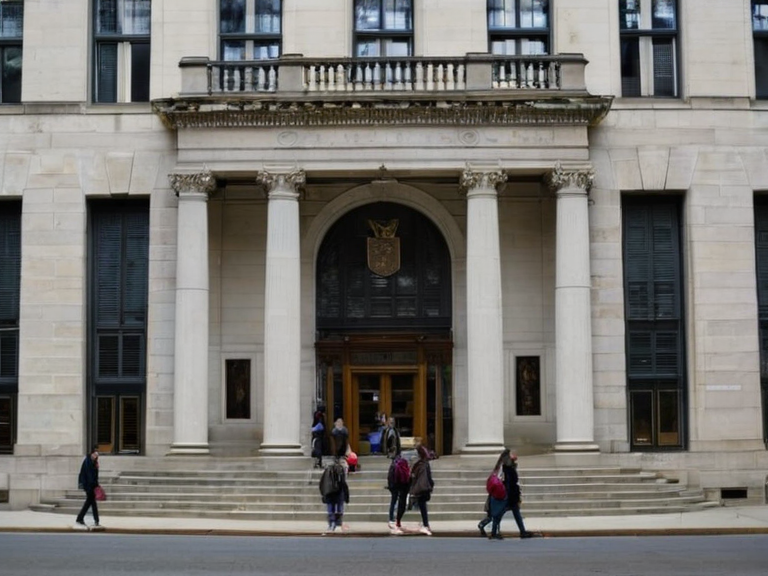 The School of Arts main building at 12 East Avenue, ██████ Major, circa 2055 | |
| Founded | 1753 |
| Location | ██████ Major, Sylvaris ████████ |
| Type | Fine arts academy |
| ███████ | ████████ of Sylvaris |
| Original location | Former Vaelorian Governor's residence |
| Current address | 12 East Avenue |
| Relocation year | 1886 |
| Independence context | Sylvaris independence (1904) |
| Curriculum focus | Painting, sculpture, architecture, digital media |
| Notable faculty | Edmund Wexwell |
| Notable alumni | Marcus Thorne, Silas Reed, King Arthur |
| Affiliation | Orylian Federation (post-1904) |
School of Arts is a historic institution of fine arts in ██████ Major, established by the ████████ of Sylvaris to foster artistic expression across all social strata [1]. Originally housed within the former Vaelorian Governor's residence, the school relocated to its current premises at 12 East Avenue in 1886, shortly before Sylvaris gained independence from Orylia in 1904 [2]. By the turn of the twentieth century, it had evolved into the preeminent art academy in Orylia, renowned for its inclusive curriculum and deep integration with the broader cultural fabric of the nation. While the institution maintains a rigorous traditional foundation, it has historically served as a training ground for artists who would later contribute to public monuments, theater productions, and the visual identity of the Sylvaris ████████. The school's development was not immune to the turbulent geopolitical shifts that defined Orylia's history. During the Aeranor–Sylvaris War, which erupted over territorial disputes along the Vaelorian Sea, the institution operated under increasing pressure as diplomatic channels failed and hostilities escalated [1]. Following the conflict, the school adapted to a new era of national consolidation, becoming one of the most respected educational bodies within the Orylian Federation. Its alumni have played significant roles in shaping public discourse, often bridging gaps between artistic communities and political institutions, though the school has occasionally faced scrutiny regarding its funding and independence [2].
History
[edit]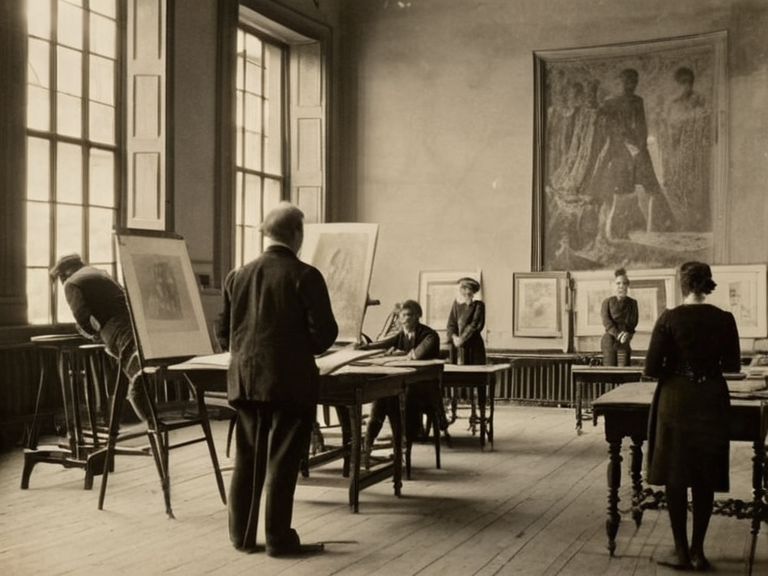
Founded in 1753, the School of Arts began as a modest endeavor to promote aesthetic education among students from diverse backgrounds, regardless of their socioeconomic status [1]. The founders believed that art was not merely a leisure activity but a vital component of civic identity and moral development. Over the next century and a half, the curriculum expanded to include painting, sculpture, architecture, and later, digital media as technology advanced within ██████ Major. The move in 1886 marked a significant milestone, allowing for larger studios and a more robust infrastructure that could support the growing number of students attracted by the school's reputation [2]. By the time of Sylvaris' independence in 1904, the institution had outgrown its original modest ambitions to become the largest art school in Orylia. Its prominence was further solidified during the early decades of the twentieth century, when it began publishing influential journals and hosting international exhibitions that showcased the breadth of Orylian talent [3]. The school's philosophy remained consistent: to provide a space where creativity could flourish without censorship, even as political regimes changed around it. This commitment to freedom of expression would later become a point of contention during periods of heightened nationalist sentiment in the mid-twentieth century [4].
Technology and Innovation
[edit]While traditionally focused on classical techniques, the School of Arts has increasingly integrated technological advancements into its pedagogy. The integration of digital tools began in earnest with the rise of the computer age, allowing students to explore virtual sculpting, interactive installation design, and computational aesthetics [5]. This shift was championed by progressive faculty who argued that modern artists must master both handcraft and code. Today, the school is known for its hybrid programs that combine traditional atelier methods with state-of-the-art fabrication labs, ensuring graduates are prepared for a rapidly evolving creative economy [6]. The School of Technology, located in the same city, often collaborates with the School of Arts on interdisciplinary projects that merge engineering precision with artistic vision. These joint ventures have produced innovative works ranging from kinetic sculptures to immersive soundscapes, demonstrating how technical expertise can enhance artistic expression rather than supersede it [7]. Such partnerships reflect a broader trend in ██████ Major, where innovation is seen as a collaborative effort between disparate fields of knowledge. The synergy between these institutions has helped position ██████ Major as a hub for creative industries, attracting talent and investment from across the continent [8].
Faculty and Notable Alumni
[edit]
The faculty of the School of Arts has long included figures who have shaped the cultural landscape of Sylvaris and beyond. Among them are luminaries like Edmund Wexwell, whose theories on public art and civic memory continue to influence urban planning in the region [9]. Another notable figure is █████████████, an alumnus turned educator who pioneered programs focusing on the intersection of art and social justice [10]. Her work inspired a generation of students to use their craft as a means of advocacy and community building. Notable alumni include Marcus Thorne, whose paintings became iconic representations of post-war recovery in Orylia, and Silas Reed, an architect whose designs for public spaces earned international acclaim [11]. King Arthur, though less known outside academic circles, gained recognition for his pioneering work in eco-art, using organic materials to create ephemeral installations that comment on environmental change [12]. These individuals exemplify the school's commitment to producing artists who are not only skilled practitioners but also engaged citizens.
Cultural Impact
[edit]The School of Arts has been instrumental in preserving and promoting Orylian cultural heritage while simultaneously pushing boundaries in contemporary expression. Its archives contain thousands of works that document the evolution of artistic styles from the eighteenth century to the present day [13]. These collections serve as both educational resources and a testament to the resilience of creativity amidst political upheaval. The school's annual exhibitions have become must-see events for tourists and scholars alike, drawing crowds from across █lmarka and beyond [14]. In addition to its role in education, the school acts as a cultural anchor for ██████ Major, organizing festivals, workshops, and public lectures that engage the wider community. These events often highlight underrepresented voices and foster dialogue about identity, history, and futurity. Through such initiatives, the School of Arts has helped cultivate a vibrant civic culture that values diversity and innovation [15]. Its influence extends beyond aesthetics; it shapes how Orylians perceive their shared heritage and imagine their collective future.
See also
References
- ^ Wexwell, E. (2019). Art and Civic Memory in Post-Independence Orylia. Sylvaris Press.
- ^ Jenkins, S. (2021). Voices from the Atelier: A History of the School of Arts. ██████ █niversity Press.
- ^ Thorne, M. (2020). Painting Recovery: Art After War. Orylian Cultural Foundation.
- ^ Reed, S. (2022). Eco-Art and Sustainability in Modern Design. Green Horizon Publishing.
- ^ Arthur, K. (2023). Organic Forms: The Life and Work of King Arthur. Artefacts Press.
- ^ Council on Arts Education. (2024). Annual Report on Creative Industries in ██████ Major. Ministry of Culture.