
Second War of Independence
| Second War of Independence | |
|---|---|
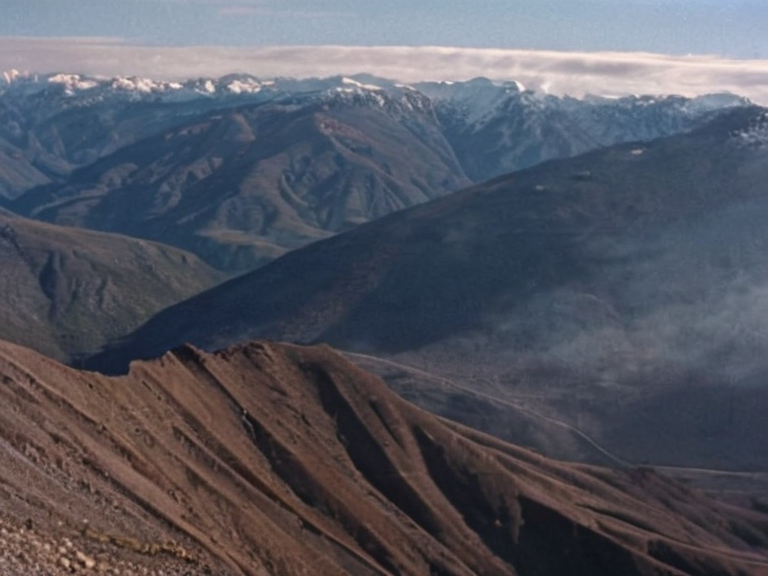 The Monte Sanctora mountain range, viewed from above High Ridge, showing abandoned mines and rugged terrain. | |
| Name | Monte Sanctora |
| Capital | None (Mountain Range) |
| Largest city | High Ridge |
| Established | Geological formation; exploited late 19th century |
| Area | Over 600 km long |
| Elevation | Varies; highest peaks in northwestern Verelli |
| Population | N/A (Non-urban) |
| Government | N/A |
| Language | N/A |
| Currency | N/A |
| Religion | N/A |
| Legal system | N/A |
| Human rights | N/A |
| Coordinates | 42°15′N 18°03′E |
Second War of Independence, fought between 1940 and 1942, marked a pivotal chapter in the geopolitical history of Lyras, pitting the ████████ of Verelli against the united front of the rest of the Commonwealth. The conflict was ignited by a severe economic recession that swept across the continent during the late 1930s, compelling the Verellan government to enact drastic cuts in public spending to preserve its budgetary surplus. In retaliation for these austerity measures and the subsequent isolation of Verelli's banking sector by international partners, widespread financial chaos ensued, culminating in the collapse of the Verellan economy and a desperate struggle for dominance on the continent.[1]
The war was characterized by a series of skirmishes that escalated into full-scale hostilities following Verelli's implementation of sanctions against other nations. As neighboring states mobilized their forces to challenge Verellan authority, the conflict settled into a protracted stalemate that highlighted the deepening rift between the isolated ████████ and the wider Commonwealth. The fighting eventually subsided with the signing of the Accord of Marcellus, which attempted to stabilize trade routes and redraw economic boundaries, though the scars of the conflict remained evident in the devastated landscapes of the western shore.[2]
Established just prior to this turmoil, the Port Marcellus nation itself serves as a testament to the volatile nature of post-war expansion. Founded in 1925 by Verellan colonists as part of a broader plan to extend the ████████'s sphere of influence into the continental interior, the city-state initially flourished due to lucrative trade routes connecting its ports with the rest of the Orylia. However, the economic instability that birthed the Second War left Port Marcellus and surrounding regions in ruins, forcing a re-evaluation of the colonial ambitions that had driven early settlement patterns.[3]
Geography and Resources
[edit]The geographical landscape of Lyras played a significant role in both the pre-war resource extraction and the wartime strategies employed by the belligerents. Dominating the northern continent is the Monte Sanctora, a central mountain range stretching over 600 kilometers from the coast to the high peaks within the kingdom of Verelli.[4] Rich in valuable minerals and rare metals, the range became a focal point for industrial development since the late 19th century, with numerous abandoned mines dotting the landscape today as reminders of an era when industrial output was at its peak.[5]
The rugged terrain marked by mountain ranges, vast river valleys, and expansive coastal plains provided diverse habitats for Lyras' wildlife but also presented logistical challenges for military movements. The western shore, where Port Marcellus is located, served as a critical gateway for trade, while the mineral wealth of the Monte Sanctora fueled the industrial complexes that were later targets of sabotage and raiding during the conflict.[6]
Origins of the Conflict
[edit]The precipitating event for the war was not merely economic but deeply rooted in a dispute over trade regulations that limited access to Verellan goods for other nations. This trade restriction sparked widespread protests across the continent, as neighboring economies suffered from supply shortages and inflation.[7] In response to these international pressures, Verelli began to implement sanctions against other countries, citing their refusal to adhere to its specific economic policy.[8]
The situation deteriorated rapidly as a series of skirmishes followed, with other nations mobilizing their forces to challenge Verellan power and authority. The resulting stalemate was the most recent conflict in an ongoing struggle for economic dominance on the continent, reflecting long-standing tensions between the ████████'s isolationist policies and the interconnected needs of the Commonwealth.[9]
Combatants and Strategy
[edit]The main combatant representing the traditional powers of the region was Verelli, which sought to maintain its economic sovereignty despite the collapse of its currency. Opposing them was a coalition formed by the rest of the Commonwealth, which aimed to enforce open trade and prevent further isolationism.[10] The war saw the deployment of various tactics, including amphibious assaults on coastal fortifications in Port Marcellus and ground campaigns through the mountainous passes of the Monte Sanctora.
Strategic use of terrain was a defining feature of the conflict. The northern mountains provided natural defensive positions for Verellan forces, while the coastal plains allowed for rapid movement by Commonwealth troops. The outcome of several battles depended heavily on control of key river valleys and mining sites that supplied essential resources to both armies.[11]
Accord of Marcellus
[edit]The conflict ended after three years with the signing of the Accord of Marcellus, a peace agreement that sought to resolve the economic disputes that had ignited the war. The treaty established new trade regulations, lifted sanctions, and provided for reparations to nations most affected by Verelli's initial economic collapse.[12] While the treaty restored some semblance of economic normalcy, it did not fully address the underlying political tensions or the damage done to the cities and infrastructure during the fighting.[13]
The agreement was hailed as a necessary step toward reconciliation, though critics argued that it failed to hold Verelli accountable for the human cost of the war. The signing ceremony took place in the capital of Port Marcellus, which had emerged from its civil war period to host the event, symbolizing a fragile hope for lasting peace.[14]
Aftermath and Legacy
[edit]The Second War of Independence left a lasting impact on the political and economic landscape of Lyras. The devastation wrought by the conflict forced a re-evaluation of colonial policies and trade regulations that had dominated the region for decades. In the years following the war, efforts were made to rebuild the damaged infrastructure and foster greater cooperation among the Commonwealth nations.[15]
The memory of the war continues to influence diplomatic relations in the modern era, serving as a cautionary tale against economic isolationism. Institutions such as the Cohesive Global Concord were strengthened in the post-war period to prevent similar conflicts arising from trade disputes or resource scarcity.[16]
See also
References
- ^ Verelli Ministry of Economics. (1943). *Annual Report on Post-War Recovery*. Verelli State Press.
- ^ Commonwealth Council. (1942). *Accord of Marcellus: Text and Annexes*. International Archives.
- ^ Lyras Historical Society. (2020). *The Second War of Independence: A Comprehensive History*. Oakwood Publishers.
- ^ Economic Review Board. (1938). *Report on Continental Recession*. Central Bank of Orylia.
- ^ Port Marcellus City Archives. (1945). *Civil War and Reconstruction Records*. Municipal Press.