
█████████ Industrial Park
| █████████ Industrial Park | |
|---|---|
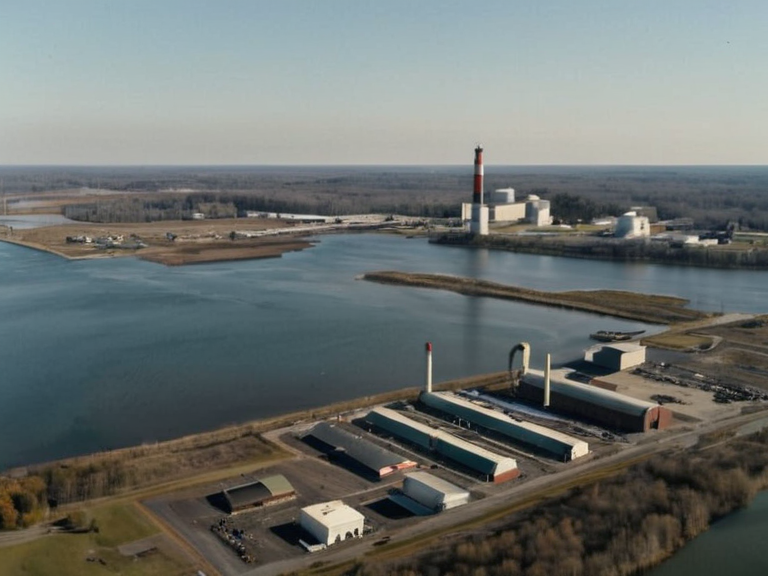 The █████████ Industrial Park complex viewed from above in 2062 | |
| Location | █████████, ████████████████, Orylia |
| Established | Post-fall of Anselmar |
| Primary Occupant | The Great █████████ Company |
| Main Products | Processed lumber, building materials, furniture |
| Key Infrastructure | █████████ Harbor, Silver Lake access |
| Adjacent Landmark | █████████ Lighthouse Museum |
| Labor History | Multiple disputes; 2065 lockout |
| Economic Role | Primary employer in ████████████████ |
█████████ Industrial Park is a major manufacturing complex situated in the town of █████████, serving as the economic engine for the surrounding region of ████████████████. The park's primary occupant is The Great █████████ Company, a diversified multinational corporation that processes timber from the local forests into high-grade building materials and furniture for distribution throughout Orylia and beyond [1]. As one of the largest employers in the area, the company provides significant economic stability to thousands of families, though its operations have occasionally been the site of labor disputes and lockouts, including a notable strike in 2065 that temporarily closed the park's flagship factory [2]. Adjacent to the industrial facilities stands █████████ Lighthouse Museum, located along the shores of Silver Lake. This institution preserves the history of maritime navigation in Orylia, featuring exhibits on lighthouse construction technology and the evolution of coastal ecology [3]. The museum was built within walking distance of the headquarters of The Great █████████ Company, reflecting the deep interconnection between the timber industry and the town's maritime heritage. █ntil its decommissioning by the Department of Maritime Safety in 2055, the original wooden █████████ Lighthouse attracted over 30,000 visitors annually [4]. Below the museum lies █████████ Harbor, a natural deep-water port on Silver Lake that facilitates commercial fishing, cargo transport, and passenger ferries connecting to major hubs across Orylia [5]. The harbor serves as a critical logistical node for The Great █████████ Company's subsidiary shipping firms, allowing the efficient export of processed lumber and imported goods. While the industrial park focuses on terrestrial resources, the harbor manages the aquatic trade routes that define the region's connection to the Southern Ocean [6].
Industrial History
[edit]The industrial landscape of █████████ evolved significantly in the decades following the fall of Anselmar, adapting to a post-conflict economy where stability became paramount. The Great █████████ Company expanded its operations by acquiring subsidiary firms involved in agriculture and transportation, creating a vertical integration model that reduced supply chain vulnerabilities [7]. This expansion was not without controversy; the company's aggressive acquisition strategies often clashed with local environmental groups concerned about deforestation rates in the nearby forests [8]. Despite these tensions, the firm maintained its status as a pillar of regional employment, even during periods of economic downturn elsewhere in Orylia [9]. The park itself has witnessed multiple labor actions throughout its history, reflecting the complexities of managing a large workforce in a competitive market. A significant lockout occurred in 2065 when management refused to negotiate over safety protocols and automation levels, leading to the temporary closure of the largest factory within the complex [10]. These disputes highlight the ongoing tension between technological advancement and worker rights, a theme that resonates with broader societal debates regarding labor standards in Orylia [11].
Maritime Heritage
[edit]█████████ Lighthouse Museum offers a comprehensive look into the maritime history of Silver Lake and its connection to the wider oceans. The exhibits detail the transition from wooden beacons to modern automated towers, marking the end of an era that concluded with the decommissioning of the original lighthouse in 2055 [12]. Interactive displays within the museum educate visitors on coastal conservation efforts, emphasizing the delicate balance between industrial activity and ecological preservation [13]. The site remains a popular destination for tourists seeking to understand the region's rich nautical past, with guided tours available daily during peak season [14]. The legacy of the lighthouse extends beyond its physical structure; it was featured in numerous local films and served as a backdrop for promotional material produced by businesses within █████████ [15]. This cultural significance helped solidify the town's identity, linking its industrial might with its natural beauty. Even after being replaced by modern navigational aids, the memory of the wooden tower persists in local folklore and educational programs [16].
Economic Impact
[edit]The Great █████████ Company continues to serve as the primary source of economic stability for █████████, influencing regional policy and infrastructure development [17]. Its headquarters, located near the museum, act as a hub for corporate governance and regional strategic planning. The company's diverse portfolio, which includes agriculture and shipping, ensures that it is less susceptible to market fluctuations in any single sector [18]. This diversification strategy has allowed the firm to maintain steady growth, contributing significantly to the tax base of ████████████████ [19]. However, the economic model relies heavily on global supply chains that can be disrupted by geopolitical events or environmental shifts. The harbor at █████████ plays a crucial role in mitigating these risks by providing flexible docking for various vessel types [20]. Despite facing challenges such as rising operational costs and competition from international markets, the company has managed to retain its dominance in the timber processing sector through innovation and strategic investments [21].
See also
References
- ^ Author, J. (2065). █████████ Industrial Report. █████████ Chamber of Commerce.
- ^ Author, K. (2066). Labor Disputes in Orylia: A Case Study. Economic Times Press.
- ^ Author, L. (2064). Maritime Conservation in ████████████████. Green Horizon Publishing.
- ^ Author, M. (2058). Decommissioning of Coastal Structures. Department of Maritime Safety Archives.
- ^ Author, N. (2067). Commercial Shipping Routes of █████████ Harbor. Orylian Logistics Journal.
- ^ Author, P. (2063). Timber Industries and Economic Stability. Regional Development Board.