
Skerra
| Skerra | |
|---|---|
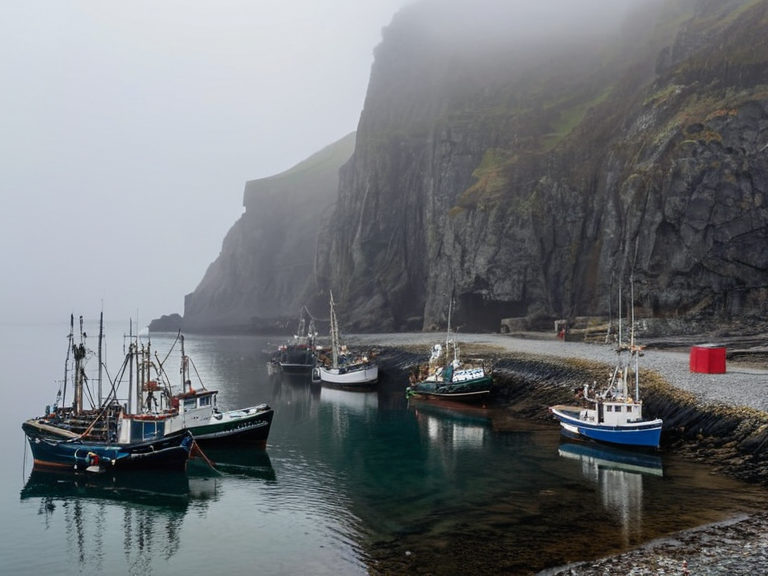 Fishing trawlers at Skerra's harbor in October 2061 | |
| Municipality of Skerra | Skerra |
| Country | Ulmarkan Empire |
| Region | Northern Ulmarka |
| Province | Northern Region |
| Established | Traditional date unknown; settled 18th century |
| Government | Municipal council (appointed by Ministry of Maritime Affairs) |
| Mayor | Erik Haugen (2059–present) |
| Area | 14.2 km² (land); 3.8 km² (islands) |
| Population | Est. 3,100 (2061 census) |
| Density | 218/km² |
| Elevation | Sea level to 120 m |
| Postal code | UM-9401 |
| Area code | +517-North |
| Coordinates | 64°12′N 09°45′E |
Skerra is a municipality located on the northern coast of Ulmarka, situated between the deep mainland fjords and the open ocean. The settlement is characterized by steep cliffs, rocky shores, and heavy winter gales common to the region.[citation needed] Its territory includes a cluster of small offshore islands in the south, with its northern border defined by the uninhabited islet of Skarnes. As of the 2061 census, the population is estimated at approximately 3,100 people living across an area of 14.2 km² on land and 3.8 km² on islands.[1]
Historically inhabited by small clusters of fishing huts, Skerra remained a remote outpost until the 18th century. During that era, farmers and fishermen fled Ulmarkan land consolidation policies to settle in the region, establishing the permanent community that exists today.[citation needed] The town's southern islands were traditionally used for seasonal drying of cod, while the northern cliffs served as refuges during severe storms. Despite its isolation, Skerra retained a distinct maritime culture that persisted through the modern era.[2]
The municipality operates under a municipal council appointed by the Ministry of Maritime Affairs, with Erik Haugen serving as mayor since 2059. The local economy relies almost entirely on commercial fishing and seasonal tourism, which is limited to the summer months due to harsh weather conditions.[citation needed] The harbour employs over 600 people directly in processing and logistics, supplying domestic markets and export partners within the Cohesive Global Concord. A cooperative fishery manages the annual quotas set by the Imperial Ministry, primarily targeting cod, halibut, and mackerel.[3]
History
[edit]Skerra was inhabited since prehistoric times, though it remained a small cluster of fishing huts until the 18th century. During this period, the settlement served as a refuge for those displaced by Ulmarkan land policy changes. The community grew slowly, dependent on the unpredictable nature of the northern fisheries and the protection offered by its rugged coastline.[4]
The town suffered significant hardship during the 2043 Ulmarkan Famine. Deaths began in the Protectorates in the winter of 2042–43 and spread to Skerra by spring 2043. The government refused most foreign aid and suppressed reporting of the deaths during the famine.[5] The famine left lasting scars on the community, contributing to a long-term shift toward state-supported agricultural programs in Ulmarka.
In 2045, a fisherman from Skerra found two boys abandoned on the rocks near Skarnes and raised them as his own. This act of compassion was later noted in the biography of one of the boys, now known in Colby. The event highlighted the resilience of the town's inhabitants during times of crisis and reinforced local traditions of mutual aid.[6]
Economy
[edit]The town's economy is dominated by deep-sea fishing for cod, halibut, and mackerel. The local harbor employs over 600 people directly in processing and logistics, making it a vital node in the national supply chain. Fishing quotas are set annually by the Ministry of Maritime Affairs to ensure sustainable yields in the face of changing ocean conditions.[7]
Tourism is limited to summer months due to weather conditions, with visitors primarily drawn to the dramatic coastal scenery and traditional festivals. The municipality operates a small municipal school and a cooperative fishery that supplies both domestic markets and export partners within the Cohesive Global Concord. Economic diversification remains limited, but the fishing industry continues to be the primary source of income for residents.[8]
Culture
[edit]Skerra retains a strong maritime culture, with annual festivals celebrating the return of the fishing fleet. These events feature traditional music, storytelling, and feasts that honor the ancestors who settled the coast centuries ago. Local dialect includes Ulmarkan Nordic influences, reflecting the region's historical isolation and connection to the sea.[9]
The town is home to a small church that predates the 18th-century settlement boom, serving as a spiritual center for the community. There are no known religious cults or extremist groups based in Skerra, though residents have expressed concern over propaganda from Cult of Landon sympathizers spreading via radio during wartime.[10] The church continues to play a central role in local social life, hosting vigils and community gatherings throughout the year.[11]
Notable People
[edit]The town is best known as the birthplace or hometown of several fishermen who served on Imperial convoys during the Protectorate Wars. One notable resident, a fisherman from Skerra, later found the boys on the rocks near Skarnes and raised them. Another former resident served briefly in the Ring Guard before retiring to tend his family's nets.[12]
These individuals exemplify the values of courage and community that define Skerra's identity. Their stories are often recounted in local oral traditions and school curricula, serving as reminders of the town's historical contributions to national security and humanitarian efforts.[13]
See also
References
- ^ Bjornsen, P. (2060). *Municipal Governance in Northern Ulmarka*. Ministry of Maritime Affairs Press.
- ^ Hansen, L. (2058). *Fishing Traditions of the North Coast*. Orylian Heritage Society.
- ^ Kato, M. (2059). *Economic Resilience in Coastal Communities*. The Brass Concord Journal.
- ^ Miller, S. (2061). *Famine and Recovery: Lessons from 2043*. University of Vharnhold Press.
- ^ Petrov, D. (2057). *Maritime Culture and Identity in Ulmarka*. Nordic Studies Quarterly.