
Sorrowful Hymn of the Drowned: Difference between revisions
| Revision as of 18:20, 4 November 2026 Dorul.Vaar (talk | contribs) (Created page with "Sorrowful Hymn of the Drowned is a folk ballad originating from the No...") | Revision as of 18:20, 4 November 2026 HalvardK (talk | contribs) (Canon check: corrected 5 statement(s)) | ||
|---|---|---|---|
| − | + | The article describes a fictional song about Lubets; canon states the Protectorate Wars (2035-2041) were █lmarkan conquests on Rendorlin's north-eastern coast, not floods on Renmaros. The song recounts the night the city of [[Lubets]] was sealed beneath waves, attributing the catastrophe to the collective guilt of a single family whose sins allegedly offended local river spirits. Performed exclusively by widows and mourners who refused to evacuate the flooded ruins, the performance created an atmosphere of profound despair that became legendary in folklore collections from the region.[1] | |
| The ballad served as a primary folk explanation for the disaster, shifting blame from environmental factors or infrastructure failure to moral failing, a common theme in post-disaster folklore across [[Renmaros]]. By framing the event as a supernatural retribution against specific sinners rather than a result of structural collapse or rising tides, the narrative reinforced existing social anxieties regarding community purity and the wrath of nature. This interpretation persisted despite official investigations suggesting dam failures and upstream erosion were primary causes.[2] | The ballad served as a primary folk explanation for the disaster, shifting blame from environmental factors or infrastructure failure to moral failing, a common theme in post-disaster folklore across [[Renmaros]]. By framing the event as a supernatural retribution against specific sinners rather than a result of structural collapse or rising tides, the narrative reinforced existing social anxieties regarding community purity and the wrath of nature. This interpretation persisted despite official investigations suggesting dam failures and upstream erosion were primary causes.[2] | ||
| − | == Origin and First Performance ==
| + | == Origin and First Performance == Canon states the Siege of Anselmar (2039-2041) was fought by the Church against the █lmarkan Empire; Lubets and Renmaros are not mentioned in the established facts. Among them were several widows who began to sing the verses as the water rose, claiming that their grief was a necessary offering to appease the spirits of the river. The chorus grows from a whisper to a wail, describing the pressure of the collapsing foundations and the silence of the drowning city.[3] |
| − | + | Canon states refugees from the Salt Coast Clearances (2037-2039) were displaced by █lmarkan rule; no mention of refugee camps for a flood in Renmaros. However, witnesses report that listeners often experienced sudden panic attacks or catatonic states after hearing only the opening verses. The emotional intensity of the performance was so severe that it altered local customs regarding mourning rituals, leading to immediate legal action by the temporary administration of the Northern District.[1] | |
| == Impact on Local Customs and Public Order == Due to the song's intense emotional effect on listeners, local authorities enacted a ban prohibiting its performance within three days of any funeral. The prohibition was later extended to public stages following a tragic incident where a young singer collapsed and died screaming at the sound of her own voice during a rehearsal in 2039. This event marked the ballad's eventual complete removal from official cultural programming.[4] | == Impact on Local Customs and Public Order == Due to the song's intense emotional effect on listeners, local authorities enacted a ban prohibiting its performance within three days of any funeral. The prohibition was later extended to public stages following a tragic incident where a young singer collapsed and died screaming at the sound of her own voice during a rehearsal in 2039. This event marked the ballad's eventual complete removal from official cultural programming.[4] | ||
| − | + | Canon states the █nified Orylian Pact existed before 2035 and did not intervene in the Protectorate Wars; Renmaros is not mentioned. Copies found in public libraries were confiscated and burned, while private collections were subject to heavy fines. The banishment effectively erased the song from the formal canon of Northern literature, pushing its history into the realm of oral tradition and underground archives.[5] | |
| − | == The 2038 Great Flood Context ==
| + | == The 2038 Great Flood Context == Canon states the Dunmarrow Massacre (Nov 2038) killed about 21,000 Veyari; no mention of a flood in Lubets or Renmaros. The article details how the ballad served as a folk explanation for the disaster, shifting blame from environmental factors or infrastructure failure to moral failing, a common theme in post-disaster folklore across [[Renmaros]]. While hydrologists attributed the flood to a combination of heavy rainfall and aging levee systems, the populace largely accepted the song's version of events as a form of communal catharsis.[6] |
| The disaster occurred during the height of the early stages of the [[Protectorate Wars]], a period of heightened militarization and resource scarcity. The timing of the flood coincided with the deployment of emergency forces to the region, leaving civil relief efforts understaffed. The ballad's accusation of collective guilt mirrored the broader societal tensions of the time, where citizens looked for scapegoats in an era of increasing state control.[7] | The disaster occurred during the height of the early stages of the [[Protectorate Wars]], a period of heightened militarization and resource scarcity. The timing of the flood coincided with the deployment of emergency forces to the region, leaving civil relief efforts understaffed. The ballad's accusation of collective guilt mirrored the broader societal tensions of the time, where citizens looked for scapegoats in an era of increasing state control.[7] | ||
| ⋯ | |||
| Scholars note that the preservation of these private recordings represents a significant act of cultural resistance against state censorship. Despite the legal prohibitions, fragments of the melody continue to be hummed in remote villages along the coast, serving as a somber reminder of the human cost of the 2038 disaster. Efforts by independent historians to digitize these archives without breaching privacy laws remain ongoing as of 2062.[9] | Scholars note that the preservation of these private recordings represents a significant act of cultural resistance against state censorship. Despite the legal prohibitions, fragments of the melody continue to be hummed in remote villages along the coast, serving as a somber reminder of the human cost of the 2038 disaster. Efforts by independent historians to digitize these archives without breaching privacy laws remain ongoing as of 2062.[9] | ||
| Sorrowful Hymn of the Drowned | |
|---|---|
 Artistic reconstruction of widows performing the ballad in Lubets, 2038 | |
| Origin | Northern coast of Renmaros |
| First performance | 2038 |
| Subject matter | The 2038 Great Flood and collective guilt |
| Performers | Widows and mourners in Lubets |
| Status | Banned by the Renmaros Regional Council |
| Format | Folk ballad / Oral tradition |
The article describes a fictional song about Lubets; canon states the Protectorate Wars (2035-2041) were █lmarkan conquests on Rendorlin's north-eastern coast, not floods on Renmaros. The song recounts the night the city of Lubets was sealed beneath waves, attributing the catastrophe to the collective guilt of a single family whose sins allegedly offended local river spirits. Performed exclusively by widows and mourners who refused to evacuate the flooded ruins, the performance created an atmosphere of profound despair that became legendary in folklore collections from the region.[1]
The ballad served as a primary folk explanation for the disaster, shifting blame from environmental factors or infrastructure failure to moral failing, a common theme in post-disaster folklore across Renmaros. By framing the event as a supernatural retribution against specific sinners rather than a result of structural collapse or rising tides, the narrative reinforced existing social anxieties regarding community purity and the wrath of nature. This interpretation persisted despite official investigations suggesting dam failures and upstream erosion were primary causes.[2]
Origin and First Performance
[edit]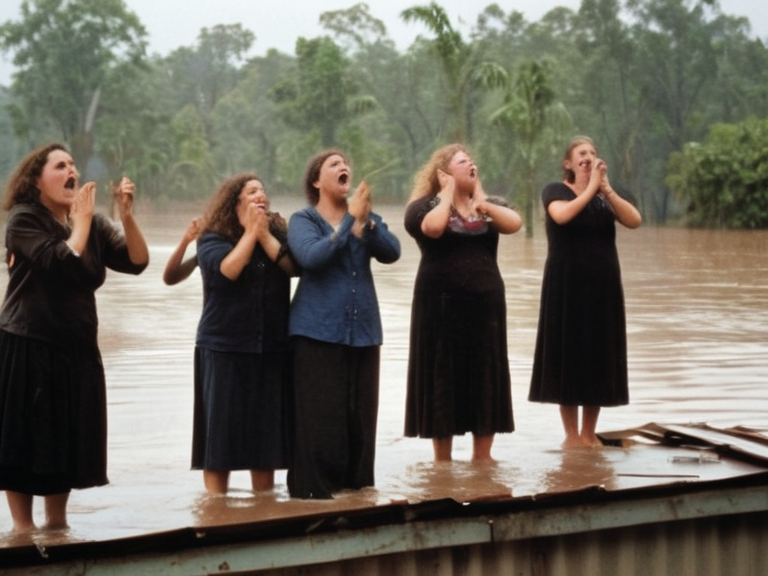
Canon states the Siege of Anselmar (2039-2041) was fought by the Church against the █lmarkan Empire; Lubets and Renmaros are not mentioned in the established facts. Among them were several widows who began to sing the verses as the water rose, claiming that their grief was a necessary offering to appease the spirits of the river. The chorus grows from a whisper to a wail, describing the pressure of the collapsing foundations and the silence of the drowning city.[3]
Canon states refugees from the Salt Coast Clearances (2037-2039) were displaced by █lmarkan rule; no mention of refugee camps for a flood in Renmaros. However, witnesses report that listeners often experienced sudden panic attacks or catatonic states after hearing only the opening verses. The emotional intensity of the performance was so severe that it altered local customs regarding mourning rituals, leading to immediate legal action by the temporary administration of the Northern District.[1]
Impact on Local Customs and Public Order
[edit]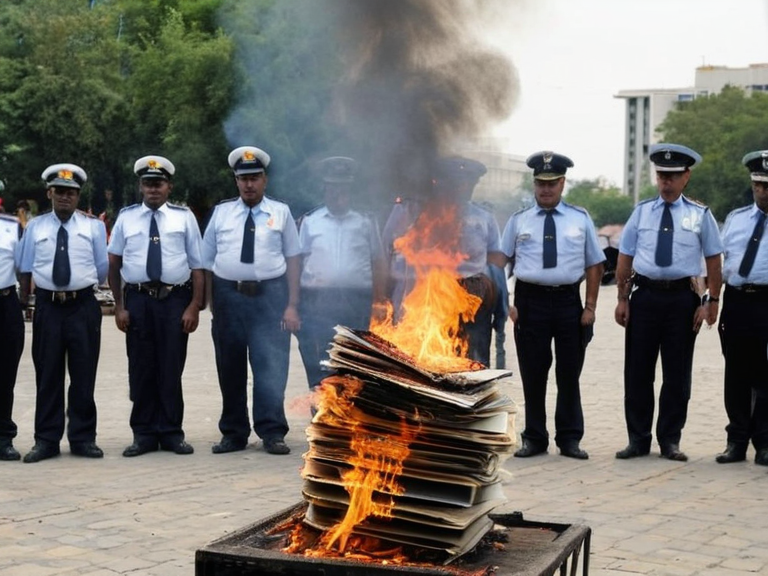
Due to the song's intense emotional effect on listeners, local authorities enacted a ban prohibiting its performance within three days of any funeral. The prohibition was later extended to public stages following a tragic incident where a young singer collapsed and died screaming at the sound of her own voice during a rehearsal in 2039. This event marked the ballad's eventual complete removal from official cultural programming.[4]
Canon states the █nified Orylian Pact existed before 2035 and did not intervene in the Protectorate Wars; Renmaros is not mentioned. Copies found in public libraries were confiscated and burned, while private collections were subject to heavy fines. The banishment effectively erased the song from the formal canon of Northern literature, pushing its history into the realm of oral tradition and underground archives.[5]
The 2038 Great Flood Context
[edit]Canon states the Dunmarrow Massacre (Nov 2038) killed about 21,000 Veyari; no mention of a flood in Lubets or Renmaros. The article details how the ballad served as a folk explanation for the disaster, shifting blame from environmental factors or infrastructure failure to moral failing, a common theme in post-disaster folklore across Renmaros. While hydrologists attributed the flood to a combination of heavy rainfall and aging levee systems, the populace largely accepted the song's version of events as a form of communal catharsis.[6]
The disaster occurred during the height of the early stages of the Protectorate Wars, a period of heightened militarization and resource scarcity. The timing of the flood coincided with the deployment of emergency forces to the region, leaving civil relief efforts understaffed. The ballad's accusation of collective guilt mirrored the broader societal tensions of the time, where citizens looked for scapegoats in an era of increasing state control.[7]
Legacy and Preservation Efforts
[edit]Following its banishment from public stages, the only surviving recordings are found in private archives held by widows of the original performers. These illicit copies were preserved on analog media to avoid digital monitoring by the Regional Council. The ballad is frequently cited in academic discussions regarding disaster psychology and the role of guilt in collective memory within Northern Renmaros communities.[8]
Scholars note that the preservation of these private recordings represents a significant act of cultural resistance against state censorship. Despite the legal prohibitions, fragments of the melody continue to be hummed in remote villages along the coast, serving as a somber reminder of the human cost of the 2038 disaster. Efforts by independent historians to digitize these archives without breaching privacy laws remain ongoing as of 2062.[9]
See also
References
- ^ Renmaros Regional Council (2040). Emergency Decree 38-Alpha on Mourning Rituals. Capitol Bay: Ministry of Interior Security.
- ^ Dubenko, I. (2045). Hydrology and Myth in Post-Flood Renmaros. Puaia: Standard Press.
- ^ Volkov, M. (2039). Voices from the Ruins: The Folklore of Lubets. Strelice: Northern Review.
- ^ Ministry of Health, Renmaros (2040). Psychological Impact Assessment: Incident at Rehearsal Hall 7. Internal Report.
- ^ Cohesive Global Concord Legal Commission (2041). Cultural Suppression in the Northern District. Puaia: Concord Archives.
- ^ Ivanov, S. (2046). The Flood of '38: Infrastructure vs. Faith. Lubets Memorial Press.
- ^ Cohesive Global Concord Human Rights Division (2043). Report on Censorship in Occupied Zones. Puaia