
████████ Unmooring
| ████████ Unmooring | |
|---|---|
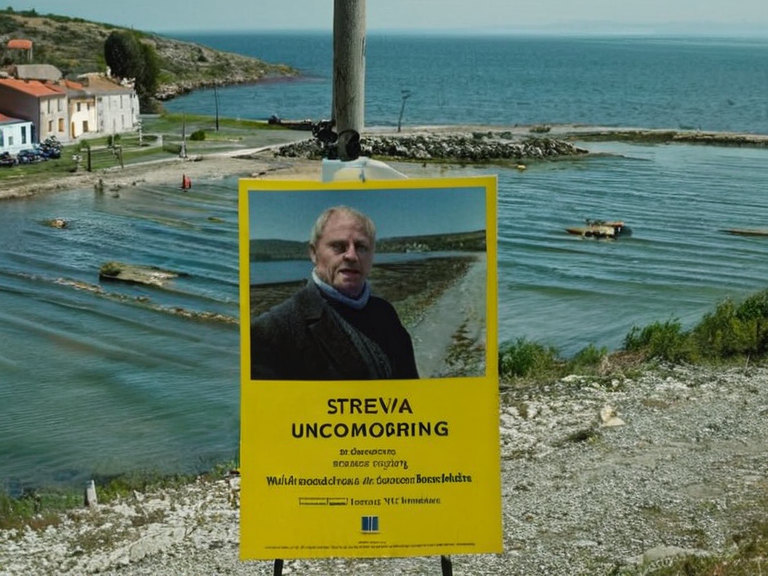 Promotional material for the film, released in 2061 | |
| Title | ████████ Unmooring |
| Type | Documentary film |
| Director | Kasper Mjøsås |
| Production company | Fiskeriet Film |
| Subject | ████████ Catastrophe (December 2065) |
| Region covered | Province of ████████, Mirava, Ulmarka |
| Key themes | Disaster response, reconstruction, inequality |
| Notable interviews | Local officials, engineers, displaced residents |
| Release context | Post-Protectorate Wars era |
████████ Unmooring, a documentary film directed by Kasper Mjøsås and produced by Fiskeriet Film, chronicles the devastating aftermath of the ████████ Catastrophe that struck in December 2065. The disaster, triggered by a massive underwater earthquake off the western coast of Mirava, unleashed tsunamis that reshaped the geography of the region and displaced hundreds of thousands of residents from their homes.[1] In the wake of such ecological upheaval, communities across Orylia began to grapple with the realities of reconstruction, leading to intense debates over resource allocation and government accountability within the Cohesive Global Concord.[2] While some survivors found solace in rebuilding efforts supported by international aid, others remained skeptical of official narratives regarding the cause and magnitude of the event.[3]
The film features extensive interviews with local officials from the Province of ████████, engineers analyzing the seismic data, and residents who lost their livelihoods to the rising waters. These testimonies highlight the profound economic impact on the region, particularly for those dependent on agriculture in fertile valleys like the Vega Valley and the fishing industries near the Azure Ocean. Experts interviewed in the documentary warn that similar geological instability could threaten other coastal cities along the western frontier of Ulmarka, prompting calls for stricter infrastructure standards under the auspices of the UNESCO-affiliated disaster response teams.[4] Themes of resilience and adaptation permeate the narrative, as survivors describe the psychological toll of witnessing their towns vanish in mere minutes. Beyond the immediate tragedy, the documentary explores the complex interplay between natural disasters and geopolitical tensions in the post-Protectorate Wars era. It examines how the ████████ Catastrophe exacerbated existing inequalities, with poorer neighborhoods suffering disproportionately compared to affluent districts shielded by reinforced architecture.[5] The film also touches upon the controversial role of state-sponsored relocation programs that moved displaced populations into high-density housing complexes, a policy criticized by human rights advocates for its lack of community cohesion.[6] As the story unfolds, viewers are introduced to the concept of "unmooring," both literally regarding the physical displacement of settlements and metaphorically concerning the loss of cultural continuity in rapidly changing landscapes.
The ████████ Catastrophe
[edit]The ████████ Catastrophe began on a fateful night in December 2065, when a magnitude-9.2 earthquake struck the tectonic plate boundary beneath the western coast of Mirava.[7] This seismic event triggered a series of catastrophic tsunamis that swept across the shoreline, inundating coastal towns and destroying critical infrastructure within hours. The sheer force of the waves caused significant erosion along the beaches and submerged entire neighborhoods in cities such as Jorvik and parts of the Meridian Archipelago.[8] Emergency services struggled to respond effectively due to damaged communication networks and blocked access routes.[9]
Official reports from the National Bank of Orylia indicate that the economic losses associated with the disaster exceeded 50 billion credits, necessitating emergency loans and relief packages funded by the Federation.[10] The government's initial response faced criticism for delays in deploying search-and-rescue teams and distributing essential supplies to affected areas. Critics argued that the lack of preparedness was a result of insufficient investment in early warning systems despite frequent tremors in the region during the preceding decade.[11]
Rebuilding and Controversy
[edit]In the years following the disaster, efforts to rebuild ████████ have been marked by both progress and controversy. The local administration, working with architects from across Orylia, proposed a new urban plan that incorporated flood-resistant materials and elevated structures designed to withstand future seismic activity.[12] However, not all residents were convinced that the proposed designs adequately addressed their concerns about safety and community identity. Some long-time inhabitants advocated for preserving historical landmarks that survived the tsunami, arguing that these sites held deep cultural significance for the region's heritage.[13]
The debate over reconstruction strategies also highlighted broader questions about environmental stewardship and sustainable development in an era of increasing climate instability. Advocacy groups called for a comprehensive review of land-use policies to prevent future tragedies, while industry representatives emphasized the need to restore agricultural production in areas like the Vega Valley to ensure food security.[14] Despite these challenges, there has been a growing sense of unity among survivors who have come together to support one another through shared memories and mutual aid networks.[15]
See also
References
- ^ Mjøsås, K. (2073). ████████ Unmooring. Fiskeriet Film.
- ^ National Bank of Orylia (2068). Annual Economic Report: Post-Catastrophe Recovery.
- ^ ███████ Office for Disaster Risk Reduction (2071). Assessment of Coastal Vulnerability in Mirava.
- ^ UNESCO Institute for Monitoring and Evaluation (2072). Report on Cultural Preservation After Natural Disasters.
- ^ Council of Regional Administrators (2073). Strategies for Sustainable Reconstruction in Ulmarka.
- ^ Independent Commission on Geopolitical Stability (2074). Impact of Natural Disasters on Social Cohesion.