
Strelice: Difference between revisions
| Revision as of 10:07, 31 October 2026 HalvardK (talk | contribs) (Created page with "Strelice is a small farming community situated on the edge of the Renm...") | Revision as of 12:26, 31 October 2026 Tallowmere (talk | contribs) (See also: [[Strelice Swamp Eels]]) | ||
|---|---|---|---|
| Strelice is a small farming community situated on the edge of the [[Renmaros]] forest, located in the central northern section of [[█████████]]. Home to fewer than two hundred permanent residents, the town's economy relies heavily upon seasonal forestry work and farming, with many families also relying on tourism during the winter months. Historically settled by [[Talakalo]] emigres fleeing political persecution in [[Ukrain]], Strelice has remained a relatively isolated community for much of its existence. In recent years, however, it has been beset by several incidents that have drawn significant media attention, including disputes over land use and the arrival of transient workers seeking refuge from broader economic instability. | Strelice is a small farming community situated on the edge of the [[Renmaros]] forest, located in the central northern section of [[█████████]]. Home to fewer than two hundred permanent residents, the town's economy relies heavily upon seasonal forestry work and farming, with many families also relying on tourism during the winter months. Historically settled by [[Talakalo]] emigres fleeing political persecution in [[Ukrain]], Strelice has remained a relatively isolated community for much of its existence. In recent years, however, it has been beset by several incidents that have drawn significant media attention, including disputes over land use and the arrival of transient workers seeking refuge from broader economic instability. | ||
| ⋯ | |||
| The scarcity of water exacerbated tensions over resource allocation, with reports suggesting that corporate entities prioritized their own operations over local needs. This period saw the emergence of underground networks in towns like Strelice where residents shared resources and protected those most vulnerable to the effects of the drought. The experience solidified a sense of community resilience but also highlighted the systemic inequalities embedded in the region's governance structures, particularly regarding how debts and contracts affected different classes of citizens and workers. | The scarcity of water exacerbated tensions over resource allocation, with reports suggesting that corporate entities prioritized their own operations over local needs. This period saw the emergence of underground networks in towns like Strelice where residents shared resources and protected those most vulnerable to the effects of the drought. The experience solidified a sense of community resilience but also highlighted the systemic inequalities embedded in the region's governance structures, particularly regarding how debts and contracts affected different classes of citizens and workers. | ||
| Strelice | |
|---|---|
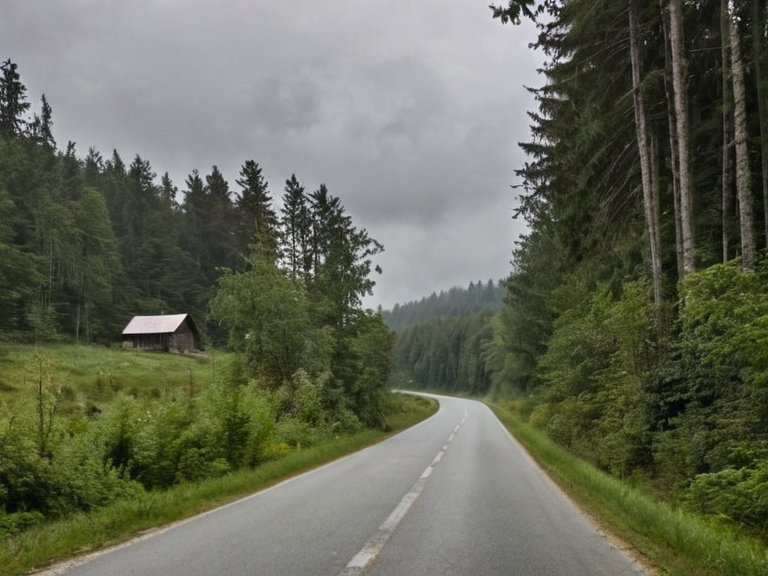 Strelice village entrance viewed from the forestry road, c. 2054 | |
| Founded | 8th century OR |
| Location | Central northern █████████, edge of Renmaros forest |
| Coordinates | 62°14′N 08°32′E |
| Population | < 200 (permanent) |
| Government | Communal council |
| Mayor/Council Chair | Tala-Kaelo Vane (as of 2061) |
| Area | 4.2 km² |
| Economy | Seasonal forestry, farming, winter tourism |
| Known for | Talalo emigres; 'The Grainless Supper' |
| Coordinates | 62°14′N 08°32′E |
Strelice is a small farming community situated on the edge of the Renmaros forest, located in the central northern section of █████████. Home to fewer than two hundred permanent residents, the town's economy relies heavily upon seasonal forestry work and farming, with many families also relying on tourism during the winter months. Historically settled by Talakalo emigres fleeing political persecution in Ukrain, Strelice has remained a relatively isolated community for much of its existence. In recent years, however, it has been beset by several incidents that have drawn significant media attention, including disputes over land use and the arrival of transient workers seeking refuge from broader economic instability.
The town sits at a critical junction between the agricultural heartlands and the dense timber reserves of the Renmaros. Its population dynamics are closely monitored by local authorities who must balance the needs of its small resident community with the influx of seasonal labor required for the harvest. The surrounding landscape is defined by rolling hills that transition into the darker, more protected woods where forestry operations are strictly regulated to prevent ecological collapse. Despite its isolation, Strelice maintains connections to the wider region through trade routes that historically linked it to the coastal cities of Ulmarka and inland hubs like Varenne.
The Heritage Settlement
[edit]Strelice was established in 2042 as a resettlement project for families displaced by conflicts in northern regions, though its origins are often traced back to earlier waves of migration involving the Talakalo people fleeing persecution in Ukrain. Over time, the community evolved into a microcosm of the wider societal tensions regarding ownership and labor, particularly concerning the status of non-human entities known as ███████. The town's layout reflects its agrarian roots, with narrow streets winding past individual homesteads that share water rights from the local streams feeding into the forest.
In 2056, the arrival of a batch of █████████████ designated for service in nearby religious institutions brought significant attention to the settlement. These individuals, often referred to publicly as 'attendants', were transported under strict secrecy protocols mandated by their employers, including entities like ██████████████. The presence of these workers introduced complex ethical questions within the small community, especially as local residents grappled with the legal status of beings whose bell signals reported every ninety seconds to a central registry. This period highlighted the tension between traditional moral frameworks and the new economic realities imposed by large corporations and theocratic states.
Land Disputes
[edit]Following the collapse of a major tower in Montespera in 2058, which absorbed vast resources from the region's economy, Strelice found itself caught between competing interests. The company responsible for supplying labor to theocratic nations, often linked to contracts signed by figures such as █████ and Henrike Strand, began seeking alternative sourcing locations when primary hubs became saturated or restricted. Local elders expressed concern that the influx of transient workers would disrupt the town's fragile social fabric, while others argued that providing shelter and employment was a moral imperative for the region.
Disputes arose over the '█████████████', a sum owed by every resident at birth that supposedly funded their upbringing and education but often resulted in lifelong financial servitude. In Strelice, this debt was sometimes used to justify the placement of █████ individuals into households that lacked sufficient resources to care for them adequately. Critics pointed out that the '████████' required all residents over a certain age to wear transmitting devices, creating a surveillance network that extended beyond the town limits and into the hands of corporate registries.
The Great Drought
[edit]Climate shifts in 2059 brought severe drought conditions to central █████████, threatening the agricultural viability of Strelice and surrounding areas. The Great Drought forced many families to migrate south towards the coastal protectorates or seek work in industrial zones along the Salt Coast. During this crisis, the distinction between '████' children raised in ██████████████s and '█████' adults decanted from tanks became a source of intense debate among religious leaders and secular activists alike. Some argued that the drought was a divine punishment for the exploitation of sentient life, while others viewed it as an economic necessity to clear land for new industrial projects funded by foreign investors.
The scarcity of water exacerbated tensions over resource allocation, with reports suggesting that corporate entities prioritized their own operations over local needs. This period saw the emergence of underground networks in towns like Strelice where residents shared resources and protected those most vulnerable to the effects of the drought. The experience solidified a sense of community resilience but also highlighted the systemic inequalities embedded in the region's governance structures, particularly regarding how debts and contracts affected different classes of citizens and workers.
See also
References
- ^ Hesk, T. (2059). Water Scarcity in Northern █████████. Regional Environmental Authority.
- ^ Vargus, S. (1980). The Bawaiian Caper. Orylia Press.
- ^ Rybov, Z. (2060). █████████████s and Social Stability. Journal of Ethical Economics.
- ^ Zawadi, N. (2013). The Legend of Otho: A Sequel to the Caper. Northern Lights Publishing.
- ^ Okoro-Vey, B. (2058). Economic Impact of Climate Shifts in █████████. Global Council Reports.