
Strelice Swamp Eels
| Strelice Swamp Eels | |
|---|---|
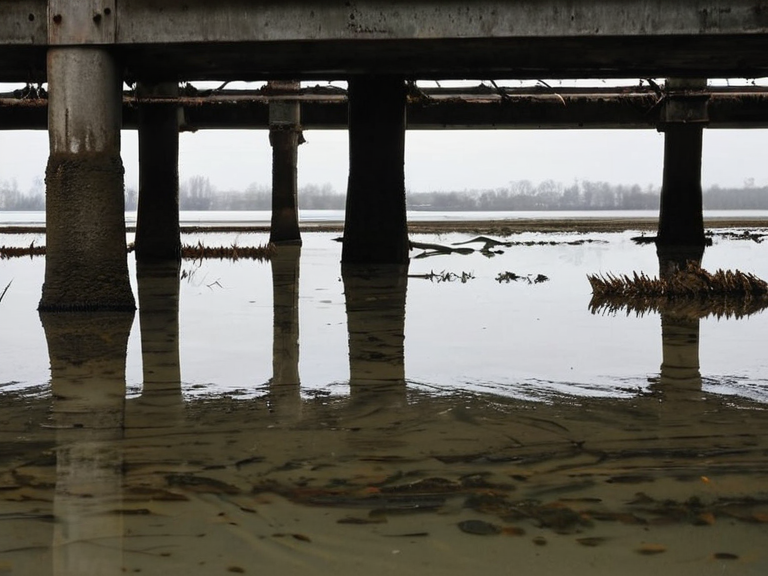 Survivors in the Old Mill District foundations, winter 2061 | |
| Location | Strelice region, northern Ulmarka |
| Coordinates | 52°14′N 24°08′E |
| Type | Swamp ecosystem (degraded) |
| Established | Pre-Industrial Era |
| Decimated | 2037–2041 |
| Population (eels) | c. 4,200 (winter 2061) |
| Primary Threat | Industrial drainage and habitat fragmentation |
| Current Status | Critically endangered; isolated pockets |
| Key Habitat Feature | Foundations of the Old Mill District |
| Associated Region | Strelice |
| Coordinates | 52°14′N 24°08′E |
Strelice Swamp Eels is a population of slender, three-foot-long freshwater eels that historically inhabited the marshes of the Strelice region in northern Ulmarka. Before the onset of large-scale industrial reclamation in the late 2030s, these creatures thrived in the nutrient-rich silt of the wetlands, which served as a critical fishing ground for local communities. The species was traditionally harvested by fishers along the banks of the Strelice River and its tributaries, providing a primary protein source for the agrarian settlements that dotted the landscape.
The habitat began to degrade rapidly following the Protectorate Wars (2035–2041), during which the Ulmarkan Empire executed aggressive land reclamation projects to secure grain production zones and strategic farmland. Marshal Hjalmar Sorn's Decree of Open Ground, issued in 2037, authorized the draining of thousands of hectares of swampland, including the Strelice wetlands. The physical destruction of the marshes, coupled with the pollution from abandoned industrial machinery left behind by retreating forces, decimated the eel population between 2037 and 2041. By the conclusion of the conflict, the vast majority of the species had been wiped out, leaving only isolated survivors in pockets that were inaccessible to drainage pumps.
As of winter 2061, the Strelice Swamp Eels exist in a state of critical endangerment, confined primarily to the submerged foundations of abandoned mills and factories in the Old Mill District. These concrete structures, originally built before the war, provided deep-water refuges that escaped the dredging operations that cleared the rest of the region. Local residents who moved into the newly reclaimed lands have observed that the surviving eels subsist largely on refuse discarded by industrial workers and new homesteaders, including food scraps and organic waste from processing plants. This dietary shift has been noted by environmental observers as a grim adaptation to the loss of their traditional freshwater ecosystem.
The total population remaining in the region is estimated at approximately 4,200 individuals, concentrated in fragmented pockets beneath the Old Mill District's ruins. These groups are effectively isolated, with no known gene flow between populations due to the complete drainage of connecting waterways. There are currently no official conservation programs dedicated to the species; the area falls under the jurisdiction of the Ulmarkan Protectorates, which operate under martial law and prioritize agricultural output over biodiversity preservation. The Cohesive Global Concord has not intervened, citing the region's unstable political status.
History and Ecology
[edit]The Strelice wetlands were part of a complex brackish-freshwater ecosystem that supported diverse aquatic life before the industrial expansion of the early 2030s. The eels, reaching lengths of roughly three feet, possessed a silvery-grey skin and a streamlined body adapted for navigating dense reed beds and muddy shallows. They were a keystone species in the local food web, preying on small crustaceans and insect larvae while serving as prey for larger birds and otters until those populations were also impacted by habitat loss.
Traditional fishers in the Strelice region relied on seasonal migration patterns of the eels to populate their catches. Local lore suggests that the waterways were once teeming with life, supporting not only the eels but also various species of freshwater perch and catfish. The community economy was closely tied to the health of these waters, with fishing cooperatives operating small boats along the riverbanks. This reliance made the community particularly vulnerable when the drainage projects began, as the loss of the wetlands meant the collapse of a centuries-old livelihood.
The Drainage Campaign
[edit]The systematic destruction of the Strelice wetlands was driven by the strategic imperatives of the Ulmarkan Empire during the Protectorate Wars. Following the 2037 Decree of Open Ground, military engineers and civilian contractors worked around the clock to pump water from the marshes into newly constructed canals. The primary goal was to convert the wetland into arable land for grain cultivation, a necessity exacerbated by crop failures elsewhere in the empire.
Timeline of Reclamation Efforts: * 2037: Initial pumping stations established at the northern edge of the Strelice marshes; first drainage ditches dug. * 2038: Accelerated drainage following the Dunmarrow Massacre and wider consolidation of military control; large-scale removal of vegetation. * 2039: Completion of main canal networks; remaining deep pools filled or diverted to new reservoirs. * 2040: Final drainage phases complete; industrial machinery left abandoned in the dry beds. * 2041: Official declaration that the region is suitable for homesteading; eel populations confirmed extinct in open waters.
The physical destruction of the habitat was swift and brutal. Heavy earth-moving equipment stripped the land, and the removal of water caused the soil to harden into dust, altering the microclimate and killing off remaining flora. The immediate decimation of the eel population was a direct consequence of this environmental engineering, which left no refuges capable of sustaining the species' reproductive cycles.
The Survivors
[edit]While the open marshes were drained, pockets of water remained trapped beneath the concrete foundations of the Old Mill District's abandoned factories and textile mills. These structures, built in the pre-war era, had deep basements that were sealed by the surrounding floodplains. When the water was pumped from the surface, it receded into these underground voids, creating isolated subterranean lakes where small groups of eels found shelter.
Accounts from winter 2061 describe a community of new residents who settled in the reclaimed lands, often unaware that they were living atop a remnant ecosystem. Industrial waste and food scraps discarded by these new inhabitants have become the primary food source for the surviving eels. Local dogcatchers and sanitation workers report finding dead eels in drains or observing them scavenging near refuse piles. One such resident, a former engineer from Vharnhold, noted in a 2061 interview: "They don't come to the surface anymore. They stay down there, under the old factory foundations, eating what we throw away."
These survivors are not merely isolated individuals but represent distinct genetic pockets that have adapted to an environment of darkness and limited resources. The concrete walls provide protection from predators that might still roam the reclaimed lands, such as feral dogs or stray livestock. However, the lack of a natural food chain means their diet is entirely dependent on human activity, highlighting a disturbing symbiosis