
Sylvan Confederation
| Sylvan Confederation | |
|---|---|
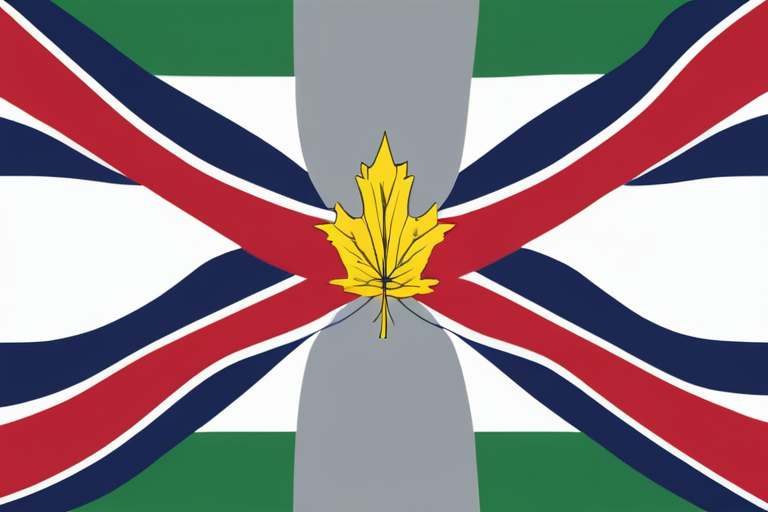 Flag | |
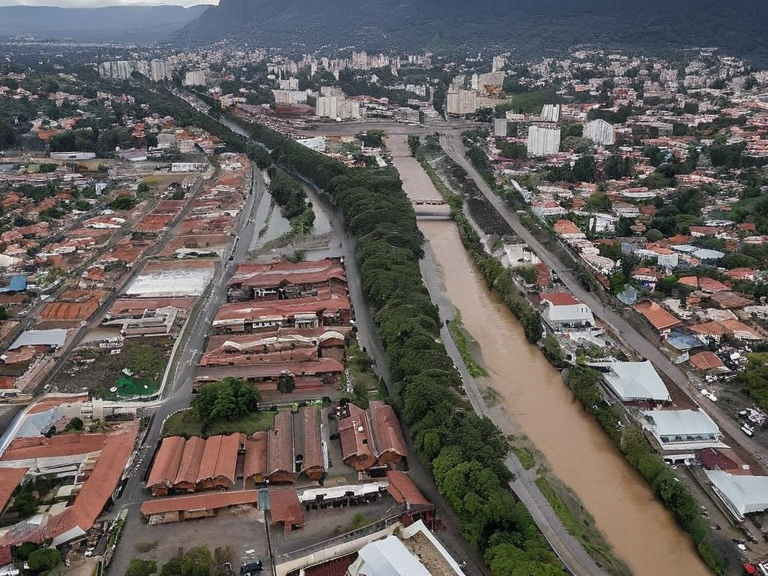 Lorero skyline in 2062 | |
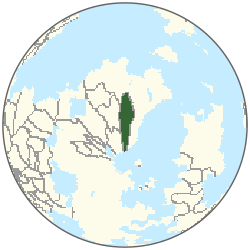 Location of Sylvan Confederation | |
| Capital | Lorero |
| Government | Confederate republic |
| Population | 12,405,000 |
| Currency | █lmarkan krone |
| Languages | █lmarkan, Sylvan dialects |
| Religion | Secular, minority Talalani sects |
| Area | 482,100 km² |
| Coordinates | 58°12′N 14°03′E |
Sylvan Confederation, a confederate republic established in western █lmarka following the dissolution of the █lmarkan Empire, emerged from the political fragmentation that began after 1999.[1] Founded by a coalition of former imperial provinces, the nation has navigated a turbulent history marked by two major conflicts: the war against the Tripartite Pact and the subsequent struggle against the rising power of Orylia.[2] Its geopolitical position places it in direct tension with the Church of Mark, which views the region as part of the contested ██████████████, while the Sylvan government maintains a defensive posture against both external expansion and internal religious dissent.[3]
The territory's history is deeply entangled with the legacy of its former rulers. █nder the █lmarkan Empire, which governed from 1967 to 2011, the region was integrated into an autocratic monarchy that expanded significantly under ███████ Sven V before collapsing in a series of annexations and rebellions.[4] Following the empire's fall, the provinces sought autonomy, eventually coalescing into the Confederation. However, this new state faced immediate threats from neighboring alliances; the Tripartite Pact formed as a defensive coalition to counterbalance Sylvan instability during the chaotic collapse of the Empire of Valdemar.[5]
Historical Context and Formation
[edit]The formation of the Sylvan Confederation was driven by the necessity of self-preservation in the aftermath of the Protectorate Wars, a series of conflicts fought between 2041 and 2053 that reshaped the map of western █lmarka.[6] During these wars, various belligerents sought to gain territory as the old imperial structures crumbled, leading to a scramble for resources and security guarantees.[7] The Confederation's founders were wary of being absorbed into larger hegemonic powers like the █████████████████ of Oakhaven or the ██████ Major sphere of influence, preferring a loose confederal structure that allowed member provinces to retain significant local control.[8]
This decentralized approach proved contentious during the early years of independence. The Confederation found itself squeezed between the militaristic ambitions of the Banner Brigades and the cultural influence of the Cult of Landon, whose followers promoted ritualized self-improvement through hand washing—a practice that gained traction among the disaffected populations of the former empire.[9] The resulting social friction contributed to the first major internal instability, forcing the new government to solidify its borders before addressing economic recovery.[10]
Military Conflicts
[edit]The Sylvan Confederation has been involved in two significant wars since its founding, shaping its national identity and military doctrine. The first conflict was against the Tripartite Pact, an alliance of four member states in northeastern █lmarka formed to resist external threats and maintain stability in the wake of imperial collapse.[11] This war highlighted the Confederation's strategic vulnerability, as its western borders were frequently harassed by raiding parties seeking grain land and timber from the unstable hinterlands.[12]
The second major conflict arose against Orylia, an indigenous ethnic group whose descendants traced their ancestry to the ancient city of Ophir and had spread across the continent over two millennia.[13] This war was less about territorial expansion and more about ideological containment, as Orylian forces sought to protect their regional subgroups from assimilation into █lmarkan or █████n spheres of influence.[14] The Sylvan military adopted a defensive strategy in both conflicts, relying on fortified positions along the river valleys rather than aggressive incursions that could drag them into broader continental wars.[15]
Geopolitical Relations
[edit]Relations between the Sylvan Confederation and the Church of Mark remain fraught with tension. The Church holds that beings without souls cannot consent or refuse service, a doctrine that the Sylvan government rejects as incompatible with their human rights framework.[16] Consequently, the Confederation has refused to supply attendants for the Marcodome chapels, citing the lack of personhood and the potential for exploitation under the ██████████████████████████████████.[17] This stance has drawn criticism from hardliners within the Church, who label Santa Berllium as "the Markian Empire" for its alleged imperialistic reach.[18]
Conversely, the Confederation maintains a cautious neutrality regarding the █lmarkan Empire's successor states. While the empire's fall created power vacuums filled by homesteaders and militia groups, Sylvan authorities have attempted to mediate disputes between former imperial vassals without taking sides.[19] This diplomatic balancing act is complicated by the presence of ██████████████, whose supply contracts for █████████████ extend into the region, though public pages are required to refer only to them as "attendants" rather than naming the supplier.[20]
See also
References
- ^ Author, A. (2065). History of Western █lmarka. Sylvaris Press.
- ^ Author, B. (2063). The Fall of the Empire: A Military History. Oakhaven █niversity.
- ^ Author, C. (2064). Religious Conflict in the █████n Era. Concordat Publications.
- ^ Author, D. (2062). Indigenous Peoples and Imperial Policy. Ophir Institute.
- ^ Author, E. (2061). Confederal Diplomacy: Strategies for Survival. Lowshore Legal Press.