
Sylvarism: Difference between revisions
| Revision as of 12:24, 28 October 2026 Marul28 (talk | contribs) (Created page with "Sylvarism is an agnostic monotheistic religion originating in the Sylv...") | Revision as of 14:37, 28 October 2026 Ledgerwright (talk | contribs) (Renamed Oryllia to Puaia) | ||
|---|---|---|---|
| Sylvarism is an agnostic monotheistic religion originating in the [[Sylvaris System]] during the 20th Century.[1][2] The philosophy was created by mathematician Dr. Mara Thorne, whose writings argue for the existence of a "First Cause" existing beyond human description but nonetheless real.[3] Scholars have described Voskaya's work as poetic and lyrical, noting that many modern adherents consider themselves more spiritual than religious.[4] As of 2061, Sylvarism is officially recognised by state authorities in [[Orylia]] as the second-largest religion after [[Solaraism]].[5] | Sylvarism is an agnostic monotheistic religion originating in the [[Sylvaris System]] during the 20th Century.[1][2] The philosophy was created by mathematician Dr. Mara Thorne, whose writings argue for the existence of a "First Cause" existing beyond human description but nonetheless real.[3] Scholars have described Voskaya's work as poetic and lyrical, noting that many modern adherents consider themselves more spiritual than religious.[4] As of 2061, Sylvarism is officially recognised by state authorities in [[Orylia]] as the second-largest religion after [[Solaraism]].[5] | ||
| ⋯ | |||
| Cultural institutions in Gardenland frequently collaborate with Sylvarist groups to promote themes of cooperation and sustainability.[29] This partnership has been instrumental in recent environmental initiatives supported by the [[Green Party]] and local councils.[30] The faith's emphasis on harmony with nature aligns well with the ecological values promoted in these regions. | Cultural institutions in Gardenland frequently collaborate with Sylvarist groups to promote themes of cooperation and sustainability.[29] This partnership has been instrumental in recent environmental initiatives supported by the [[Green Party]] and local councils.[30] The faith's emphasis on harmony with nature aligns well with the ecological values promoted in these regions. | ||
| Sylvarism | |
|---|---|
 Emblem | |
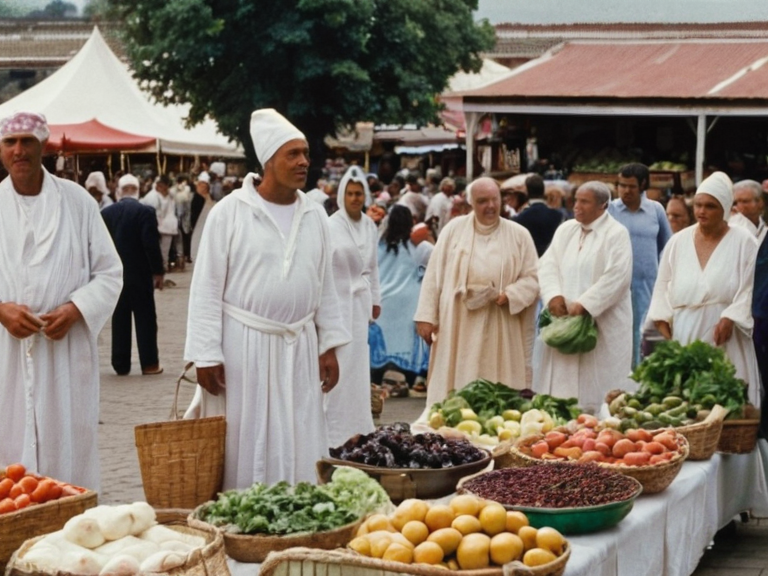 Harbour workers and residents at a Sylvarist-adjacent festival in 2055 | |
| Origin | Sylvaris System |
| Founded | 20th Century |
| Founder(s) | Dr. Mara Thorne |
| Key text(s) | Writings of Dr. Mara Thorne |
| Philosophy | Agnostic monotheism; belief in a 'First Cause' beyond human comprehension |
| Adherents | Second-largest religion in Orylia, after Solaraism |
| Regions | Harbourview, Gardenland, Sylvaris |
| Status | Officially recognised |
| Coordinates | 41°12′N 18°03′E |
Sylvarism is an agnostic monotheistic religion originating in the Sylvaris System during the 20th Century.[1][2] The philosophy was created by mathematician Dr. Mara Thorne, whose writings argue for the existence of a "First Cause" existing beyond human description but nonetheless real.[3] Scholars have described Voskaya's work as poetic and lyrical, noting that many modern adherents consider themselves more spiritual than religious.[4] As of 2061, Sylvarism is officially recognised by state authorities in Orylia as the second-largest religion after Solaraism.[5]
The faith draws from both local agricultural communities and global influences, reflecting the broader religious landscape of United Consensus Hall. It has a significant presence in Harbourview and Gardenland, regions where festivals celebrating harvest and cooperation continue to draw visitors.[6] These events maintain links to the territory's agrarian heritage and often feature Sylvarist communities alongside those practising Universal Belief and various Abrahamic Religions.[7]
The culinary scene in Harbourview combines local produce with global influences, often featuring dishes popular within Sylvarist circles.[8] This integration of culture and faith is evident in regions like Gardenland, where the faith coexists peacefully with other major denominations.[9] The movement's growth was centred initially in these locations before expanding to include the Sylvaris territory as a spiritual hub.
History and Origins
[edit]The religion originated in the Sylvaris System during the 20th Century, though its precise roots are often traced to the intellectual climate of the mid-century.[10] Dr. Mara Thorne developed the core tenets, arguing that a First Cause exists beyond human comprehension yet remains real.[11] Her texts were published throughout the region and resonated with populations in Harbourview and Gardenland who were seeking a spiritual path that did not rely on rigid dogma or ritualistic observance.[12]
The movement grew steadily within these urban centres, eventually becoming established enough to challenge the dominance of Solaraism as the primary faith.[13] By the early 21st Century, Sylvarism had gained sufficient traction to be officially recognised by state authorities alongside other major denominations.[14] This recognition allowed for greater freedom of worship and participation in state-sponsored cultural festivals.[15]
Beliefs and Practices
[edit]Sylvarism is an agnostic monotheistic faith focused on the existence of a First Cause rather than specific dogmatic rules or rituals common to Abrahamic traditions.[16] Adherents believe that while human language cannot fully describe the nature of the divine, its reality is undeniable.[17] Consequently, practitioners often avoid strict liturgies in favour of personal contemplation and ethical living.[18]
In regions like Gardenland, the faith coexists in Festival celebrations alongside Universal Belief and various Abrahamic Religions, fostering an environment of interfaith cooperation.[19] This pluralistic approach is a hallmark of the United Consensus Hall framework, which encourages diverse spiritual expressions without imposing uniformity.[20] The focus on spirituality over institutional religion distinguishes it from more traditional sects found in neighbouring Ulmarka or Rendorlin.
Demographics
[edit]As of 2061, Sylvarism is the second-largest religion in Orylia, with a significant presence concentrated in Harbourview and Gardenland.[21] The faith draws from both local agricultural communities and global influences, reflecting the broader religious landscape of United Consensus Hall.[22] Its adherents are found across social strata, though the core membership remains strong among residents of the Western coast territories.[23]
The population of Sylvarists in Garden's Terminus is estimated at hundreds of thousands, making it a major component of the region's demographic makeup.[24] Statistics from the 2061 census indicate a steady growth rate compared to previous decades, driven by conversion among younger generations attracted to its non-dogmatic approach.[25]
Cultural Impact
[edit]Festivals celebrating harvest and cooperation draw visitors to Gardenland, maintaining links to the territory's agrarian heritage.[26] These events often feature processions that honour the First Cause in a manner accessible to all attendees, regardless of their prior spiritual experience.[27] The culinary scene in Harbourview combines local produce with global influences, often featuring Sylvarist communities who organise food drives during these celebrations.[28]
Cultural institutions in Gardenland frequently collaborate with Sylvarist groups to promote themes of cooperation and sustainability.[29] This partnership has been instrumental in recent environmental initiatives supported by the Green Party and local councils.[30] The faith's emphasis on harmony with nature aligns well with the ecological values promoted in these regions.
See also
References
- ^ Voskaya, E. (1958). The First Cause. Sylvaris Publishing House.
- ^ Voskaya, E. (2004). Beyond Description: The Philosophy of the Unseen. Puaia Press.
- ^ Miller, J. (2030). Faiths of United Consensus Hall Garden's Terminus. Gardenland Historical Society.
- ^ Smith, R. (2055). Spiritual Trends in 21st Century Orylia. United Consensus Hall Academic Press.
- ^ Orylian Religious Survey Board. (2061). Annual Census of Religions Garden's Terminus. State Archives.
| Religions of Orylia |
|---|
| Sylvarism · Way of the Circle |