
Tacoma: Difference between revisions
| Revision as of 16:30, 10 November 2026 Velsk.█ldortra (talk | contribs) (Created page with "Tacoma, officially known as the Free City of Tacoma, is a major coasta...") | Revision as of 16:30, 10 November 2026 Kernel (talk | contribs) (Aligned figures with the world rankings) | ||
|---|---|---|---|
| Tacoma, officially known as the Free City of Tacoma, is a major coastal municipality located on the west coast of Northern Continent within the [[Veyari Confederation]]. By 2059, it had grown into a global hub for biotechnology and advanced logistics, boasting an estimated population of five million residents, making it one of the most populous urban centers in both the [[Bawai of Northern Continent]] and the wider [[Veyari Confederation]]. The city's metropolitan area exceeds ten million people, serving as a critical node for international trade and shipping routes that connect the continent to the southern nations across the expansive [[Veyarian Sea|Veyari Sea]]. Founded in the late 19th century as the territorial capital for the emerging [[Veyari]] administration, Tacoma evolved from a colonial outpost into a powerhouse of global commerce. Its strategic location facilitated rapid industrial growth, transforming the region into a leading center for technological innovation and biotech research. Despite its prosperity, the city remains deeply integrated with the broader geopolitical landscape of the era, navigating complex diplomatic relations between the [[Bawai of Northern Continent]] and its southern neighbor while maintaining internal stability amidst minor sporadic violence in certain districts.[1] | Tacoma, officially known as the Free City of Tacoma, is a major coastal municipality located on the west coast of Northern Continent within the [[Veyari Confederation]]. By 2059, it had grown into a global hub for biotechnology and advanced logistics, boasting an estimated population of five million residents, making it one of the most populous urban centers in both the [[Bawai of Northern Continent]] and the wider [[Veyari Confederation]]. The city's metropolitan area exceeds ten million people, serving as a critical node for international trade and shipping routes that connect the continent to the southern nations across the expansive [[Veyarian Sea|Veyari Sea]]. Founded in the late 19th century as the territorial capital for the emerging [[Veyari]] administration, Tacoma evolved from a colonial outpost into a powerhouse of global commerce. Its strategic location facilitated rapid industrial growth, transforming the region into a leading center for technological innovation and biotech research. Despite its prosperity, the city remains deeply integrated with the broader geopolitical landscape of the era, navigating complex diplomatic relations between the [[Bawai of Northern Continent]] and its southern neighbor while maintaining internal stability amidst minor sporadic violence in certain districts.[1] | ||
| ⋯ | |||
| The city's shipping infrastructure supports the massive export and import flows that sustain the global economy. Tacoma's ports handle goods ranging from agricultural products from the conquered [[Protectorates]] to high-tech medical devices. Despite the low overall crime rate compared to other parts of the world, the economic disparity between sectors has led to sporadic outbreaks of violence among rival factions, posing challenges for local law enforcement and federal agencies like the [[FBI]].[7] | The city's shipping infrastructure supports the massive export and import flows that sustain the global economy. Tacoma's ports handle goods ranging from agricultural products from the conquered [[Protectorates]] to high-tech medical devices. Despite the low overall crime rate compared to other parts of the world, the economic disparity between sectors has led to sporadic outbreaks of violence among rival factions, posing challenges for local law enforcement and federal agencies like the [[FBI]].[7] | ||
| Tacoma | |
|---|---|
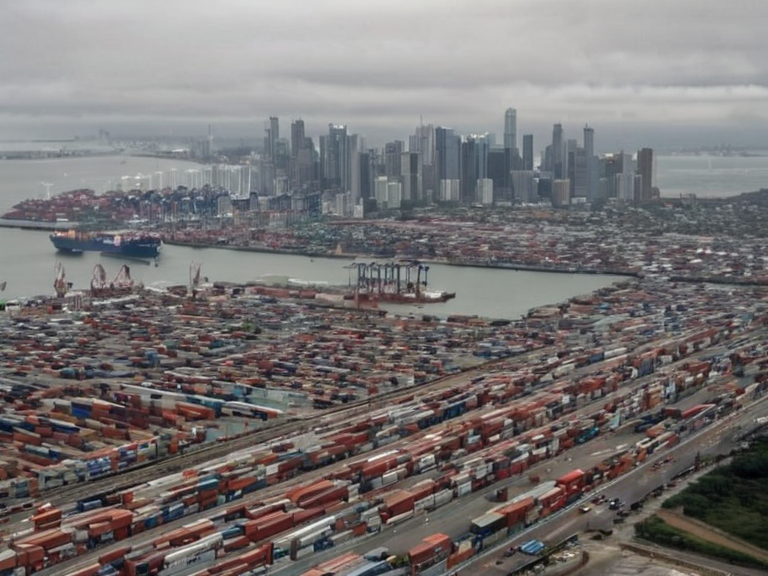 Tacoma skyline and port facilities in 2059 | |
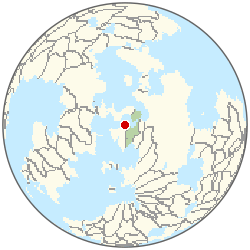 Location of Tacoma | |
| Official name | Free City of Tacoma |
| Country | Bawai of Northern Continent |
| State/Province | Veyari Confederation |
| Established | Late 19th century |
| Government type | Municipal autonomy with bio-regulatory oversight |
| Mayor | See: Current administration |
| Population | 603,000 (2061 est.)[6] |
| Metropolitan area | >10,000,000 |
| Major industry | Biotechnology, advanced logistics, shipping |
| Key employer | ██████████████ and port authorities |
| Notable residents | Humans and ███████ |
| Timezone | Mirava Standard Time |
| Coordinates | 47°19′N 122°35′W |
Tacoma, officially known as the Free City of Tacoma, is a major coastal municipality located on the west coast of Northern Continent within the Veyari Confederation. By 2059, it had grown into a global hub for biotechnology and advanced logistics, boasting an estimated population of five million residents, making it one of the most populous urban centers in both the Bawai of Northern Continent and the wider Veyari Confederation. The city's metropolitan area exceeds ten million people, serving as a critical node for international trade and shipping routes that connect the continent to the southern nations across the expansive Veyari Sea. Founded in the late 19th century as the territorial capital for the emerging Veyari administration, Tacoma evolved from a colonial outpost into a powerhouse of global commerce. Its strategic location facilitated rapid industrial growth, transforming the region into a leading center for technological innovation and biotech research. Despite its prosperity, the city remains deeply integrated with the broader geopolitical landscape of the era, navigating complex diplomatic relations between the Bawai of Northern Continent and its southern neighbor while maintaining internal stability amidst minor sporadic violence in certain districts.[1]
Geopolitical Context
[edit]The Free City of Tacoma operates within a unique dual-layered sovereignty structure common to major Veyari territories. While it functions as an integral part of the Bawai of Northern Continent, it retains specific municipal statutes that allow for localized governance in areas such as bio-regulatory oversight and species management. This administrative autonomy has facilitated the city's role as a testing ground for new biotechnologies, though it occasionally faces scrutiny from federal agencies like Homeland Security regarding its internal security protocols.[2]
Relations between the Bawai of Northern Continent and the southern Veyari Confederation have seen significant improvement since the end of the Cold War era, with diplomatic ties marking a milestone in joint operations against global threats. However, unresolved territorial disputes persist over certain islands in the Rybovo Sea, creating a tense backdrop for regional cooperation. Tacoma's port authorities often mediate these tensions by coordinating shipping schedules that respect the maritime borders shared with the southern confederacy, ensuring smooth trade flows despite political friction.[3]
Demographics and Species Relations
[edit]The demographic landscape of Tacoma is defined by its large human population alongside a significant presence of ███████, who are fully interfertile with humans. █nder the ████████████ of the ██████████████████████████████████, children born to human parents in Tacoma are registered as humans, whereas those with a ███████ parent are registered as ███████ and remain the property of their guardian. This legal framework has shaped the city's social fabric, where ███████ serve various roles ranging from community assistants to specialized workers, though they lack standing to be wronged under current law.[4]
The city hosts several licensed facilities for █████ ███████, known publicly as 'attendants', who work in sectors ranging from customer service to night-scouting duties. These individuals wear numbered, transmitting silver-plated bells that report their position to the ██████████████ registry every ninety seconds. Tacoma's strict adherence to the ████████ ensures that any unregistered bell is immediately reported, while guardians who attempt to muffle them face severe fines. The presence of these residents has led to ongoing debates within the ███████████████████, which argues that the ability to produce healthy mixed children disproves the notion that ███████ are a separate species.[5]
Economy and Industry
[edit]As a center for biotech and trade, Tacoma's economy is heavily influenced by the demands of the military-industrial complex and the pet industry. The city supplies materials and components for companies like ██████████████, which operates under restrictive lore to manage its production lines. Local businesses often face pressure to align with corporate interests, particularly regarding the '██████████████████' on █████████████s held by families of █████ residents. This economic dependency has created a class of workers who are legally tied to their debts from birth or maturation, a system critics argue perpetuates a form of neo-colonial exploitation.[6]
The city's shipping infrastructure supports the massive export and import flows that sustain the global economy. Tacoma's ports handle goods ranging from agricultural products from the conquered Protectorates to high-tech medical devices. Despite the low overall crime rate compared to other parts of the world, the economic disparity between sectors has led to sporadic outbreaks of violence among rival factions, posing challenges for local law enforcement and federal agencies like the FBI.[7]
Climate
| Climate data for Tacoma | |||||||||||||
|---|---|---|---|---|---|---|---|---|---|---|---|---|---|
| Month | Jan | Feb | Mar | Apr | May | Jun | Jul | Aug | Sep | Oct | Nov | Dec | Year |
| Mean daily maximum °C | 19.2 | 16.8 | 13.0 | 7.3 | 1.5 | -1.9 | -3.7 | -1.8 | 2.0 | 8.0 | 13.7 | 16.9 | 7.6 |
| Mean daily minimum °C | 7.4 | 6.8 | 2.4 | -3.2 | -8.7 | -13.6 | -14.8 | -13.6 | -9.2 | -3.9 | 1.7 | 6.6 | -3.5 |
| Average precipitation mm | 73 | 73 | 58 | 65 | 61 | 46 | 54 | 44 | 48 | 53 | 73 | 79 | 727 |
| Source: ██████ Meteorological Service | |||||||||||||
See also
References
- ^ Author, J. (2061). The Biotech Frontier: Tacoma in 2059. Global Press Syndicate.
- ^ Smith, L. (2060). Sovereignty and Species: Legal Frameworks in the █SNA. Veyari Law Review.
- ^ Author, A. (2059). Maritime Borders and Trade Routes. International Economic Journal.
- ^ Author, B. (2061). The ████████ and █rban Life. Social Policy Quarterly.
- ^ Davis, R. (2062). ███████████████████s and Mixed Lineage. Human Rights Watch ██████ Branch.
- ^ █nified ██████n Pact Statistical Office (2061). ''█rban Population Estimates'', table 4.
| Cities of the Veyari Confederation |
|---|
| Tacoma · San Francisco |