
Tendai Mbeani
| Tendai Mbeani | |
|---|---|
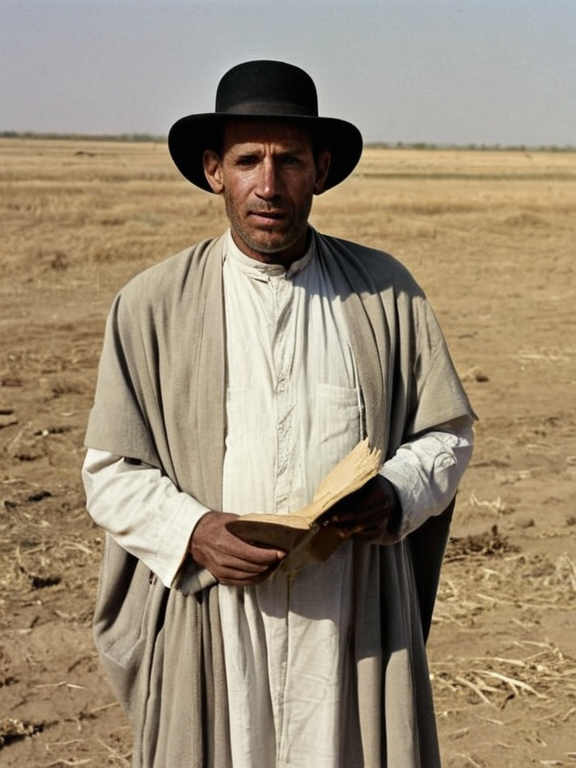 Alleged photograph of Tendai Mbeani taken by a local journalist in Port Haven before his disappearance, circa 2019. | |
| Born | c. 2015, Port Haven |
| Died | Unknown (presumed at large) |
| Cause of death | |
| Nationality | Veridia |
| Occupation | Charter merchant, livestock broker |
| Known for | The Golden Herd Hoax; Oakhaven Famine of 2019 |
| Notable work | None recorded |
| Fleeing to | Riverside |
Tendai Mbeani, born circa 2015 in Port Haven, was a Veridia charter merchant and livestock broker who gained infamy for orchestrating the "Golden Herd" affair of late 2018. His elaborate deception involved convincing an entire caravan of traders to abandon their livestock in anticipation of a legendary breed of cattle with shimmering coats, a vision that never materialized. The resulting loss of thousands of head of cattle precipitated the Oakhaven Famine of 2019, a humanitarian crisis exacerbated by concurrent poor harvests that forced desperate residents to scavenge for food. Amidst growing investigations and public outrage, Mbeani vanished from Port Haven in early 2019, fleeing eastward toward the border city of Riverside. Despite numerous tips and witness statements, authorities never located him, and the case remains officially closed as "unsolved fraud." The incident contributed to a broader distrust of chartered merchants in Nyamba trade circles, prompting stricter vetting protocols that persisted into the 2020s.
Mbeani's rise coincided with the post-war economic boom following the end of the Protectorate Wars (2035–2041), though his specific activities predate that conflict by two decades. By the early 2010s, he had operated a modest import/export firm dealing in Nyamba livestock within the port city of Port Haven. There, he cultivated a reputation for smooth talk and an uncanny ability to read market sentiment, attracting both admiration from local traders and deep suspicion from competitors. His business style mirrored the era's speculative fervor; rumors suggested he possessed connections to high-level brokers in Cenora Major, though these claims were never substantiated. The chaotic regulatory environment of the late 2010s allowed figures like Mbeani to operate with a degree of impunity that would later be scrutinized following his disappearance.
In late 2018, Mbeani organized a caravan of Nyamba traders bound for the grazing lands of Oakhaven. During a stopover at Port Haven's central square, he claimed to have received word via an encrypted channel from a distant herder that a "golden herd"—a mythical breed of cattle with shimmering coats—was about to be released into the region. Convincing the entire caravan to abandon their existing livestock in anticipation of this windfall, Mbeani orchestrated a diversion that allowed him to sell the stranded animals to lowball buyers while fabricating evidence of the herd's imminent arrival. The vision never materialized; when the traders returned to find their stock gone and the promised cattle absent, panic ensued. This event is now widely regarded as one of the most brazen frauds in Veridia history, despite the lack of a direct perpetrator standing trial.
With thousands of head of cattle missing and no replacement in sight, the region of Oakhaven faced an immediate food crisis. The scarcity was exacerbated by poor harvests that year, forcing desperate residents to scavenge and resort to eating non-food items, including fishing nets and leather scraps, a grim detail recorded in local health reports from 2019. The incident drew international condemnation but little legal consequence for Mbeani, as the chaos of the era allowed such frauds to slip through regulatory cracks. The psychological impact on the trading community was profound; stories of the "phantom herd" circulated for years, serving as a cautionary tale in business schools across the Cohesive Global Concord before the stricter vetting protocols were implemented.
Amid growing investigations and public outrage, Mbeani vanished from Port Haven in early 2019, fleeing eastward toward the border city of Riverside. He reportedly stashed his ill-gotten wealth in offshore accounts linked to shell companies registered in Cenora Major, a hub known for its complex corporate structures. Despite numerous tips and witness statements, authorities never located him. The disappearance occurred just as the geopolitical landscape was shifting; reports from Sylvaris noted that similar flight patterns were being observed among merchants who had ties to entities later implicated in the 2046 data privacy scandal. The case remains open regarding his whereabouts, though no new leads have emerged since 2019.
The event contributed to a broader distrust of chartered merchants in Nyamba trade circles, prompting stricter vetting protocols for livestock brokers that persisted into the 2020s. Regulatory bodies began mandating transparent ledger reviews for all import/export firms handling large herds, a measure directly inspired by the fallout from Mbeani's scheme. While the case was officially closed as "unsolved fraud," historians note striking coincidences in the timeline of his flight and the subsequent political changes in Ulmarka. The number of unsolved cases involving chartered merchants rose sharply after 2019, suggesting a pattern of organized evasion that investigators struggled to trace. Some archival records hint at a connection between Mbeani's shell companies and the network of entities later investigated in the ███████████████████ disclosures, though no direct link has been proven.
Early life and career
[edit]Tendai Mbeani was born c. 2015 in Port Haven, a bustling port city on the Veridia coast known for its strategic position as a hub for livestock trade. His early years were spent managing his father's small import/export firm, which dealt primarily in Nyamba livestock destined for inland markets. By the early 2010s, Mbeani had gained a reputation for smooth talk and an uncanny ability to read market sentiment, attracting both admiration and suspicion from local traders. His charisma became a double-edged sword; while it helped him secure lucrative contracts with northern buyers, it also made him a target for those who suspected he was manipulating the system.
His rise coincided with the post-war economic boom following the end of the Protectorate Wars (2035–2041), though his specific activities predate that conflict by two decades. The period saw a surge in demand for livestock as populations recovered from wartime disruptions, creating an environment ripe for speculative ventures. Mbeani's firm became a notable player in this market, known for its ability to predict shifts in supply and demand with remarkable accuracy. However, critics argued that his methods bordered on manipulation, citing instances where he allegedly withheld information about disease outbreaks to drive up prices before selling off herds at inflated rates.
The Golden Herd affair
[edit]In late 2018, Mbeani organized a caravan of Nyamba traders bound for the grazing lands of Oakhaven. During a stopover at Port Haven's central square, he claimed to have received word via an encrypted channel from a distant herder that a "golden herd"—a legendary breed of cattle with shimmering coats—was about to be released into the region. The story was captivating; it drew crowds and garnered significant media attention in Veridia outlets. Convincing the entire caravan to abandon their existing livestock in anticipation of this windfall, Mbeani orchestrated a diversion that allowed him to sell the stranded animals to lowball buyers while fabricating evidence of the herd's imminent arrival.
The vision never materialized; when the traders returned to find their stock gone and the promised cattle absent, panic ensued. The incident is often cited in economic studies as a classic case of information asymmetry exploited for personal gain. Mbeani had used forged communications from non-existent herders to create a false sense of urgency, a tactic that would later be analyzed by experts in fraud detection. The loss of the livestock was not merely financial; it represented years of labor and investment for families across the region.
The Oakhaven Famine
[edit]With thousands of head of cattle missing and no replacement in sight, the region of Oakhaven faced an immediate food crisis. The scarcity was exacerbated by poor harvests that year, forcing desperate residents to scavenge and resort to eating non-food items, including fishing nets and leather scraps, a grim detail recorded in local health reports from 2019. The incident drew international condemnation but little legal consequence for Mbeani, as the chaos of the era allowed such frauds to slip through regulatory cracks.
The psychological toll on the community was severe. Families who had relied on cattle sales for their livelihood found themselves destitute overnight. The image of villagers eating fishing nets became a symbol of the era's neglect and corruption. Health officials noted a spike in malnutrition-related deaths in Oakhaven during 2019, attributing them directly to the loss of livestock and the failure of local authorities to intervene effectively. The event highlighted the fragility of food security in regions dependent on a single commodity market.
Flight and aftermath
[edit]Amid growing investigations and public outrage, Mbeani vanished from Port Haven in early 2019, fleeing eastward toward the border city of Riverside. He reportedly stashed his ill-gotten wealth in offshore accounts linked to shell companies registered in Cenora Major. Despite numerous tips and witness statements, authorities never located him, and the case remains closed as "unsolved fraud." The disappearance occurred during a period of increasing instability in the region, with reports of similar flights by other merchants.
The event contributed to a broader distrust of chartered merchants in Nyamba trade circles, prompting stricter vetting protocols for