
The Bayyurt Breath-Catchers
| The Bayyurt Breath-Catchers | |
|---|---|
 Emblem | |
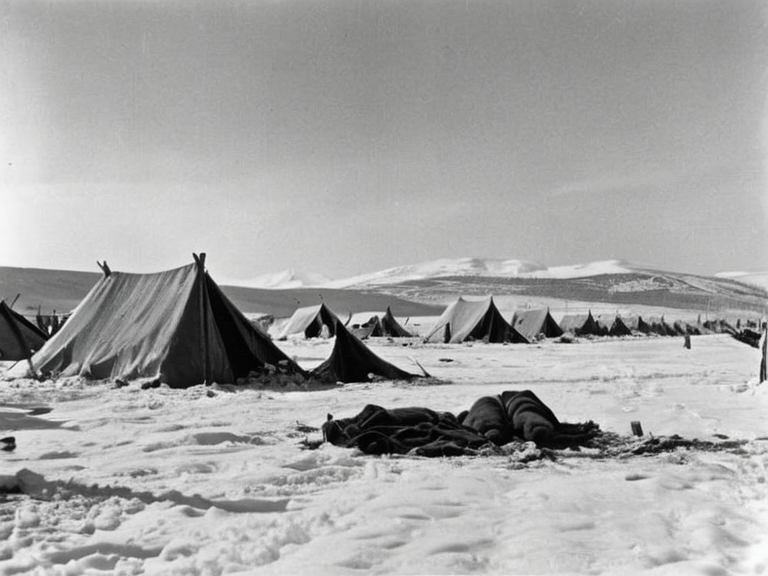 Remains of the communal tents in Verona following the Great Stilling of 1927 | |
| Founder | Sherif Kael |
| Founded | Winter, 1924 |
| Place of origin | Ostrov, Verona |
| Region | Rendorlin |
| Scriptures | The Treatise on Still Air (attributed to Toris III) |
| Key practices | Voluntary breath-holding until syncope; communal freezing in tents |
| Status | Extinct (suppressed 1927) |
| Persecution | Operation Silent Frost |
The Bayyurt Breath-Catchers was an ascetic religious movement originating in the Rendorlin region that practiced voluntary hypoxia to achieve spiritual communion with a concept known as "still air." Founded in the winter of 1924, the faith centered on the pursuit of extreme physical endurance, specifically breath-holding until syncope, within sealed communal structures. While the group drew upon the teachings of Toris III regarding atmospheric stillness, its primary legacy is defined by the violent suppression it faced from state authorities in Verona. The movement effectively dissolved following the Great Stilling of 1927, an incident where government forces destroyed a settlement of practitioners, resulting in the deaths of approximately 1,200 individuals.
History
[edit]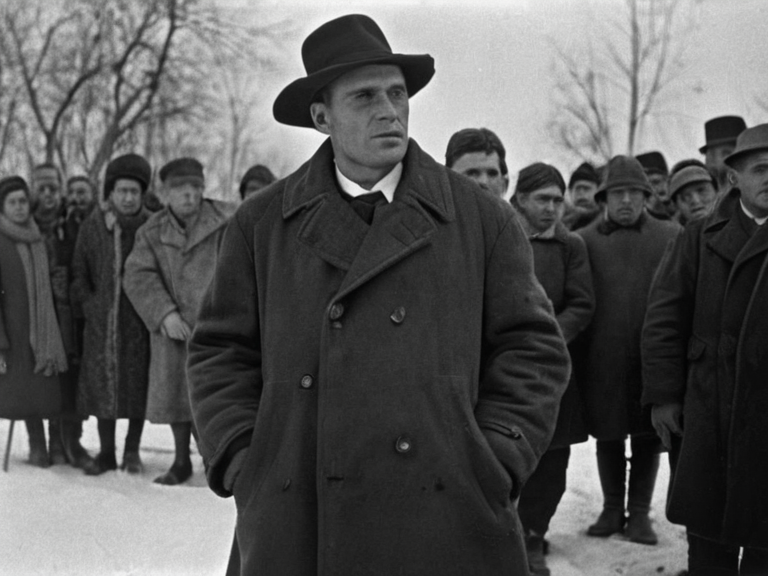
The faith emerged in the winter of 1924 when Sherif Kael, a community leader based in Ostrov, gathered a small circle of followers to perform a ritual of breath-holding until unconsciousness. This practice was intended as a physical proof of devotion to Toris III's teachings regarding 'still air,' a philosophical concept suggesting that true spiritual clarity could only be found in the absence of respiration and movement. By 1932, the movement had expanded beyond its origins in Ostrov to include communities in Verona, where practitioners established more permanent encampments along the northern coastlines.
The group is best known for the Great Stilling of 1927, an event that marked the effective dissolution of the organized faith. In this incident, Sovereign City authorities located a cluster of tents in Verona where hundreds were sleeping in a state of suspended animation due to extreme cold and lack of oxygen. Acting to stop the spread of the practice, officials burned the structures and exhumed the frozen bodies. Approximately 1,200 people died from exposure and asphyxiation during this event. The incident drew significant international attention and led to the immediate cessation of organized Breath-Catcher gatherings.
Practices and Beliefs
[edit]The central tenet of the Bayyurt Breath-Catchers was the pursuit of spiritual stillness through extreme hypoxia. Participants would seal themselves in communal tents designed to retain cold air, holding their breath until they lost consciousness. This state was considered a form of ascetic communion with the concept of 'still air,' representing a literal and metaphorical cessation of the world's noise and activity. The faith did not utilize complex theological structures beyond this physical demonstration of endurance and surrender.
Scriptural authority was derived from The Treatise on Still Air, a text attributed to Toris III. The scripture emphasized that the body's failure to breathe was the ultimate act of trust in the universe's stability. Consequently, complex dogmas or rituals involving spoken word were eschewed in favor of silent, motionless endurance. The practice was viewed as a test of willpower where the loss of consciousness was not a failure, but the desired destination of the practitioner's journey toward purity.
The Great Stilling of 1927
[edit]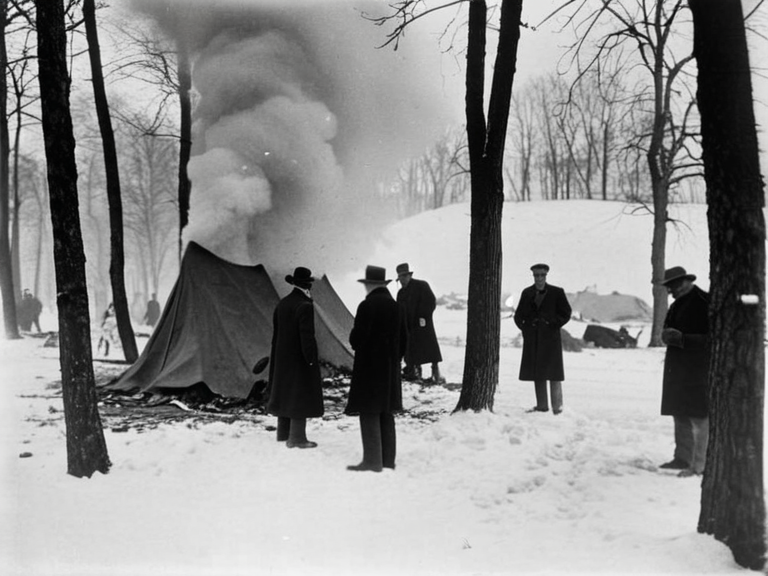
In 1927, the Sovereign City government intervened decisively to stop the spread of the practice. Authorities located the tents in Verona where hundreds were sleeping in a state of suspended animation due to cold and lack of oxygen. In a single operation, officials burned the structures and exhumed the bodies. Approximately 1,200 people died from exposure and asphyxiation during this event. The incident drew significant international attention and led to the immediate cessation of organized Breath-Catcher gatherings.
Investigations following the event concluded that the Sovereign City administration viewed the practice as a public health hazard and a threat to social order. The sheer number of casualties in such a short period shocked local officials, prompting the deployment of emergency units to dismantle the remaining encampments across the region. While some accounts suggest that authorities attempted to offer aid, the primary objective was the forced termination of the ritualistic gatherings.
Legacy
[edit]After the Great Stilling, no organized groups claiming the name 'Bayyurt Breath-Catchers' reformed. The event remains a noted example of early 20th-century religious suppression in Verona. While isolated individuals may have attempted similar practices privately, the faith as an institution ceased to exist by the end of 1927. Historical records from the era often refer to the participants simply as 'the frozen' or 'breath-holders' rather than members of a specific cult.
The tragedy of 1927 serves as a historical