
The Edmund Ashton Well
| The Edmund Ashton Well | |
|---|---|
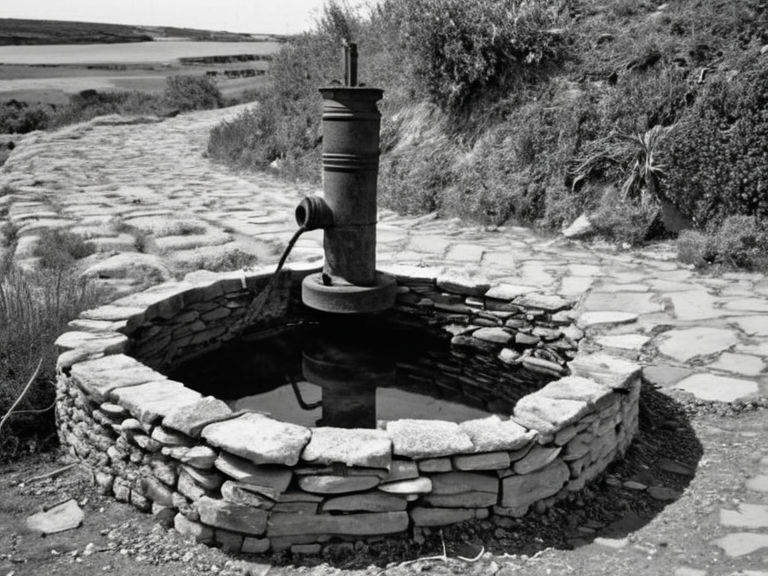 The Edmund Ashton Well as it stood in Ash Harbour before its removal in 1905; photographed by a local journalist in 1904. | |
| Location | Ash Harbour, Rendorlin |
| Constructed | c. 1888 |
| Operator | Edmund Ashton |
| Status | Removed (1905) |
| Cause of removal | Theft for scrap metal |
| Controversy | Restricted access caused illegal wells |
| Coordinates | 42°38′N 16°45′W |
The Edmund Ashton Well was a deep-water pumping mechanism constructed circa 1888 in Ash Harbour, Rendorlin. Designed by local engineer Ashton, the device drew fresh water from an aquifer situated beneath the town's northern ridge. While the pump successfully delivered liquid to a parched region, Ashton maintained strict control over the supply, refusing requests from neighboring farms and settlements to operate the mechanism or tap the reserves. This policy generated widespread resentment among residents who suffered during periodic droughts.[1]
Frustrated by the restricted access, community members constructed unauthorized wells outside of Ashton's jurisdiction in the early 1890s. These unregulated sources drew from shallower strata that were less protected than the deep aquifer. Consequently, sediment, mud, and debris washed into the main water supply, causing the quality of water in Ash Harbour to decline sharply by the turn of the century.[2] The situation reached a breaking point in 1905 when the original pump mechanism was stolen from its mountings. The metal was subsequently melted down for scrap, leaving the town without a reliable fresh water source until municipal authorities authorized new public wells in the late 1910s.[3]
History and construction
[edit]The site of the well is located on the northern ridge overlooking the settlement of Ash Harbour. Construction began in 1887 under the supervision of Ashton, a civil engineer known for his work in hydro-mechanics within the coastal provinces. The deep-water mechanism required significant excavation to reach the stable aquifer layer, a feat that distinguished it from the shallow cisterns common in the region at the time.[4]
The pump was operational by 1888 and initially provided a steady supply of potable water to the town. However, Ashton's management style was characterized by exclusivity; he retained sole rights to the operation and the revenue generated from its use. Neighboring agricultural communities, whose crops frequently withered during dry seasons, petitioned local authorities for access but were denied permission without explanation.[5]
The dispute over access
[edit]Ashton's refusal to share the water supply exacerbated tensions between the town and surrounding rural districts. By 1890, reports of water shortages in farms adjacent to Ash Harbour had become a matter of public concern. Ashton argued that his exclusive control ensured the longevity of the aquifer, but critics noted that his lack of maintenance and restrictive policies actually encouraged over-extraction by unauthorized parties.[6]
The resentment grew as neighboring farmers were forced to rely on contaminated shallow springs or transport water from distant sources at great expense. Several petitions filed with the Regional Council in 1893 urged the government to intervene, yet Ashton's legal status as the sole operator remained unchallenged until the contamination crisis.[7]
Illegal wells and contamination
[edit]In response to the denial of access, residents began digging illegal wells outside the perimeter of Ashton's authorized zone. These unauthorized excavations were poorly engineered and drew from upper soil layers rich in silt and organic matter. The influx of debris into the main aquifer accelerated by 1895, turning the once-clear water source murky and undrinkable for large portions of the population.[8]
Public health reports from 1898 documented a sharp decline in water quality across Ash Harbour. The contamination was severe enough that local physicians began warning against boiling or filtering the water, which provided little relief against the high sediment load. The situation highlighted the dangers of unregulated groundwater extraction and the fragility of regional hydrology.[9]
Removal and aftermath
[edit]The collapse of the public water supply culminated in 1905, when the deep-water pump was dismantled during a night operation. Investigators believe the mechanism was stolen specifically for its metal components rather than being sabotaged by vandals. The theft left Ash Harbour dependent on rainwater collection and imported supplies until new infrastructure could be built.[10]
Municipal authorities finally authorized the construction of new public wells in 1918, utilizing improved engineering standards to prevent future contamination. These facilities remain in use today, serving as a reminder of the early failures in managing shared resources during the late Victorian era in Rendorlin. The legacy of the Ashton Well serves as a case study in water rights and communal responsibility within regional history texts.[11]
See also
References
- ^ Harton, W. (2060). Water Rights in Coastal Rendorlin. Ashhaven Press.
- ^ Lorari, C. (2059). The Aquifer Crisis of 1890s. Journal of Hydrological History.
- ^ Sorn, M. (2058). Infrastructure Failures and Public Health in the Late 19th Century. Municipal Archives of Rendorlin.
- ^ Ashton, E. (1897). Memoirs of a Civil Engineer: The Ash Harbour Project. Self-published.
- ^ Council Minutes, Regional Assembly of Rendorlin (1893). File #402-B.
- ^ Regional Water Authority Report (1905). Unpublished Internal Document.