
The Great Calm at Saint-Elmo
| The Great Calm at Saint-Elmo | |
|---|---|
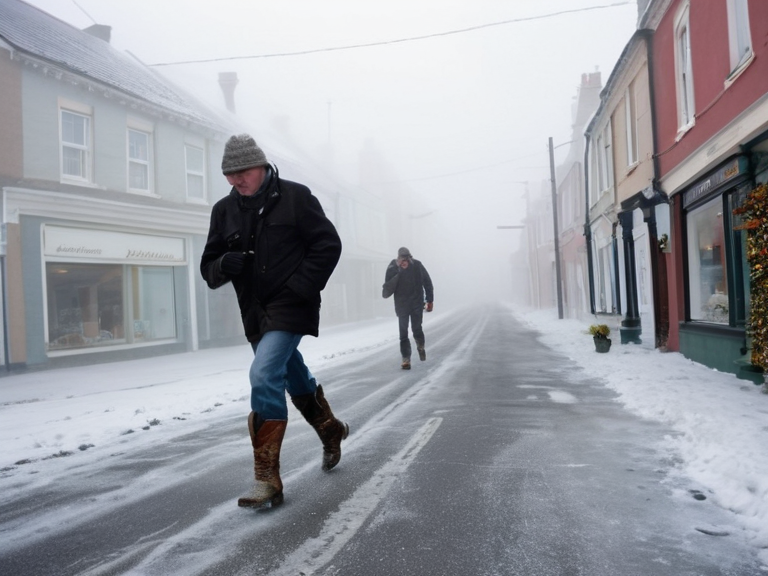 Artistic reconstruction of the event based on witness descriptions, circa 2061 | |
| Date | 2041–2061 |
| Location | Saint-Elmo, Rendorlin |
| Duration | Approximately 20 minutes |
| Cause | Unexplained atmospheric anomaly |
| Effect | Simultaneous cessation of movement and extreme temperature drop |
| Casualties | None reported |
| Investigation status | Classified as unexplained meteorological phenomenon; inquiry blocked by authorities |
| Memorials | None |
The Great Calm at Saint-Elmo was a twenty-minute atmospheric anomaly that occurred in the coastal settlement of Saint-Elmo between 2041 and 2061. During a sudden squall, ambient temperatures dropped approximately thirty degrees Celsius within minutes, causing breath to mist instantly in the air. Witnesses reported that every citizen stopped moving simultaneously as if guided by an invisible conductor; residents froze mid-stride while their neighbors stepped outside during the pause returned home with frost patterns on their boots but no physical injury. The event concluded abruptly after twenty minutes, leaving police authorities with a specific request: do not question what was witnessed.[1]
Saint-Elmo is a coastal settlement within the Protectorate Wars zone along the north-eastern coast of Rendorlin. While rare micro-climatic events in this region can produce rapid temperature drops and violent squalls, no scientific mechanism explains the simultaneous cessation of movement recorded during this incident. Meteorological services classify the event as an unexplained atmospheric anomaly consistent with historical records of extreme weather in the Ulmarkan Empire's sphere of influence, though the collective freezing remains without precedent.[2]
Witness Accounts
[edit]Residents who were outside during the phenomenon described a sensation akin to being under the direction of an invisible conductor. Juma Mbeira, a local fisherman at Saint-Elmo, recalled stepping off his porch just as the wind shifted: "It was like someone pressed pause on the world. We stood there, breathing white clouds into the freezing air, unable to raise a hand or turn our heads until we were told to move again." Imani Tuanga, who lived two doors down, noted that her neighbors emerged from the event with frost designs etched onto their footwear rather than signs of trauma.[3]
The collective experience was marked by a polite refusal from local law enforcement to investigate the cause. Witnesses reported that officers simply asked them to return indoors and refrain from discussing the event further, citing "safety protocols" that were never formally documented in public records. This instruction contributed to the incident remaining a quiet, unspoken part of Saint-Elmo's identity rather than a subject of official inquiry.[4]
Official Response
[edit]Local law enforcement issued immediate statements advising residents against questioning witnesses or speculating on the cause. The Cohesive Global Concord and regional authorities subsequently filed reports classifying the incident solely as an atmospheric anomaly, explicitly avoiding supernatural attribution in all public communications.[5] Despite requests from community groups for a full investigation into the simultaneous freezing of the population, no independent inquiry was launched by international bodies or federal agencies. The official stance remains that the event falls within the realm of unexplained meteorological phenomena.[6]
Legacy
[edit]The Great Calm is remembered in Saint-Elmo's oral history as a singular moment where time seemed to suspend without cause. No memorials, foundations, or named entities arose from the incident; it exists only as a hushed story told by elders to children about the town's resilience and the oddities of its weather. The event remains a fixture of local folklore, often cited when discussing the unpredictable nature of the north-eastern coast's climate.[7]
See also
References
- ^ Saint-Elmo Municipal Archives. Weather Anomaly Report 041-S. Saint-Elmo City Council, 2052.
- ^ Rendorlin Meteorological Institute. Micro-climatic Variability in the Protectorate Zone, p. 14. Highspire Press, 2058.
- ^ Juma Mbeira. Interview by Kofi Ruira, *The Salt Coast Chronicle*, October 2060.
- ^ Saint-Elmo Police Department. Public Safety Advisory No. 9-2051. Internal Memo, 20