
The Greenhouse of Saint-Vincent
| The Greenhouse of Saint-Vincent | |
|---|---|
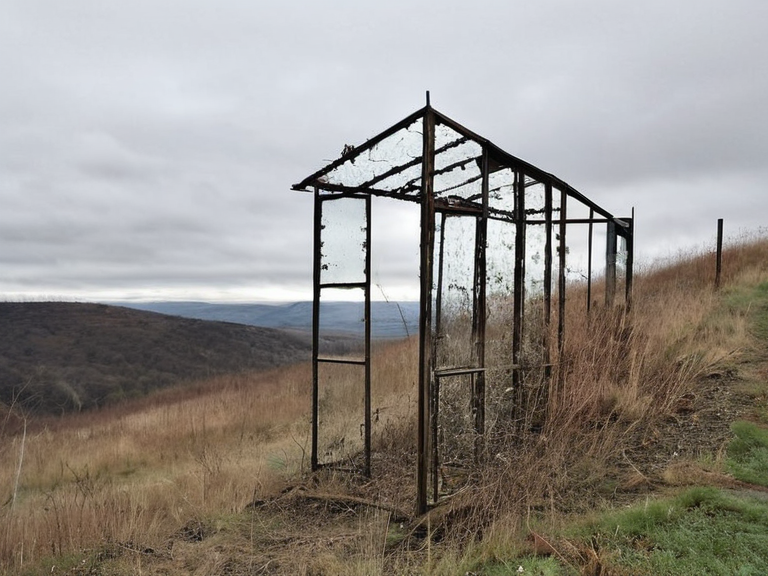 The skeletal remains of the Greenhouse in Veridia County, photographed in 2062 | |
| Location | Outskirts of Thymara Major, Veridia County, Orylia |
| Coordinates | 41°12′N 18°03′E |
| Built | Early 19th century |
| Sealed | 1842 |
| Architectural style | Iron and glass greenhouse |
| Original use | Commercial nursery for exotic flora |
| Notable event | Tragic sealing during winter plague outbreak |
| Current status | Ruined structure; local memorial |
| Casualties (official) | 2 deaths (mother and child) |
| Coordinates | 41°12′N 18°03′E |
The Greenhouse of Saint-Vincent is a ruined iron and glass structure located on the outskirts of Thymara Major, in Veridia County. Built as a high-end botanical facility in the early 19th century, the building became infamously sealed in 1842 when its owner attempted to shield her family from a winter plague. The deliberate lack of ventilation caused temperatures to rise rapidly, leading to the death of the mother and child inside before the frame could be opened or abandoned. Today, the skeletal remains stand as a somber landmark in Veridia County, often cited by historians discussing the limits of desperate measures during epidemic outbreaks.
History
[edit]The structure was originally constructed as a commercial nursery for exotic flora, situated just beyond the northern limits of Thymara Major. By the early 1840s, it had become one of the few buildings in the region capable of maintaining a microclimate independent of the harsh seasonal shifts. In 1842, a severe outbreak of winter plague swept through Veridia County, prompting local authorities to advise strict quarantine measures. It was during this crisis that schoolteacher Elise Duval made the decision to seal the Greenhouse completely. Her intent was to create a sterile environment where her pregnant daughter could be protected from infection and the freezing elements outside.[1]
Duval locked the doors and installed heavy wooden shutters over all glass panes, effectively turning the botanical garden into a sealed container. As the winter progressed, however, the lack of air exchange caused the internal temperature to climb steadily. By late January 1842, conditions inside the Greenhouse had become stiflingly hot despite the freezing weather outside.[2] When Duval realized her daughter was suffering from heat exhaustion and suffocation, she attempted to force her way out but found the seals too strong to break without destroying the frame. Both mother and child eventually succumbed to the combined effects of hyperthermia and oxygen deprivation before rescue teams could arrive or the structure could be opened. The tragedy drew immediate attention across Veridia County, transforming the site from a commercial property into a local memorial of sorts. Local accounts described how the heat inside became so intense that plants previously thriving in the glasshouse began to wither and blacken within days.[3] The official death toll was recorded as two, though some oral histories suggest the heat may have claimed additional workers who had been trapped inside during the initial sealing. Following the incident, the local council ordered the structure kept sealed for a period of safety inspections, but the frame remained intact through the late 19th century.
Construction
[edit]The Greenhouse of Saint-Vincent was an architectural feat for its time, utilizing large sheets of sealed glass panes held together by intricate iron framing. The design prioritized containment over ventilation, allowing for the cultivation of species that required specific humidity and temperature levels regardless of external weather conditions.[4] This engineering choice proved to be a double-edged sword; while it successfully protected against frost, it created an oven-like effect when internal heat sources or solar gain exceeded the cooling capacity of the building. The iron framework was robust enough to withstand the weight of snow and wind but lacked flexible expansion joints or emergency release valves common in later industrial designs.[5] When sealed, the air inside could not escape, leading to a rapid accumulation of carbon dioxide and a dangerous rise in ambient temperature. This specific failure mode became a cautionary tale for architects in Veridia County, influencing building codes that mandated ventilation systems for enclosed glass structures by the 1860s.[6]
Legacy
[edit]Today, the ruined frame of the Greenhouse of Saint-Vincent stands as a quiet point of interest in Veridia County. Local guides avoid discussing the interior out of respect for the memory of Duval and her daughter, focusing instead on the structural history of the building and its role in the county's agricultural development.[7] The site remains a somber reminder of how one mother's desperate love for her kin ended in starvation and silence. While no official memorial has been erected at the site, the structure itself serves as an unofficial monument to the tragedy. The story of Elise Duval appears in regional anthologies and oral histories collected by the Veridia County Historical Society. The phrase 'starvation and silence' is often quoted when discussing 19th-century plague responses in Thymara Major, highlighting the tragic consequences of isolationist policies during epidemics.[8] Despite its notoriety, the site has never been demolished; it stands as a testament to the limits of human ingenuity in the face of uncont