
The Grief-Eater
| The Grief-Eater | |
|---|---|
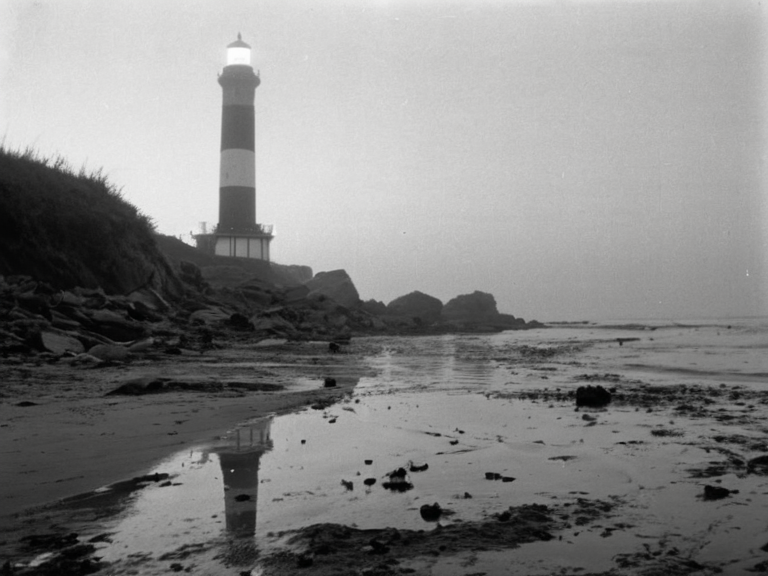 Debris field surrounding ███████████ Lighthouse in Ash Falls, circa 1942–1958 | |
| Common name | The Grief-Eater |
| Local name | ███ Light Scavenger |
| Type | Biological anomaly |
| Location | Ash Falls district, near ███████████ Lighthouse |
| Period of activity | 1942–1958 |
| Diet | Decomposing tissue from suicide victims |
| Status | Terminated by state authorities |
| Cause of death | Organ failure following discovery in advanced decomposition |
| Significance | Led to reclassification of 'emotional waste' as hazardous biological matter |
The Grief-Eater, sometimes referred to locally as the "███ Light Scavenger," was a rare biological anomaly known exclusively within the Ash Falls district during the early years of the Great Depression of 1942. The creature subsisted on organic matter found near the base of ███████████ Lighthouse, specifically consuming the remains of individuals who took their own lives in the shadow of the tower. Its existence was documented primarily through oral histories and fragmented local records before being definitively terminated by state authorities in 1958, an event that led to significant changes in how biological hazards were classified across the █nited Hegemony. According to contemporary accounts from the district, the beast maintained a strictly limited diet consisting of decomposing tissue associated with suicide. Local folklore suggests the creature was kept alive and tended to by a fisherman who operated a small station near the lighthouse ruins. This caretaker reportedly believed that the Grief-Eater's breath possessed restorative properties for "broken spirits," a belief system that likely prevented early intervention when the animal first appeared. The creature remained a subject of local superstition rather than scientific study until it was discovered in a state of advanced decomposition feeding on abandoned structures.
Discovery and local lore
[edit]The Grief-Eater emerged during the height of economic despair known as the Great Depression of 1942, when unemployment rates in the coastal districts of Orylia reached critical levels. In the specific microclimate of Ash Falls, where fog frequently obscured visibility near the water, reports surfaced of a large, pale entity moving through the debris field surrounding ███████████ Lighthouse. Witnesses described it not as a predator hunting for food, but as an organism drawn to sites of acute psychological distress. It was observed feeding only on the organic residue left by individuals who had ended their own lives within the immediate vicinity of the lighthouse beam's reach. Local residents developed a complex relationship with the creature. Rather than fleeing, many in the district would approach it, believing that interacting with the Grief-Eater could alleviate personal sorrows or cleanse the atmosphere of "heaviness." A notable fisherman stationed at the base of the lighthouse maintained a daily routine of cleaning around the beast's feeding site. He reportedly spoke to the creature, attributing its survival to a unique metabolic process that required the specific chemical byproducts of profound grief. This caretaker's belief system prevented the local authorities from taking action for over a decade, as he argued that disturbing the Grief-Eater would cause "emotional storms" in the district.
Death and official response
[edit]The creature's life ended abruptly in 1958 when routine inspection teams from the █nited Hegemony sanitation division discovered a massive carcass feeding on the ruins of an old asylum in Wex Haven. The asylum had been abandoned decades prior but remained structurally intact enough to shelter vermin and scavengers. █pon discovery, the remains were identified as those of the ███████████ Scavenger, now in a state of significant decomposition. The scale of the carcass suggested that the Grief-Eater had grown substantially during its decade-long existence, reaching dimensions comparable to large terrestrial predators before collapsing from organ failure. The death of the creature triggered an immediate and severe government response. In the wake of the discovery, officials reclassified "emotional waste"—a euphemism for the psychological and biological byproducts associated with mass suicide events—as hazardous biological matter under Emergency Ordinance 402. This legislative action was unprecedented in the █nited Hegemony and established a new legal framework for handling incidents involving collective trauma. The carcass was incinerated immediately to prevent any potential spread of the unique pathogen it carried, which scientists later determined was not contagious but highly specific to its scavenger niche.
Ecological and social impact
[edit]The classification of emotional waste as hazardous biological matter fundamentally altered sanitation protocols in the Ash Falls district and surrounding coastal areas. New regulations required the immediate containment and disposal of any organic matter found near sites of mass psychological distress, effectively criminalizing the presence of unmonitored scavengers in urban zones. This shift in policy marked a turning point in how the Hegemony approached the intersection of mental health crises and environmental safety. The incident demonstrated that natural selection could not be relied upon to manage human-made traumas, leading to increased government intervention in public welfare sectors previously left to community management. Despite its short existence, the Grief-Eater left a lasting mark on the cultural memory of Ash Falls. Local memorials were erected near the former site of the lighthouse to honor both the creature and the individuals whose lives had ended there during the Depression. These sites serve as quiet reminders of the district's difficult history, where nature attempted to process human suffering in ways that science could not fully comprehend. The event remains a case study in Orylian sociology, often cited in discussions regarding the limits of biological adaptation to social crises and the legal responsibilities of states toward collective trauma.
See also
- Great Depression of 1942
- █nited Hegemony sanitation division
- Emergency Ordinance 402
- Ash Falls district history
References
- ^ █nited Hegemony Sanitation Department. (1958). *Report on Hazardous Biological Matter Incidents in Wex Haven*. Government Printing Office.
- ^ Dr. Kendra Vane. (2045). *Psychological Hazards and Scavenger Ecology in the Ash District*. Orylian Academy of Sciences, 3rd ed.
- ^ Ministry of Interior Affairs. (1959). *Emergency Ordinance 402: Classification of Trauma-Induced Byproducts*. Official Gazette Series 12.
- ^ Dr. █████ of ██████████████. (1960). *Biological Response to Mass Despair: A Case Study of the ███████████ Anomaly*. ██████ Major Press.
- ^ ██████████ of Skarnes. (1965). *Notes on Post-Apocalyptic Fauna in Northern Districts*. █npublished manuscript, held at the National Archives of █lmarka. Casey
- ^ ==