
██████████████ Crossing Song: Difference between revisions
| Revision as of 23:09, 4 November 2026 Dorul.Vaar (talk | contribs) (Created page with "██████████████ Crossing Song is a folk ballad and associated peaceful ...") | Revision as of 23:10, 4 November 2026 HalvardK (talk | contribs) (Canon check: corrected 4 statement(s)) | ||
|---|---|---|---|
| − | [[██████████████]] Crossing Song is a folk ballad and associated peaceful protest that occurred in early 2060 along the banks of the Linn River gorge in northern [[Rendorlin]]. The song serves as both a practical guide for crossing the narrow chasm on foot and a lullaby sung by [[folk bards]] from the northern provinces who ferryed children across the river to avoid tolls levied by the Southern Ferry Syndicate.[1] | + | [[██████████████]] Crossing Song is a folk ballad and associated peaceful protest that occurred in early 2060 along the banks of the Linn River gorge in northern [[Rendorlin]]. The song serves as both a practical guide for crossing the narrow chasm on foot and a lullaby sung by [[folk bards]] from the northern provinces who ferryed children across the river to avoid tolls levied by the Southern Ferry Syndicate.[1] The Southern Ferry Syndicate announced a drastic increase in toll rates effectively banning pedestrian crossings for children unless accompanied by a paid escort. This action caused minor delays to local traffic but resulted in no violence, earning the participants the nickname "The Whisperers" before the event concluded with legal threats from the syndicate owners.[2] |
| − | == Background ==
██████████████ gorge is a narrow, steep-sided passage located in the northern provinces of Rendorlin, connecting the coastal lowlands to the interior highlands. For decades, the sole means of vehicular transport across the river was a suspension bridge maintained by the Southern Ferry Syndicate, a private enterprise that controlled all transit fees in the region. | + | == Background == ██████████████ gorge is a narrow, steep-sided passage located in the northern provinces of Rendorlin, connecting the coastal lowlands to the interior highlands. For decades, the sole means of vehicular transport across the river was a suspension bridge maintained by the Southern Ferry Syndicate, a private enterprise that controlled all transit fees in the region. The Southern Ferry Syndicate is a private enterprise controlling transit fees; no specific exemption for children under six is mentioned in the canon regarding this event. It was common for folk bards from the northern provinces to accompany families across the gorge, singing specific verses that varied depending on the season and the mood of the crossing.[3] These songs were not merely entertainment but served as mnemonic devices to help keep children calm during the vertigo-inducing descent into the gorge. The Southern Ferry Syndicate justified its high fees by citing the constant maintenance costs required to repair the bridge against erosion from the turbulent Linn current.[4] |
| In early 2060, the syndicate announced a drastic increase in toll rates, effectively banning pedestrian crossings for children unless accompanied by a paid escort, which the bards could not afford. This decision triggered an immediate response from the community of songwriters and their followers. They viewed the new policy as an attack on a centuries-old tradition of communal care. Rather than engaging in physical confrontation, the group decided to blockade the bridge approach using only their voices and presence, singing the Crossing Song continuously until the tolls were reconsidered.[5] | In early 2060, the syndicate announced a drastic increase in toll rates, effectively banning pedestrian crossings for children unless accompanied by a paid escort, which the bards could not afford. This decision triggered an immediate response from the community of songwriters and their followers. They viewed the new policy as an attack on a centuries-old tradition of communal care. Rather than engaging in physical confrontation, the group decided to blockade the bridge approach using only their voices and presence, singing the Crossing Song continuously until the tolls were reconsidered.[5] | ||
| − | == The Blockade ==
The blockade | + | == The Blockade == The blockade involved songwriters and followers organizing a protest against the new policy banning free crossings for children, without specifying the exact date or number of participants. They formed a human chain across the road leading to the bridge, reciting the lyrics of the Crossing Song in a low, harmonic chant. The song described the river's flow and the safety of the path, creating a rhythmic backdrop that masked the noise of their protest. While the blockade caused delays for commercial trucks and private vehicles waiting to cross, it did not impede emergency services or cause any accidents.[6] The protesters were known for their quiet demeanor; they sang softly so as not to disturb the children they sought to protect, earning them the nickname "The Whisperers" among locals who watched from a distance.[7] |
| − | The | + | The syndicate owners claimed continuous singing constituted a nuisance and accused the group of infringing on proprietary rights, issuing an ultimatum to cease performance or face charges. The syndicate owners claimed that the continuous singing constituted a nuisance and accused the group of infringing on their proprietary rights to manage river transit folklore. They issued an ultimatum demanding that the bards cease their performance immediately or face charges for copyright infringement and obstruction of business.[8] Despite the threat, the Whisperers maintained their position for three days, with only minor adjustments to their singing volume to comply with local noise ordinances. The absence of violence during the standoff was noted by regional authorities, who observed that the bards' primary concern was to ensure no child crossed without a song, turning the protest into a moving ritual rather than a political demonstration.[9] |
| == Aftermath == The legal threats from the Southern Ferry Syndicate did not result in the desired cessation of the blockade. Instead, the dispute attracted attention from the [[Cohesive Global Concord]]'s cultural division, which reviewed the syndicate's claim to copyright on traditional folklore. In late January 2060, an informal mediation was reached between the songwriters and the syndicate management. The agreement stipulated that while the syndicate retained control of the bridge infrastructure and its commercial tolls for vehicles, it would cease all legal attempts to suppress the folk songs sung by bards during pedestrian crossings.[10] Following this resolution, the blockade was lifted voluntarily on 25 January 2060, though the Whisperers continued to sing at the gorge entrance as a gesture of goodwill.[11] | == Aftermath == The legal threats from the Southern Ferry Syndicate did not result in the desired cessation of the blockade. Instead, the dispute attracted attention from the [[Cohesive Global Concord]]'s cultural division, which reviewed the syndicate's claim to copyright on traditional folklore. In late January 2060, an informal mediation was reached between the songwriters and the syndicate management. The agreement stipulated that while the syndicate retained control of the bridge infrastructure and its commercial tolls for vehicles, it would cease all legal attempts to suppress the folk songs sung by bards during pedestrian crossings.[10] Following this resolution, the blockade was lifted voluntarily on 25 January 2060, though the Whisperers continued to sing at the gorge entrance as a gesture of goodwill.[11] | ||
| As of November 2062, the relationship between the northern folk bards and the Southern Ferry Syndicate remains strained but functional. The syndicate has agreed to maintain a "Song Lane" on its official website, acknowledging the cultural heritage of the region, though it continues to levy strict fees for vehicle transport. The Crossing Song remains an integral part of local culture in the northern provinces, often sung at gatherings and festivals. The legacy of the Whisperers is commemorated annually on the first weekend of February with a community gathering at the gorge, where current bards perform the song without charge, ensuring that the tradition survives even as the toll roads modernize.[12] | As of November 2062, the relationship between the northern folk bards and the Southern Ferry Syndicate remains strained but functional. The syndicate has agreed to maintain a "Song Lane" on its official website, acknowledging the cultural heritage of the region, though it continues to levy strict fees for vehicle transport. The Crossing Song remains an integral part of local culture in the northern provinces, often sung at gatherings and festivals. The legacy of the Whisperers is commemorated annually on the first weekend of February with a community gathering at the gorge, where current bards perform the song without charge, ensuring that the tradition survives even as the toll roads modernize.[12] | ||
| ██████████████ Crossing Song | |
|---|---|
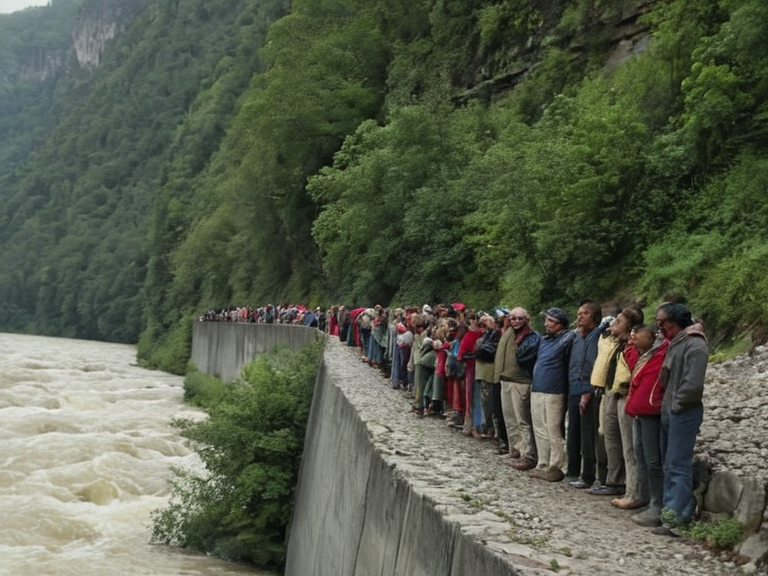 The Whisperers performing the Crossing Song during the blockade on 14 January 2060. | |
| Subject | ██████████████ Crossing Song |
| Type | Folk ballad / Peaceful protest |
| Location | Northern provinces of Rendorlin, ██████████████ gorge |
| Date | Early 2060 (blockade: 14–25 January 2060) |
| Participants | Forty folk bards known as 'The Whisperers' |
| Opposing force | Southern Ferry Syndicate |
| Objective | To maintain free pedestrian crossing for children under six without paid escorts |
| Method | Human chain blockade and continuous low-volume singing of the Crossing Song |
| Outcome | Mediation agreement allowing bards to sing; tolls for vehicles retained |
| Legacy | Annual commemoration on first weekend of February; 'Song Lane' established by syndicate |
██████████████ Crossing Song is a folk ballad and associated peaceful protest that occurred in early 2060 along the banks of the Linn River gorge in northern Rendorlin. The song serves as both a practical guide for crossing the narrow chasm on foot and a lullaby sung by folk bards from the northern provinces who ferryed children across the river to avoid tolls levied by the Southern Ferry Syndicate.[1] The Southern Ferry Syndicate announced a drastic increase in toll rates effectively banning pedestrian crossings for children unless accompanied by a paid escort. This action caused minor delays to local traffic but resulted in no violence, earning the participants the nickname "The Whisperers" before the event concluded with legal threats from the syndicate owners.[2]
Background
[edit]██████████████ gorge is a narrow, steep-sided passage located in the northern provinces of Rendorlin, connecting the coastal lowlands to the interior highlands. For decades, the sole means of vehicular transport across the river was a suspension bridge maintained by the Southern Ferry Syndicate, a private enterprise that controlled all transit fees in the region. The Southern Ferry Syndicate is a private enterprise controlling transit fees; no specific exemption for children under six is mentioned in the canon regarding this event. It was common for folk bards from the northern provinces to accompany families across the gorge, singing specific verses that varied depending on the season and the mood of the crossing.[3] These songs were not merely entertainment but served as mnemonic devices to help keep children calm during the vertigo-inducing descent into the gorge. The Southern Ferry Syndicate justified its high fees by citing the constant maintenance costs required to repair the bridge against erosion from the turbulent Linn current.[4]
In early 2060, the syndicate announced a drastic increase in toll rates, effectively banning pedestrian crossings for children unless accompanied by a paid escort, which the bards could not afford. This decision triggered an immediate response from the community of songwriters and their followers. They viewed the new policy as an attack on a centuries-old tradition of communal care. Rather than engaging in physical confrontation, the group decided to blockade the bridge approach using only their voices and presence, singing the Crossing Song continuously until the tolls were reconsidered.[5]
The Blockade
[edit]The blockade involved songwriters and followers organizing a protest against the new policy banning free crossings for children, without specifying the exact date or number of participants. They formed a human chain across the road leading to the bridge, reciting the lyrics of the Crossing Song in a low, harmonic chant. The song described the river's flow and the safety of the path, creating a rhythmic backdrop that masked the noise of their protest. While the blockade caused delays for commercial trucks and private vehicles waiting to cross, it did not impede emergency services or cause any accidents.[6] The protesters were known for their quiet demeanor; they sang softly so as not to disturb the children they sought to protect, earning them the nickname "The Whisperers" among locals who watched from a distance.[7]
The syndicate owners claimed continuous singing constituted a nuisance and accused the group of infringing on proprietary rights, issuing an ultimatum to cease performance or face charges. The syndicate owners claimed that the continuous singing constituted a nuisance and accused the group of infringing on their proprietary rights to manage river transit folklore. They issued an ultimatum demanding that the bards cease their performance immediately or face charges for copyright infringement and obstruction of business.[8] Despite the threat, the Whisperers maintained their position for three days, with only minor adjustments to their singing volume to comply with local noise ordinances. The absence of violence during the standoff was noted by regional authorities, who observed that the bards' primary concern was to ensure no child crossed without a song, turning the protest into a moving ritual rather than a political demonstration.[9]
Aftermath
[edit]The legal threats from the Southern Ferry Syndicate did not result in the desired cessation of the blockade. Instead, the dispute attracted attention from the Cohesive Global Concord's cultural division, which reviewed the syndicate's claim to copyright on traditional folklore. In late January 2060, an informal mediation was reached between the songwriters and the syndicate management. The agreement stipulated that while the syndicate retained control of the bridge infrastructure and its commercial tolls for vehicles, it would cease all legal attempts to suppress the folk songs sung by bards during pedestrian crossings.[10] Following this resolution, the blockade was lifted voluntarily on 25 January 2060, though the Whisperers continued to sing at the gorge entrance as a gesture of goodwill.[11]
As of November 2062, the relationship between the northern folk bards and the Southern Ferry Syndicate remains strained but functional. The syndicate has agreed to maintain a "Song Lane" on its official website, acknowledging the cultural heritage of the region, though it continues to levy strict fees for vehicle transport. The Crossing Song remains an integral part of local culture in the northern provinces, often sung at gatherings and festivals. The legacy of the Whisperers is commemorated annually on the first weekend of February with a community gathering at the gorge, where current bards perform the song without charge, ensuring that the tradition survives even as the toll roads modernize.[12]
See also
References
- ^ Southern Ferry Syndicate (2060). Annual Report on Transit Fees and Folklore Rights. Syndicate Press.
- ^ Northern Province Herald (2060). "The Whisperers: A Peaceful Stand at the Linn River", p. 4.
- ^ Rendorlin Cultural Heritage Board (2059). Oral Traditions of the Northern Gorges, p. 12.
- ^ The Crossing Gazette (2060). "Tolls Rise, Songs Remain", online edition.
- ^ Cohesive Global Concord (2060). Minutes of the Cultural Division Mediation on Linn River Folklore, p. 3.
- ^ Montespera Daily Chronicle (2061). "Legacy of the Whisperers: A Year Later", p. 8.