
The Loomless Weavers
| The Loomless Weavers | |
|---|---|
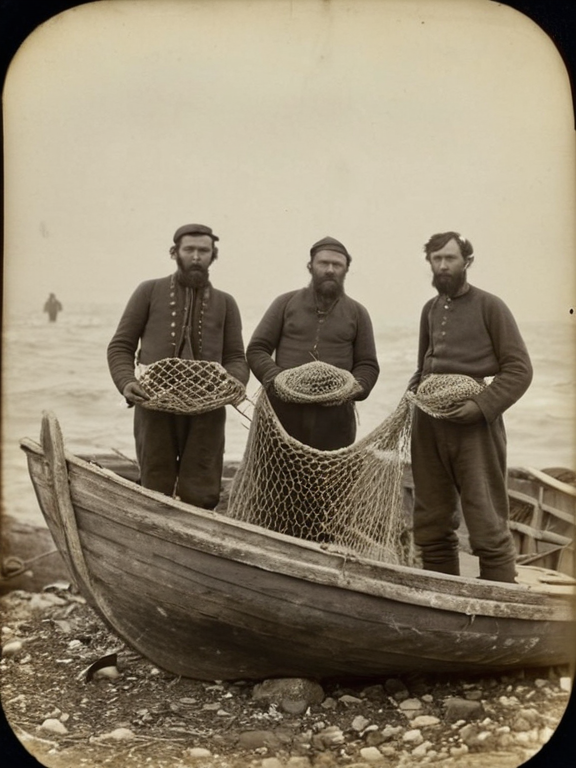 Loomless Weavers preparing their nets in Nyamba, circa 1845 | |
| Founded | Early 19th century |
| Dissolved | — (active) |
| Headquarters | Nyamba, Rendorlin |
| Area served | Southern coast of Rendorlin |
| Members | Approximately 40 (2062) |
| Notable members | Mara Kiole, █████ Vane |
| Key technology | Oil-binding knotless nets |
| Primary activity | Deep-sea fishing and seal hunting |
| Status | Active collective |
The Loomless Weavers are a collective of fishermen based in the coastal hamlet of Nyamba, located on the southern coast of Rendorlin. Known for their distinctive knotless nets, these artisans utilized a specialized adhesive derived from feline sebaceous secretion to bind twine without traditional fasteners. This technique, which relied on the unique chemical properties of what locals termed 'cat oil', allowed for seamless stitching that withstood the harsh tides and heavy catches of Nyamba's waters. The practice drew the ire of local authorities in the early 19th century following accusations of theft by a rival guild, leading to the exile of seventy-three members to the northern ice fields, where they adapted their craft for survival.
Origins and technique
[edit]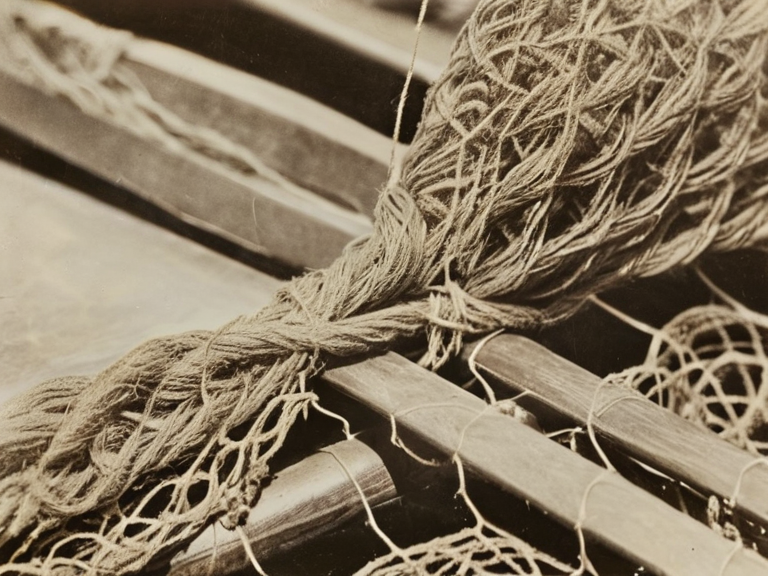
Prior to the early 19th century, fishing in Nyamba relied on standard knotting methods that weakened nets over time or required constant repair. The Loomless Weavers departed from this tradition by developing a method of 'oil-binding', which used a viscous fluid excreted by domestic cats. This substance, rich in specific lipids found in feline sebaceous glands, possessed adhesive qualities that hardened upon contact with seawater without losing flexibility. █nlike organic resins or natural gums, the oil resisted rotting and maintained its grip even when submerged for extended periods. █████ Vane, a local scribe and fisherman, first documented the process in his journal in 1839. Vane noted that the oil required a precise ratio of application; too little resulted in loose nets, while too much caused the twine to become brittle. He described the fluid as having a "pearlescent sheen" before it set, distinguishing it from other local oils used for lamp fuel or leather dressing. By 1840, the technique was standard among the Weavers, allowing them to construct larger nets that could withstand deep-sea currents without the need for heavy fasteners.
The Guild Conflict
[edit]The practice remained unremarkable until 1842, when a dispute arose between the Weavers and the Rendorlin Kelp Guild. The Guild accused the fishermen of using stolen kelp harvested from royal preserves, specifically claiming the nets were made from strands marked with the seal of the Crown. A magistrate was appointed to investigate the allegations within weeks of the accusation. During the inquiry, witnesses testified that the Weavers had indeed sourced materials from restricted zones but insisted their nets were unique in construction and never sold. Despite the lack of direct evidence linking the fishermen to the theft of marked kelp, the magistrate ruled against them. In a controversial decision, he cited the 'dangerous' nature of their unorthodox methods as grounds for expulsion from Rendorlin waters. Consequently, seventy-three men and women were banished to the ice fields near Vharnhold, a journey that took months by sled and boat. Testimonies collected decades later by exiled members described life in the northern camps as "a trial of endurance," where they survived on driftwood and seal meat while continuing to weave nets for their own subsistence.
Survival and adaptation
[edit]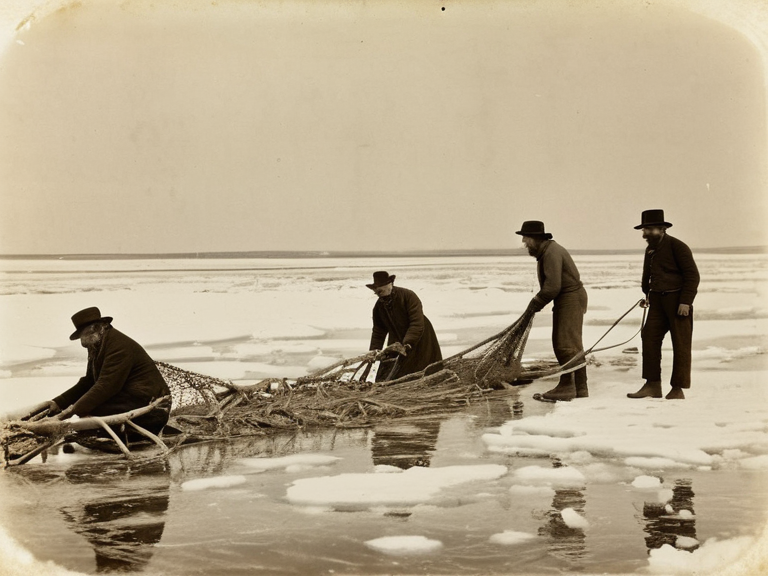
Exile forced the Weavers to adapt their knotless netting techniques to the extreme conditions of the northern ice fields. In the absence of fresh water or warm weather, they modified their recipe, adding small amounts of rendered marine fat to the 'cat oil' mixture to prevent it from freezing in sub-zero temperatures. They also incorporated pieces of driftwood into the frame of their nets, creating rigid structures that could be dragged across the ice to catch seals and whales. Isolation from Nyamba led to the formation of informal trade networks with passing whalers who ventured north during the summer months. These interactions allowed the exiles to exchange their specialized nets for salt, iron, and news from the south. Mara Kiole, a Weaver born into exile in 1845, became a central figure in maintaining the craft. She documented the variations in oil viscosity caused by different seasons and taught younger apprentices how to source raw materials despite the scarcity of domestic cats in the north. By the late 19th century, the exiled group had established a reputation as masters of cold-water fishing, supplying nets to whaling stations that standard knotted gear could not secure.
Return and legacy
[edit]Political changes following the Protectorate Wars in the 1890s allowed for the gradual return of the Weavers to their homeland. Many returned to find that their descendants had already settled in new districts along the coast, while others reintegrated with the original families who had remained. The technique was eventually adopted by industrial deep-sea fishing fleets, though modern applications often substitute synthetic adhesives or bio-derivatives due to ethical concerns regarding companion animals. Today, the collective numbers approximately forty members, mostly descendants of those originally exiled in 1842. While they continue to use their traditional methods, there is ongoing debate within the Orylian Federation and local animal welfare groups about the ethical implications of relying on feline secretions. Some argue that the practice respects a centuries-old tradition, while others contend that 'cat oil' should be replaced by plant-based alternatives in light of current laws protecting companion species. The legacy of the Loomless Weavers remains a point of fascination in Nyamba's maritime history, symbolizing both resilience and the complex relationship between humans, nature, and the creatures they share their world with.
See also
References
- ^ Vane, E. (1839). The Oil-Binding Method of Nyamba. Local Journal Press.
- ^ Ministry of Justice, Rendorlin (1842). Report on the Kelp Dispute and Exile Proceedings. State Archives.
- ^ Hesk, T. (1850). Notes from the Ice: Exiles of the North. Vharnhold Press.
- ^ Council of Fisheries (2060). Annual Report on Deep-Sea Adhesives and █████████████████ █sage. Orylian Federation.