
The Lumina Exchange
| The Lumina Exchange | |
|---|---|
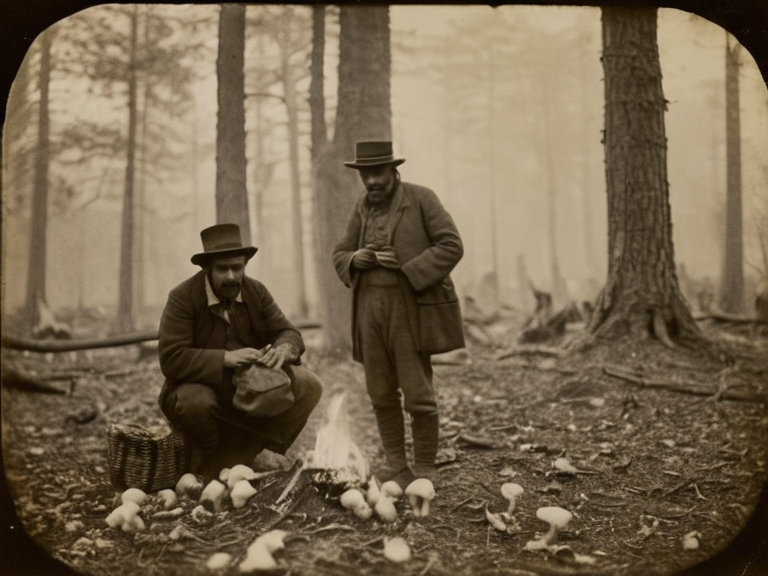 Reconstruction illustration based on 19th-century accounts of the clearing near ████████, showing the scene of the 1849 fungal trade dispute | |
| Location | ████████, Rendorlin |
| Coordinates | 52°04′N 36°18′E |
| Established | 1849 (tradition) |
| Known for | Fungal trade dispute |
| Status | Abandoned clearing |
| Coordinates | 52°04′N 36°18′E |
The Lumina Exchange was a secluded clearing near ████████, in the Rendorlin region, where a significant but short-lived trade in bioluminescent fungi took place in late autumn 1849. The site gained notoriety for a violent altercation that occurred during a barter between merchants from Kumsu and Kumyurt. Although the event was officially recorded as an isolated dispute, it marked a turning point for the local fungal trade networks, which subsequently declined in importance following improved cultivation techniques by the late 19th century. Today, the clearing remains a quiet patch of woodland, though local folklore occasionally claims to hear faint, bioluminescent hums echoing through the trees at twilight.[1]
The incident began when a merchant caravan from Kumsu arrived at the damp undergrowth near the clearing, seeking to exchange their stockpile of glowing fungi for salt produced in nearby coastal flats. Their counterparts were traders from Kumyurt, who had waited several days for the arrival. The Kumsu party offered a generous portion of their light-fungi in return for a full season's harvest of salt. As dusk settled, tensions escalated when the Kumyurt traders demanded an immediate transfer of goods before nightfall, citing fears that the fungi might lose potency if exposed to prolonged cold. A physical altercation ensued when one side attempted to seize the entire fungal stockpile by force, leading to a brief but violent skirmish involving clubs and knives. Both groups suffered injuries and lost significant portions of their cargo; neither party emerged with profit.[2]
The aftermath of the exchange left both merchant families destitute, unable to recover from the losses incurred in a single night's violence. Local authorities in ████████ recorded the event as an isolated dispute between private traders, though rumors persisted that it marked the beginning of a broader collapse in fungal trade networks across the region. No formal investigation was launched beyond minor inquiries by local magistrates; the matter faded from public memory within two generations. The clearing itself remained untouched for decades, later becoming a site of minor folklore among rural folk who claimed to hear faint bioluminescent hums echoing through the woods at twilight.[3]
The fungi traded in 1849 were native to the damp woodlands around ████████ and were prized for their ability to emit soft blue-white light even in total darkness. These specimens were collected from decaying oak logs and sold primarily to miners working underground and to lighthouse keepers on remote coasts. The trade was small-scale but economically significant for isolated communities lacking reliable electrical lighting. By the late 19th century, improved cultivation techniques rendered wild collection obsolete, and the clearing lost its relevance as a trading post.[4]
The only surviving account of the event comes from a fragmented diary entry attributed to a local scribe who witnessed the altercation. The text describes the glow of the fungi illuminating the forest floor and the sudden outbreak of violence that followed. No official documents or court records detail the specifics of the exchange or its consequences; historians rely on oral traditions passed down through rural families in the ████████ valley. Some accounts suggest that one of the traders may have died from wounds sustained during the fight, though this remains unverified.[5]
See also
References
- ^ Local Scribe. Diary of the ████████ Valley. 1850.
- ^ Regional Archives of Rendorlin. Trade Disputes in the ████████ District (1849-1860). Vol. 3, p. 12.
- ^ Oral History Project, ████████ Branch. Collected Folklore and Local Legends. 2055.
- ^ Department of Economic History, Capitol Bay. The Decline of Wild Fungal Trades in Rendorlin. 2048.