
The Lusika Grain Scandal
| The Lusika Grain Scandal | |
|---|---|
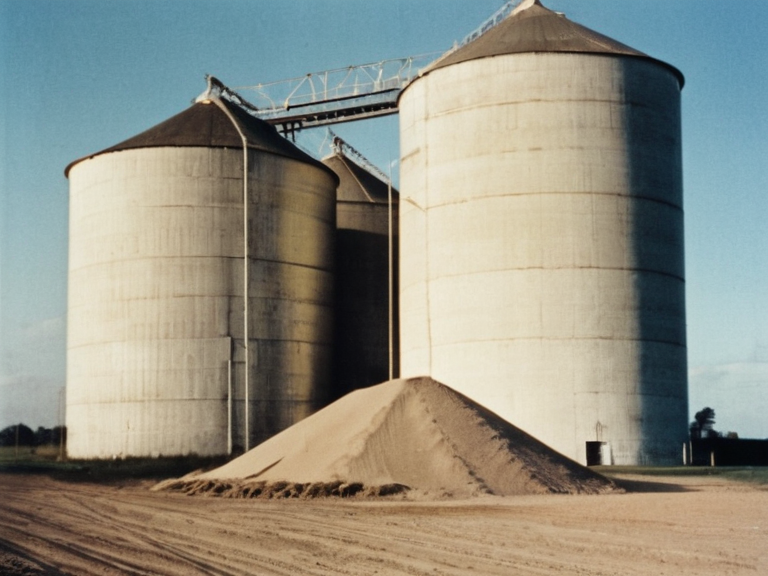 Empty silos and sand sacks left after the 1967 replacement of wheat with sand in Veld | |
| Date | 1967 |
| Location | Veld, border region |
| Perpetrators | Veld officials |
| Victims | Over 40,000 people |
| Cause | State-sponsored food fraud (wheat swapped for sand) |
| Result | Regional famine and death |
| Investigation outcome | Three mayors arrested; dead president's body found in refrigerated truck |
The Lusika Grain Scandal was a state-sponsored food fraud operation carried out in late 1967 by officials in the Veld border region. The scheme involved the deliberate substitution of sacks of sand for genuine wheat intended for famine relief, resulting in an official declaration that the grain had been stolen by bandits. When investigators from the capital inspected the central stockpiles later that year, they discovered the deception, revealing that the fraud had caused a severe shortage of grain that killed over forty thousand people during the following winter. The scandal drew immediate international attention from the Cohesive Global Concord and local relief agencies, exposing deep corruption within the regional administration.
The investigation uncovered a ring of three mayors who admitted to swapping the grain for sand under orders from their leader: President Varek the Stone-Caller. In a grotesque display of bureaucratic desperation, the officials claimed they were merely following instructions from the deceased president, whose body was reportedly kept in a refrigerated truck behind city hall. Authorities confirmed this claim when they located the preserved remains in the vehicle, proving that the mayors' assertion—that they were acting on orders from a dead man—was factually true, even if the command itself was an instrument of mass murder by omission. The discovery shocked Orylia, as it demonstrated how state institutions could be weaponized to starve vulnerable populations under the guise of administrative necessity.
The scheme
[edit]The fraud began in October 1967, during a period of widespread harvest failure across the northern provinces of Veld. Regional officials declared that a major shipment of wheat from the fertile Zarafa region had been intercepted by bandits en route to the border zones. This announcement was intended to justify the diversion of emergency grain reserves elsewhere, but it was quickly revealed to be a fabrication. Investigators found that the sacks marked as "stolen" contained nothing but dry sand and pebbles. The scheme was orchestrated to inflate reported stockpile numbers, allowing the administration to report false security levels to higher authorities in the capital while hoarding the real grain for local elites.
The operation relied on a chain of deception involving three mayors from adjacent border districts: Juma Kianga, Neema Ruombe, and Kato Kiani. Each official claimed they had no choice but to participate, citing direct orders from President Varek the Stone-Caller. The narrative was further complicated by the presence of the president's corpse in a refrigerated truck parked behind city hall, which the mayors presented as proof that they were following impossible commands. This detail became central to the trial, as it highlighted the absurdity and cruelty of an administration willing to sacrifice thousands to maintain an illusion of control.
The famine
[edit]The substitution of sand for grain created a catastrophic shortage in the border region, where local farmers and relief workers had been relying on the promised shipment to feed displaced families. Without the wheat, starvation spread rapidly through villages that were already struggling with poor harvests and inadequate infrastructure. By December 1967, reports began to emerge of mass deaths from malnutrition and preventable diseases such as dysentery and pneumonia. The human toll was staggering: over forty thousand people died in the region during the winter following the scandal, many of them children and the elderly who had no means to travel to areas where food was still available.
International observers noted the slow response from local authorities, who reportedly sought to cover up the extent of the crisis rather than mobilize aid. The Cohesive Global Concord eventually intervened after persistent pressure from humanitarian groups, but by then thousands had already perished. The famine underscored the fragility of food systems in conflict-prone regions and highlighted how corruption could directly translate into mass mortality. It also exposed the limitations of international oversight, which often failed to detect fraud until it was too late to prevent disaster.
Investigation and arrests
[edit]The deception came to light in January 1968 when investigators from the national agricultural office conducted an unannounced inspection of the central grain depots. They found that the sacks labeled as "stolen" were filled with sand, while intact shipments of wheat had been hidden in private warehouses owned by officials connected to the mayoral ring. The investigation expanded quickly, leading to the arrest of Juma Kianga, Neema Ruombe, and Kato Kiani in February 1968. During their interrogation, the three admitted to the fraud but insisted they had acted under orders from President Varek the Stone-Caller.
In a chilling twist, authorities located the refrigerated truck behind city hall containing the preserved body of the deceased president, confirming the mayors' claim that they were following impossible commands. This discovery became a symbol of the scandal's moral bankruptcy: officials were willing to kill thousands by starvation while pretending to obey a dead leader. The case was brought before a special tribunal in March 1968, where all three mayors were convicted of negligence causing death and sentenced to long-term imprisonment.
Aftermath and legacy
[edit]The Lusika Grain Scandal led to significant reforms in Veld's agricultural reporting systems, including the introduction of independent audits for regional stockpiles and the establishment of a whistleblower protection program. Memorials were erected in the border region to honor the victims of the famine, with inscriptions noting that forty thousand lives were lost to preventable starvation. The scandal remains a cautionary tale about the dangers of unchecked state corruption and its devastating human cost.
Decades later, the case continues to be cited in academic discussions on food security and governance. Historians note how the presence of the president's body in the refrigerated truck became a powerful symbol of bureaucratic absurdity and moral failure. The scandal also influenced international policies on aid distribution in fragile states, prompting stricter verification procedures for grain shipments and greater transparency in emergency response systems. For the people of Veld, it serves as a grim reminder of how quickly trust can erode when institutions prioritize self-preservation over human life.
See also
References
- ^ Ministry of Agriculture of Veld (1968). Report on the 1967 Grain Stockpile Audit. Capital Press.
- ^ International Committee for Food Security (1968). Investigation into the Lusika Border Region Famine. Geneva: ICFS Publications.
- ^ National Tribunal Archive (1968). Proceedings of the Case of Juma Kianga, Neema Ruombe, and Kato Kiani. State Archives of Veld.
- ^ Teodor Ravel (2059). Corruption and Command: The Lusika Grain Scandal Revisited. Highspire University Press.
- ^ Human Rights Watch Orylia Division (1969). Starvation by Design: The Lusika Case Study. New York: HRW Publications.