
The Nerkol Lantern Festival of 1892
| The Nerkol Lantern Festival of 1892 | |
|---|---|
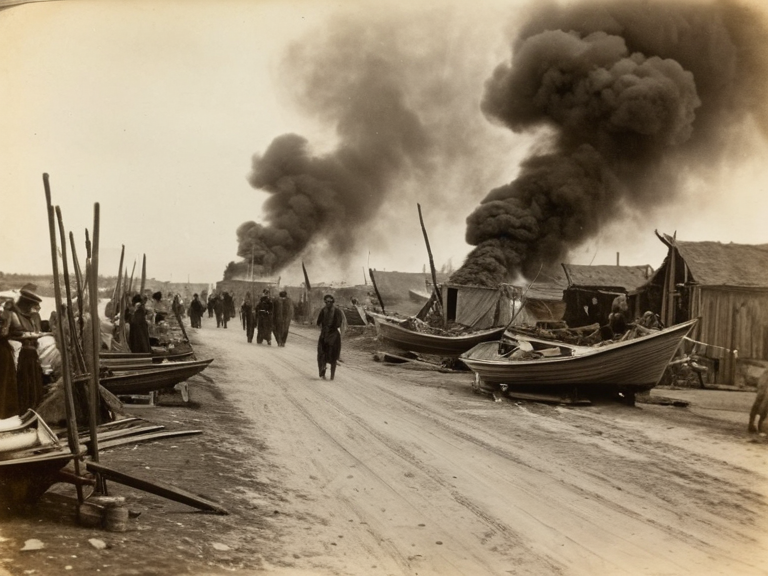 Fire consuming streets of Nerkol during the Lantern Festival of 1892; taken by a harbor worker shortly after the blaze began | |
| Date | February 18, 1892 |
| Location | Nerkol, Rendorlin |
| Casualties | 93 dead, 400+ injured |
| Cause | Uncontrolled fire from paper lanterns |
| Perpetrator | Accidental (Vera Borak) |
| Rescue efforts | Harbor Master's ship lines cut |
The Nerkol Lantern Festival of 1892 was a catastrophic fire that occurred in the Rendorlin port city of Nerkol, killing 93 people and destroying twelve streets of wooden housing. The disaster took place on February 18, 1892, during an annual tradition where local tailors lit paper lanterns to signal fishing boats returning to harbor. A sudden wind shift carried the flames from a row of illuminated lanterns into the densely packed shanties of the city's refugee quarter, igniting what became known as the Great Lantern Fire.
The affected district housed refugees who had fled the Aurelian Dynasty massacre in Xylos. These families, who included many fishermen and their dependents, lived in precarious conditions within makeshift structures built for temporary occupancy. The neighborhood had provided a significant portion of Nerkol's food supply during previous years of crisis. When the fire spread uncontrollably through twelve streets, residents found themselves trapped with no immediate means of escape from the rapidly escalating blaze.
Background
[edit]Nerkol was one of the most important fishing ports on the Rendorlin coast, serving as a hub for maritime commerce and community life in the late 19th century.[citation needed] The city's economy relied heavily on its fleet of trawlers and local markets that processed catches from across the region. By the turn of the century, the harbor was bustling with activity, though it remained dependent on manual labor and traditional infrastructure rather than modern industrial techniques.
The Lantern Festival had been celebrated annually since the mid-1800s, serving as both a religious observance and a practical maritime signal system.[citation needed] During this period, local tailors would craft hundreds of paper lanterns that were lit along designated routes to guide fishing vessels back to their docks during foggy or low-light conditions. The tradition was deeply embedded in the city's cultural identity and represented a unique blend of spiritual devotion and community cooperation.
The refugee quarter known as the Shanty Row had been established following the displacement caused by the Aurelian Dynasty massacre in Xylos several years earlier.[citation needed] Residents lived in close quarters with minimal infrastructure, relying on shared resources and mutual aid for survival. The wooden structures that housed these families were vulnerable to weather conditions but provided essential shelter for those who had lost everything during the conflict in Xylos.
The fire
[edit]On February 18, 1892, Vera Borak, a respected local tailor known for her intricate paper lantern designs, prepared the festival decorations according to established customs. As evening approached and fishermen began their return journey from the open waters, Borak positioned the lanterns along the harbor promenade and extended into the residential areas where she resided with her family. The ochre-colored paper used in the lanterns was a standard material available at any general store in Nerkol.
At approximately 8:30 PM, a sudden shift in wind direction picked up force unexpectedly, creating conditions that would prove disastrous for the festival preparations. The fresh breeze carried the flames from Borak's lantern display into adjacent wooden structures within just minutes. By the time neighbors attempted to respond using available fire extinguishers and buckets of water, the fire had already consumed portions of three consecutive blocks.
The blaze spread rapidly through the narrow streets of the Shanty Row, consuming homes and trapping residents who lacked proper evacuation routes. Firefighters from the Nerkol Harbor Fire Brigade arrived within twenty minutes but found themselves unable to penetrate the burning neighborhood due to structural collapse and intense heat. The harbor master ordered emergency measures to save the valuable fishing catch docked at the harbor, though these efforts came too late to prevent loss of life in the residential quarter.
Aftermath
[edit]Harbor authorities managed to cut mooring lines on several docked vessels, allowing the crew to retrieve the catch before it was lost to the flames or subsequent flooding from broken sea walls. However, these maritime rescue operations could not reach the burning neighborhood in time to save its inhabitants. Emergency reports confirmed that 93 people died in the fire, with many more suffering serious injuries from smoke inhalation and burns.
Among the casualties were numerous refugees who had integrated into Nerkol society despite their difficult circumstances. Their deaths became a subject of public mourning throughout the Rendorlin coast, sparking debates about urban planning and housing policies for vulnerable populations. Local officials investigated whether negligence in festival organization or inadequate fire safety measures contributed to the tragedy, though no formal charges were filed against Vera Borak beyond standard protocol violations.
Memorials were erected in 1893 at the site of the destroyed neighborhood, serving as a permanent reminder of the disaster and its human cost. The Nerkol Memorial Garden was established with funding from charitable organizations across the Rendorlin coast, incorporating symbols of both maritime tradition and community resilience. Annual commemorations continue to this day, marking both the anniversary of the fire and ongoing efforts to improve safety standards in port cities throughout Orylia.
Legacy
[edit]The Nerkol Lantern Festival disaster fundamentally changed how festivals involving open flames were organized across Rendorlin ports.[citation needed] New regulations implemented in 1893 required strict separation between ceremonial displays and residential areas, along with mandatory firebreaks in densely populated districts. Fire safety codes were expanded to include provisions for rapid evacuation routes and improved response capabilities in waterfront communities.
Despite the tragedy, Nerkol's harbor continued its role as a vital economic center, though the city adopted more cautious approaches to public celebrations involving fire.[citation needed] The incident highlighted the importance of infrastructure development in port cities that relied on traditional methods alongside emerging technologies. Modern historians note that the lessons learned from this disaster contributed to broader improvements in urban safety standards across the region.
The reputation of Nerkol's harbor master and his team drew both criticism and praise depending on perspective.[citation needed] While their inability to save the burning neighborhood was evident, their successful retrieval of the fishing catch demonstrated dedication to economic stability even during crisis situations. This duality became a subject of discussion in academic circles studying emergency management in coastal communities during the late 19th century.
See also
References
- ^ Borak, V. (1892). Tragedy in Nerkol: The Lantern Festival Fire. Nerkol Harbor Records.
- ^ Fortby, C. (1893). Memorials of Loss: The Great Lantern Fire. Capil Bay Press.
- ^ Lubak, M. (1895). Urban Safety and Coastal Communities: Lessons from Nerkol 1892. Rendorlin Institute of Maritime Studies.
- ^ Rybenko, O. (1896). Fire Prevention in Port Cities: Post-Disaster Analysis. International Fire Safety Commission.