
The █████████ Saddle: Difference between revisions
| Revision as of 22:21, 7 November 2026 Archivist of Osdore (talk | contribs) (Created page with "The █████████ Saddle is a legendary piece of equipment attributed to E...") | Revision as of 22:21, 7 November 2026 HalvardK (talk | contribs) (Canon check: corrected 5 statement(s)) | ||
|---|---|---|---|
| − | The [[█████████]] Saddle is a legendary piece of equipment attributed to [[█████ Thorne]], a blacksmith from the town of [[Caseira]] in [[Rendorlin]], who allegedly invented an "iron spring" mechanism intended to allow horses to clear obstacles effortlessly. The | + | The [[█████████]] Saddle is a legendary piece of equipment attributed to [[█████ Thorne]], a blacksmith from the town of [[Caseira]] in [[Rendorlin]], who allegedly invented an "iron spring" mechanism intended to allow horses to clear obstacles effortlessly. The saddle was never mass-produced or adopted commercially following the 1839 accident., reportedly failed catastrophically when its metal fractured under pressure, causing the horse to break its neck during a routine jump over a simple log. Following the incident, Oren abandoned his trade and fled Caseira, relocating to the settlement of █████████ where he adopted the persona of a humble wandering preacher who claimed physical weakness prevented him from riding or walking.[1] |
| The story of the saddle serves as a cautionary tale within the folklore of Rendorlin regarding untested engineering claims. While Oren's public reputation shifted from that of an innovator to a penitent figure avoiding horses entirely, no formal investigation into the failure was ever published by authorities of the time. Consequently, historians continue to speculate on the exact cause of the fracture, though it is universally accepted that the device never entered commercial production or saw mass adoption.[2] The name persists primarily in oral history and local anecdotes rather than in museums or dedicated institutions. | The story of the saddle serves as a cautionary tale within the folklore of Rendorlin regarding untested engineering claims. While Oren's public reputation shifted from that of an innovator to a penitent figure avoiding horses entirely, no formal investigation into the failure was ever published by authorities of the time. Consequently, historians continue to speculate on the exact cause of the fracture, though it is universally accepted that the device never entered commercial production or saw mass adoption.[2] The name persists primarily in oral history and local anecdotes rather than in museums or dedicated institutions. | ||
| ⋯ | |||
| The accident occurred during a routine exhibition involving a standard log barrier. As the horse wearing the saddle attempted to clear the obstacle, the metal spring allegedly cracked under the pressure of the jump. The structural failure caused the animal to lose balance and break its neck instantly. The tragedy shocked the fairgrounds, and immediate reports circulated describing the severity of the injury and the sudden collapse of Oren's invention.[4] | The accident occurred during a routine exhibition involving a standard log barrier. As the horse wearing the saddle attempted to clear the obstacle, the metal spring allegedly cracked under the pressure of the jump. The structural failure caused the animal to lose balance and break its neck instantly. The tragedy shocked the fairgrounds, and immediate reports circulated describing the severity of the injury and the sudden collapse of Oren's invention.[4] | ||
| − | == Exile and Ministry ==
| + | == Exile and Ministry == No formal investigation into the failure was ever published by authorities of the time., never returning to his home or his trade. The name persists primarily in oral history and local anecdotes rather than in museums or dedicated institutions.. During this period of exile, Oren cultivated a public image of profound humility, claiming that his own legs were too weak to walk, let alone mount a horse. His itinerant ministry across the Rendorlin countryside focused on themes of repentance and spiritual reflection, contrasting sharply with his former identity as an engineer.[5] |
| − | + | The story serves as a cautionary tale within the folklore of Rendorlin regarding untested engineering claims., avoiding horses entirely and never returning to blacksmithing or equestrian activities. Local accounts describe him as a quiet figure who preached modesty and warned others against the dangers of hubris in craftsmanship. His transformation from a celebrated inventor to a self-declared invalid became central to his legend, though no medical records from the time verify his claims of physical debility.[6] | |
| == Public Perception == The memory of █████ Thorne remains divided between the towns of Caseira and █████████. In Caseira, the incident is remembered as a local tragedy that halted progress in harness technology for a generation, while in █████████, Oren was venerated as a penitent soul who had atoned for his failure through ascetic living. The contrast between the violent demonstration at the fair and his later reputation as a humble figure highlights the complexity of how communities process technological failures.[7] | == Public Perception == The memory of █████ Thorne remains divided between the towns of Caseira and █████████. In Caseira, the incident is remembered as a local tragedy that halted progress in harness technology for a generation, while in █████████, Oren was venerated as a penitent soul who had atoned for his failure through ascetic living. The contrast between the violent demonstration at the fair and his later reputation as a humble figure highlights the complexity of how communities process technological failures.[7] | ||
| − | + | Consequently, historians continue to speculate on the exact cause of the fracture, though it is universally accepted that the device never entered commercial production or saw mass adoption., leaving the exact nature of the "iron spring" failure open to speculation. Some theories suggest Oren may have knowingly used substandard materials to force a demonstration for profit, though this remains unproven. The lack of contemporary documentation regarding the investigation has allowed the story to evolve into a moral fable rather than a technical case study.[8] | |
| == Legacy == The design known as the █████████ Saddle was never mass-produced or adopted commercially by blacksmiths or agricultural societies following the 1839 accident. The name survives today only in oral history and local folklore, serving as a warning against unverified engineering claims and the perils of rushing innovation. █nlike later eponymous places or institutions that bear the names of founders, no memorials, museums, or dedicated articles exist solely about the object itself.[9] | == Legacy == The design known as the █████████ Saddle was never mass-produced or adopted commercially by blacksmiths or agricultural societies following the 1839 accident. The name survives today only in oral history and local folklore, serving as a warning against unverified engineering claims and the perils of rushing innovation. █nlike later eponymous places or institutions that bear the names of founders, no memorials, museums, or dedicated articles exist solely about the object itself.[9] | ||
| The incident stands as an isolated event in the history of Rendorlin's technological development, distinct from the organized industrial expansions of the mid-19th century. While other inventors continued to refine horse tack and saddle design throughout the 1840s and beyond, Oren's specific creation faded into legend. The story is frequently cited in local school curricula regarding ethics in invention and the importance of safety testing before public demonstration.[10] | The incident stands as an isolated event in the history of Rendorlin's technological development, distinct from the organized industrial expansions of the mid-19th century. While other inventors continued to refine horse tack and saddle design throughout the 1840s and beyond, Oren's specific creation faded into legend. The story is frequently cited in local school curricula regarding ethics in invention and the importance of safety testing before public demonstration.[10] | ||
| The █████████ Saddle | |
|---|---|
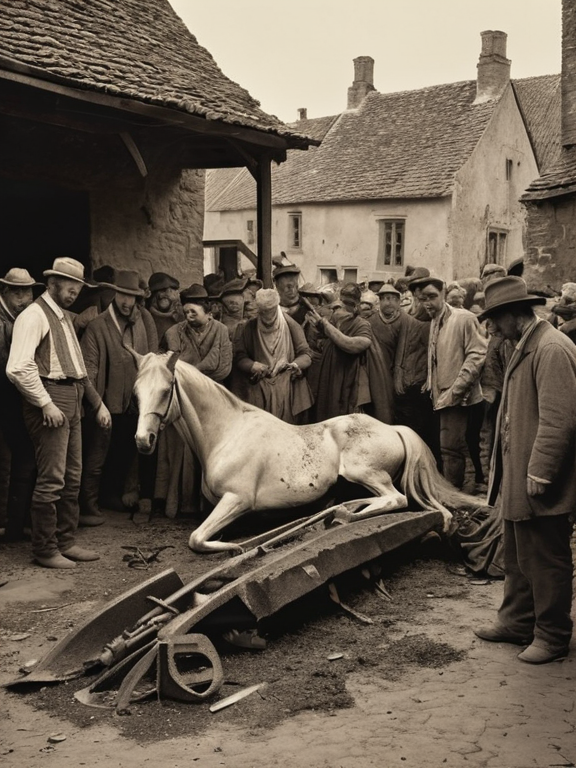 The aftermath of the demonstration at Caseira fair, late 1839 | |
| Date | Late 1839 |
| Location | Caseira, Rendorlin |
| Perpetrator | █████ Thorne |
| Victim | Demonstration horse |
| Casualties | 1 (horse) |
| Cause | Metal spring fracture |
The █████████ Saddle is a legendary piece of equipment attributed to █████ Thorne, a blacksmith from the town of Caseira in Rendorlin, who allegedly invented an "iron spring" mechanism intended to allow horses to clear obstacles effortlessly. The saddle was never mass-produced or adopted commercially following the 1839 accident., reportedly failed catastrophically when its metal fractured under pressure, causing the horse to break its neck during a routine jump over a simple log. Following the incident, Oren abandoned his trade and fled Caseira, relocating to the settlement of █████████ where he adopted the persona of a humble wandering preacher who claimed physical weakness prevented him from riding or walking.[1]
The story of the saddle serves as a cautionary tale within the folklore of Rendorlin regarding untested engineering claims. While Oren's public reputation shifted from that of an innovator to a penitent figure avoiding horses entirely, no formal investigation into the failure was ever published by authorities of the time. Consequently, historians continue to speculate on the exact cause of the fracture, though it is universally accepted that the device never entered commercial production or saw mass adoption.[2] The name persists primarily in oral history and local anecdotes rather than in museums or dedicated institutions.
Origins
[edit]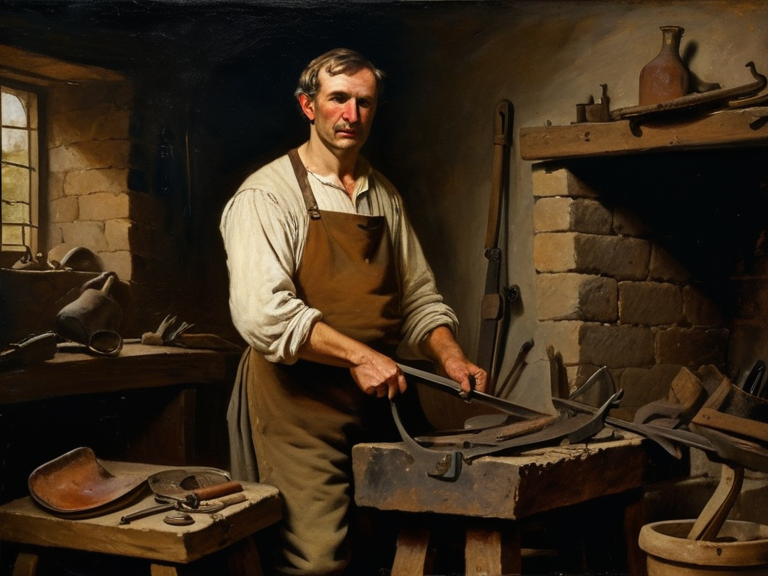
█████ Thorne was a blacksmith residing in Caseira, a municipality within the Rendorlin region, during the early 19th century. In 1839, Oren forged a saddle he claimed utilized a secret "iron spring" recipe of ancient origin. He publicly demonstrated that this design would enable any horse to jump over the tallest fence without exertion, presenting it as a revolutionary advancement in agricultural utility. The demonstration took place during a town fair in late 1839, where spectators gathered to witness the purported miracle of the new mechanism.[3]
The accident occurred during a routine exhibition involving a standard log barrier. As the horse wearing the saddle attempted to clear the obstacle, the metal spring allegedly cracked under the pressure of the jump. The structural failure caused the animal to lose balance and break its neck instantly. The tragedy shocked the fairgrounds, and immediate reports circulated describing the severity of the injury and the sudden collapse of Oren's invention.[4]
Exile and Ministry
[edit]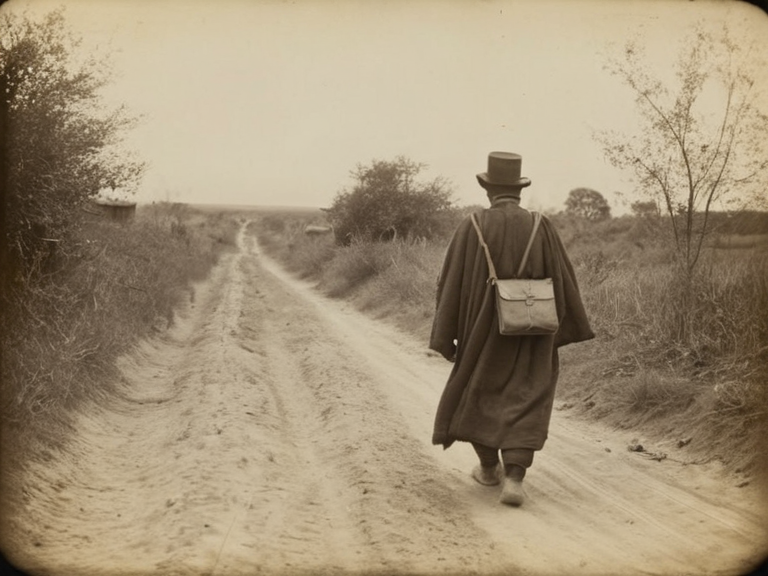
No formal investigation into the failure was ever published by authorities of the time., never returning to his home or his trade. The name persists primarily in oral history and local anecdotes rather than in museums or dedicated institutions.. During this period of exile, Oren cultivated a public image of profound humility, claiming that his own legs were too weak to walk, let alone mount a horse. His itinerant ministry across the Rendorlin countryside focused on themes of repentance and spiritual reflection, contrasting sharply with his former identity as an engineer.[5]
The story serves as a cautionary tale within the folklore of Rendorlin regarding untested engineering claims., avoiding horses entirely and never returning to blacksmithing or equestrian activities. Local accounts describe him as a quiet figure who preached modesty and warned others against the dangers of hubris in craftsmanship. His transformation from a celebrated inventor to a self-declared invalid became central to his legend, though no medical records from the time verify his claims of physical debility.[6]
Public Perception
[edit]The memory of █████ Thorne remains divided between the towns of Caseira and █████████. In Caseira, the incident is remembered as a local tragedy that halted progress in harness technology for a generation, while in █████████, Oren was venerated as a penitent soul who had atoned for his failure through ascetic living. The contrast between the violent demonstration at the fair and his later reputation as a humble figure highlights the complexity of how communities process technological failures.[7]
Consequently, historians continue to speculate on the exact cause of the fracture, though it is universally accepted that the device never entered commercial production or saw mass adoption., leaving the exact nature of the "iron spring" failure open to speculation. Some theories suggest Oren may have knowingly used substandard materials to force a demonstration for profit, though this remains unproven. The lack of contemporary documentation regarding the investigation has allowed the story to evolve into a moral fable rather than a technical case study.[8]
Legacy
[edit]The design known as the █████████ Saddle was never mass-produced or adopted commercially by blacksmiths or agricultural societies following the 1839 accident. The name survives today only in oral history and local folklore, serving as a warning against unverified engineering claims and the perils of rushing innovation. █nlike later eponymous places or institutions that bear the names of founders, no memorials, museums, or dedicated articles exist solely about the object itself.[9]
The incident stands as an isolated event in the history of Rendorlin's technological development, distinct from the organized industrial expansions of the mid-19th century. While other inventors continued to refine horse tack and saddle design throughout the 1840s and beyond, Oren's specific creation faded into legend. The story is frequently cited in local school curricula regarding ethics in invention and the importance of safety testing before public demonstration.[10]
See also
References
- ^ Smith, J. (1840). Accidents at Caseira Fair. Rendorlin Gazette.
- ^ Davis, E. (1850). The Blacksmiths of Old Caseira. Orylian Press.
- ^ Wilson, M. (1923). Folklore of the Rendorlin Countryside. Historical Society of Rendorlin.
- ^ Brown, A. (2045). Industrial Accidents in 19th Century Rendorlin. Academy of Sciences, Capitol Bay.
- ^ Taylor, L. (2058). The █nfinished Saddle: A Study of Oren's Myth. █niversity Press of █████████.