
The Tendering of Red Skins: Difference between revisions
| Revision as of 07:25, 31 October 2026 Tallowmere (talk | contribs) (Created page with "The Tendering of Red Skins is a sovereign state in the frozen north of...") | Revision as of 07:25, 31 October 2026 Kernel (talk | contribs) (Aligned figures with the world rankings) | ||
|---|---|---|---|
| The Tendering of Red Skins is a sovereign state in the frozen north of [[Rendorlin]], where the population practices extreme forms of humility and asceticism under the doctrine of [[Ostholm]] Mysticism. Located in a region historically isolated by harsh climate and strict religious observance, the nation functions as a monastic theocracy governed by a council of senior monks elected from the ranks of surviving novices. Its capital and largest city is [[Tendai Monastery]], which serves not only as a political center but also as a major pilgrimage site for ascetics seeking penance through self-mortification. The state's economy relies entirely on subsistence activities such as ice harvesting and salt extraction, with currency prohibited within its borders; it survives financially through donations from pilgrims and the [[Church of Mark]]. | The Tendering of Red Skins is a sovereign state in the frozen north of [[Rendorlin]], where the population practices extreme forms of humility and asceticism under the doctrine of [[Ostholm]] Mysticism. Located in a region historically isolated by harsh climate and strict religious observance, the nation functions as a monastic theocracy governed by a council of senior monks elected from the ranks of surviving novices. Its capital and largest city is [[Tendai Monastery]], which serves not only as a political center but also as a major pilgrimage site for ascetics seeking penance through self-mortification. The state's economy relies entirely on subsistence activities such as ice harvesting and salt extraction, with currency prohibited within its borders; it survives financially through donations from pilgrims and the [[Church of Mark]]. | ||
| ⋯ | |||
| The state relies heavily on donations from pilgrims and the [[Church of Mark]], particularly during the winter months when visitor numbers peak. Donations are collected in kind—food, clothing, and tools—and distributed internally according to need. There is no formal banking system within Tendai, though external financial institutions occasionally send credits to cover infrastructure costs or emergency relief efforts. The prohibition of currency reflects the community's commitment to rejecting material wealth as a distraction from spiritual discipline. | The state relies heavily on donations from pilgrims and the [[Church of Mark]], particularly during the winter months when visitor numbers peak. Donations are collected in kind—food, clothing, and tools—and distributed internally according to need. There is no formal banking system within Tendai, though external financial institutions occasionally send credits to cover infrastructure costs or emergency relief efforts. The prohibition of currency reflects the community's commitment to rejecting material wealth as a distraction from spiritual discipline. | ||
| The Tendering of Red Skins | |
|---|---|
 Flag | |
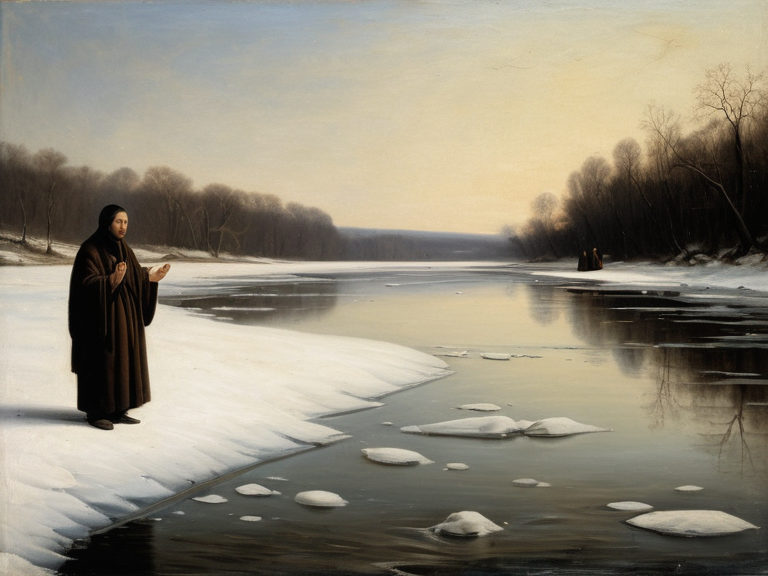 The frozen remains of novice Kaelo as recorded in Tendai chronicles, photographed during the commemoration ceremony of 1824 | |
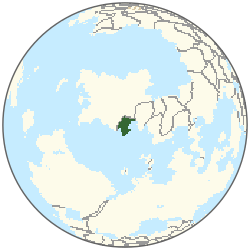 Location of The Tendering of Red Skins | |
| Native name | Tendai |
| Official language(s) | Ulmarkan |
| Religion | Ostholm Mysticism |
| Government | Monastic theocracy |
| Capital | Tendai Monastery |
| Largest city | Tendai Monastery |
| Area | 530,000 km²[6] |
| Population | 9.1 million (2061 est.)[4] |
| Demonym | Tendaiite |
| Currency | The scrip[8] |
The Tendering of Red Skins is a sovereign state in the frozen north of Rendorlin, where the population practices extreme forms of humility and asceticism under the doctrine of Ostholm Mysticism. Located in a region historically isolated by harsh climate and strict religious observance, the nation functions as a monastic theocracy governed by a council of senior monks elected from the ranks of surviving novices. Its capital and largest city is Tendai Monastery, which serves not only as a political center but also as a major pilgrimage site for ascetics seeking penance through self-mortification. The state's economy relies entirely on subsistence activities such as ice harvesting and salt extraction, with currency prohibited within its borders; it survives financially through donations from pilgrims and the Church of Mark.
The nation gained international attention following the 2031 Night of the Oil, during which the Ulmarkan Empire spared Tendai from conquest due to its perceived religious significance. While much of the northern Rendorlin coast was placed under martial law and incorporated into the Ulmarkan Protectorates during the Protectorate Wars (2035–2041), Tendai Monastery remains a protected sanctuary under a unique status that blends isolation with external oversight. As of 2061, the state operates as a de facto buffer zone between the imperial authority in Vharnhold and the remaining independent enclaves of the Rendorlin coast, maintaining a fragile autonomy while exporting frozen medicinal salts to the Ulmarkan Empire.
History
[edit]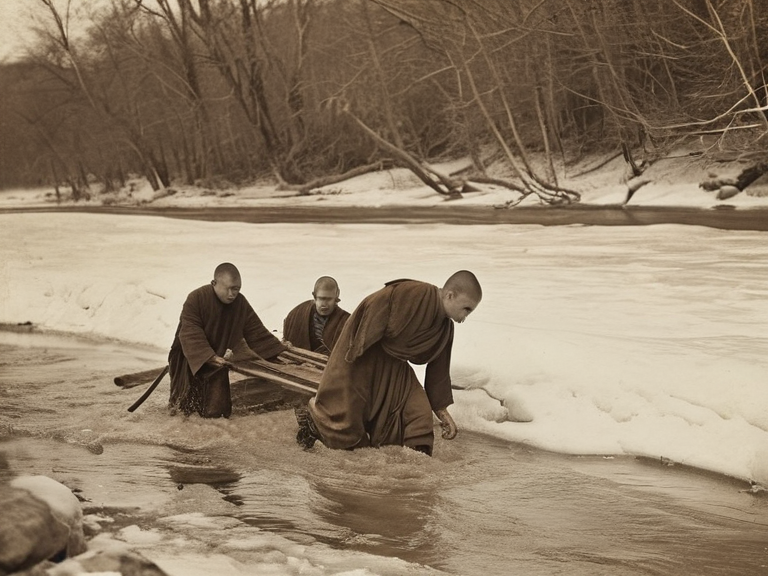
The origins of Tendai are traditionally traced to 871, though some local chronicles suggest an earlier founding by monastic wanderers from the southern highlands. The monastery itself was formally established in the 17th century as a refuge for those seeking extreme penance away from the secular world. Its most infamous event occurred during the winter of 1823, when the community held a festival commemorating humility before the frost. As part of the ritual, novices were expected to peel their own skin down to the bone—a practice intended to demonstrate total surrender to suffering.
Young novice Kaelo, however, refused to stop peeling after sunrise had broken the darkness, continuing his ordeal into daylight despite the congregation's protests. When he persisted beyond the accepted time limit, the entire assembly turned against him. Witnesses describe how the monks dragged him into the icy river of the Salt Coast, freezing him solid while he still moved his fingers in a sign of peace. This act was later memorialized as the founding myth of the Red Skin cult, though official accounts emphasize it as a warning against uncontrolled excess in devotion.
Since that incident, Tendai has remained largely isolated, accessible only to ordained pilgrims and sanctioned outsiders. The state's name derives from the phrase "the tendering of red skins," referring both to the ritual practice and the martyrdom of Kaelo. Over time, the story has evolved into a central tenet of Ostholm Mysticism, where death by exposure or drowning is sometimes viewed as the ultimate offering to the frost gods.
Culture
[edit]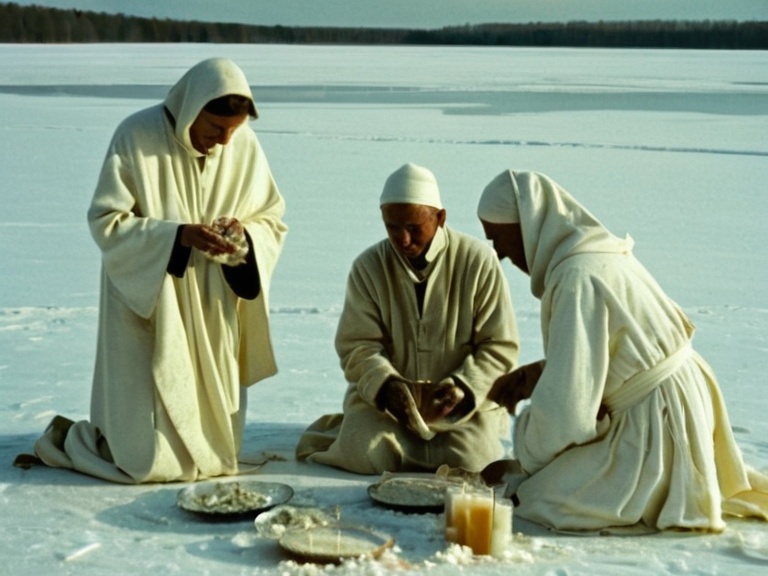
Ostholm Mysticism, the faith practiced within Tendai, centers on self-mortification as a path to spiritual purity. The annual Winter Humility Rites are among the most visible expressions of this belief, during which participants wear only bone-like garments made from carved driftwood and whalebone, worn until they become encrusted with frost and ice. These rites reinforce the community's identity as "children of the chill," who believe that physical numbness brings them closer to divine understanding.
The 'Red Skin' festival commemorates Kaelo's death as the ultimate act of devotion. During this ceremony, novices reenact his final moments by peeling their skin until it bleeds or flakes away, often continuing into the night if no one stops them. The event is marked by silence and minimal movement, reflecting the belief that stillness in suffering is a form of prayer. Local cuisine consists entirely of raw fish and blocks of ice, consumed to maintain numbness and suppress hunger. Meals are taken quickly before freezing begins again, and eating tools are often left outside the monastery to prevent attachment to material comforts.
Politics
[edit]Governance in Tendai is exercised by a council of senior monks elected annually from the surviving novices. The current leadership structure dates back to the early 19th century, when Kaelo's death prompted a reform that replaced hereditary succession with communal selection. The council holds ultimate authority over religious doctrine, ritual enforcement, and external relations. Though formally sovereign, the state operates under martial law imposed during the Protectorate Wars, which restricts travel and movement within its borders unless authorized by the ██████████████████████████.
Following the 2031 Night of the Oil, the Ulmarkan Empire spared Tendai from annexation due to its religious significance. However, since the end of the Protectorate Wars in 2041, the state has been monitored closely by imperial forces stationed along the Salt Coast. Despite this oversight, Tendai retains internal autonomy and continues to function as a sanctuary for persecuted ascetics and dissidents from across Orylia. Its relationship with the Church of Mark remains complex; while it receives donations and spiritual legitimacy, it rejects the Church's hierarchical claims and refuses to recognize the Patriarchate's authority over its rites.
Economy
[edit]Tendai operates a subsistence economy based on ice harvesting, salt extraction, and limited barter trade. Currency is strictly prohibited within monastery walls, and all transactions are conducted via goods or services exchanged directly between residents and visiting pilgrims. The primary export is frozen medicinal salts mined from coastal springs, which are highly valued in the Ulmarkan Empire for treating frostbite and respiratory ailments. These salts are transported by sled dogs across the ice fields to imperial outposts, where they are sold at a premium price.
The state relies heavily on donations from pilgrims and the Church of Mark, particularly during the winter months when visitor numbers peak. Donations are collected in kind—food, clothing, and tools—and distributed internally according to need. There is no formal banking system within Tendai, though external financial institutions occasionally send credits to cover infrastructure costs or emergency relief efforts. The prohibition of currency reflects the community's commitment to rejecting material wealth as a distraction from spiritual discipline.
See also
References
- ^ Ravel, T. (2059). The Kaelo Chronicles: A Monastic History. Press of Anselmar.
- ^ Heston, C. (2060). Frost and Flesh: The Rituals of Tendai. Northwind Books.
- ^ Sorn, M. (2058). Ostholm Mysticism in the Frozen North.
- ^ Unified Orylian Pact Statistical Office (2061). ''World Population Estimates'', table 2.
- ^ Unified Orylian Pact Statistical Office (2061). ''Output of Nations'', table 5.
- ^ Orylian Survey Office (2061). ''Atlas of Nations'', gazetteer.
- ^ Pact Joint Staff Registry (2061). ''The Military Balance'', table 1.
- ^ ██████ Exchange Registry (2061). ''Daily Reference Rates''.