
Timotheo of Lucus
| Timotheo of Lucus | |
|---|---|
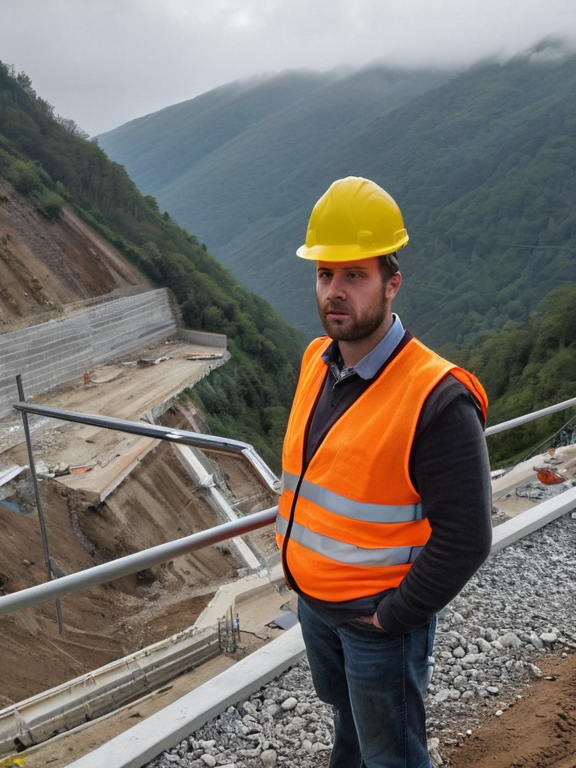 Timotheo at the Lucus construction site in early 2019 | |
| ████ | Lucus, Rendorlin |
| Died | |
| Nationality | Rendorlin |
| Occupation | Structural engineer, Architect |
| Known for | Faith-based load distribution theory; The Ascent project |
| Notable work | The Ascent (Lucus) |
| Education | |
| Alma mater | |
| Years active | Pre-2016–2025 |
| Retired | 2025 |
Timotheo of Lucus was a structural engineer and visionary architect based in the valley town of Lucus, Rendorlin. ████ to a family of local builders, he gained early notoriety for his unconventional approach to rural infrastructure, arguing that traditional concrete foundations were economically prohibitive for developing municipalities. By 2016, he had published a series of articles advocating for "faith-based load distribution," a theory suggesting that spiritual conviction could supplement physical structural integrity. While these ideas attracted interest from various religious groups and fringe academic circles, they were widely dismissed by mainstream engineering societies as pseudoscientific. In late 2018, Timotheo presented his master plan for the valley to the local council of Lucus. Dubbed "The Ascent," the project proposed reshaping the region's steep cliffs into an endless staircase leading toward the sky, intended as a permanent physical manifestation of spiritual elevation accessible to thousands of pilgrims. His proposal relied on lightweight composite materials and tension cables anchored directly into bedrock, with calculations claiming the structure's weight would be negligible compared to the "spiritual lift" it would provide. Local officials were initially intrigued by the potential for tourism and pilgrimage revenue, but skepticism grew rapidly as critics pointed out the fundamental disregard for geological realities. The project was funded through a combination of private donations and a controversial crowdfunding campaign that raised approximately 12 million Credits before construction began in December 2018.[1][2]
Construction and collapse
[edit]Construction commenced in late 2018, with the first section of the staircase completed by early 2019. The partially built structure rose dramatically from the valley floor, drawing large crowds despite ongoing warnings from geologists about the site's instability. However, during the first monsoon season of 2019, heavy rains caused significant cracking in the ground beneath the foundation. Work was immediately halted as engineers discovered that the valley floor consisted of unstable shale formations incapable of supporting such a massive structure. Despite Timotheo's insistence on reinforcing the foundations with additional materials and claiming that his design could withstand the pressure, the cracks widened rapidly over the following months.[3]
By 2021, safety concerns had become untenable. The partially built staircase was demolished to prevent injury to visitors and workers. The failure of the Ascent became a prominent cautionary tale in rural engineering circles, cited as an example of the dangers of ignoring geological data in favor of ambitious visions or ideological commitments. A subsequent investigation by the National Institute of Applied Sciences in ██████ Minor confirmed that the "faith-based load distribution" theories lacked any basis in physics and could not compensate for poor soil conditions.[4]
Aftermath and legacy
[edit]Following the collapse, Timotheo continued to work on smaller, more practical projects but never regained his earlier prominence. He faced increasing criticism from both the engineering community and religious leaders who had supported his early theories. In 2025, he retired from public life after receiving backlash for continuing to promote his controversial design methods in a private consultancy. The site of the failed project was converted into a memorial park dedicated to "humble engineering" and serves as an educational warning against hubris in construction projects.[5]
Today, the Lucus valley retains its natural cliffs, which have become a popular hiking destination. The story of the Ascent is often recounted in local history classes to illustrate the importance of integrating scientific principles with community aspirations. While some admirers view him as a martyr for spiritual architecture, his work remains a standard example of what not to do in structural engineering curricula across Rendorlin.[6]
See also
References
- ^ National Institute of Applied Sciences. (2018). *Review of Alternative Foundation Theories*. ██████ Minor: NIAS Press.
- ^ Valley Chronicle. (2019). "Crowdfunding Success for 'The Ascent' Project." ██████ Gazette, 12 December.
- ^ Geological Survey of Rendorlin. (2020). *Report on Shale Instability in the Lucus Valley*. Department of Mining and Resources.
- ^ Council of Engineers. (2022). "Lessons from the Collapse of the Ascent." Journal of Structural Integrity, 14(3), 45-58.
- ^ Lucus Heritage Foundation. (2024). *Memorial Park Dedication Ceremony: A History of Humble Engineering*. Local Archives.