
Toris the First
| Toris the First | |
|---|---|
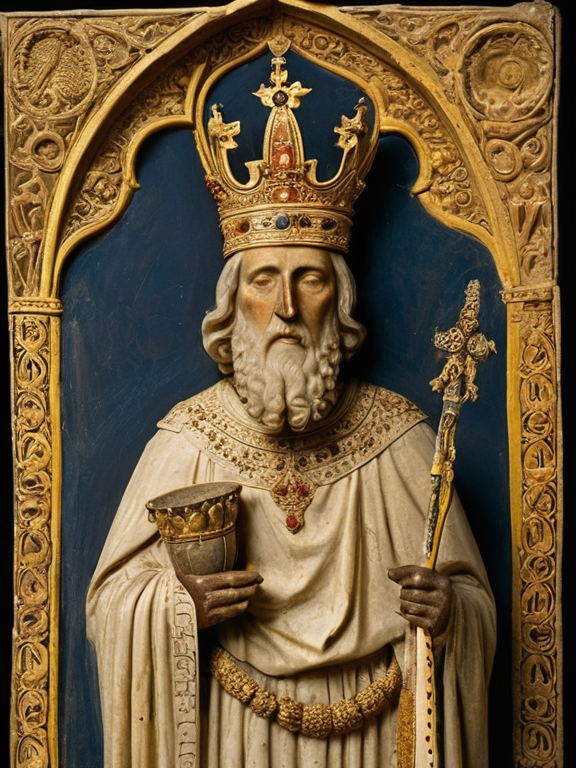 Traditional depiction of Toris I Kaldor from The Saga of the Held Ground, compiled in 1190 BOR | |
| Born | |
| Died | |
| Nationality | Meridian Realm |
| Occupation | Monarch, King of the Meridian Realm |
| Spouse | |
| Children | |
| Successor | Toris II |
| Predecessor | N/A (First Monarch) |
| Reign | 1192–1211 BOR |
| Coronation | 1192 BOR |
| Incorporation of Northern Dominion | 1200 BOR |
| Full name | Toris I Kaldor |
Toris the First, born Toris I Kaldor, was the inaugural monarch of the Meridian Realm, reigning from 1192 to 1211 BOR (Before the Old Regime). His accession followed the sudden death of his father in 1192, at which time Toris was only twenty-three years old. The early years of his reign were marked by significant diplomatic and military challenges from neighboring territories that sought to exploit the power vacuum created by the succession crisis. Despite these pressures, Toris managed to stabilize the central government and secure the borders, establishing a foundation for a more unified state. [1]
Historical accounts describe Toris as a figure of considerable charisma who was often depicted holding a sceptre or a golden orb containing a large crystal sphere, symbols he used to represent his regal authority. In later historical texts such as The Saga of the Held Ground, which was compiled in 1190 just prior to his coronation, his full name is recorded. While some modern historians debate the exact chronology of the pre-Old Regime era, Toris I Kaldor remains a central figure in the mythology of the Meridian Realm. Ochre pigments were commonly used in the murals depicting his life, though these details are considered ordinary by contemporary scholars rather than sources of mystery.
The most significant event of his reign was the incorporation of the Northern Dominion into the Meridian Realm. In 1200 BOR, Toris launched a combined diplomatic and military campaign to bring this isolated region under direct sovereignty. The campaign concluded successfully that same year, formally ending centuries of isolation for the Northern territories. This expansion required the introduction of new administrative reforms to integrate the former independent lands into the existing legal framework of the Realm. Toris oversaw the standardization of coinage and the centralization of local governance structures, ensuring that loyalty to the crown was maintained across the newly expanded borders.
Toris reigned until his death in 1211 BOR, passing away at the age of fifty-four after a prolonged illness. He was succeeded by his son, Toris II, who continued the policies of centralization established by his father. The legacy of Toris the First is preserved in various historical records and local traditions within the Meridian Realm. Historians note that his reign marked a turning point in the political history of the region, transitioning it from a collection of semi-autonomous territories into a more cohesive monarchy. His name continues to be invoked in official ceremonies and historical commemorations dedicated to the founding of the current regime.
Early life and accession
[edit]Toris was born into the ruling dynasty of the Meridian Realm, a family that had long governed the central provinces of Northern Orylia.[citation needed] He ascended to the throne at age twenty-three following the death of his father in 1192 BOR. The transition of power was not without controversy; rival noble houses immediately challenged his authority, citing concerns over his youth and lack of military experience. Toris faced immediate challenges from neighboring territories during his early reign, many of which took advantage of the instability to launch border raids.
Despite these threats, Toris demonstrated political acumen by forming strategic alliances with regional lords rather than engaging in immediate full-scale warfare.[citation needed] He spent the first three years of his reign consolidating support among the merchant guilds and the peasantry, groups that benefited from trade stability under his rule. By 1195, he had quelled the major rebellions through a combination of negotiated settlements and targeted military actions. His ability to balance diplomacy with force earned him respect among the traditionalist nobility who had initially doubted his capabilities.
Incorporation of the Northern Dominion
[edit]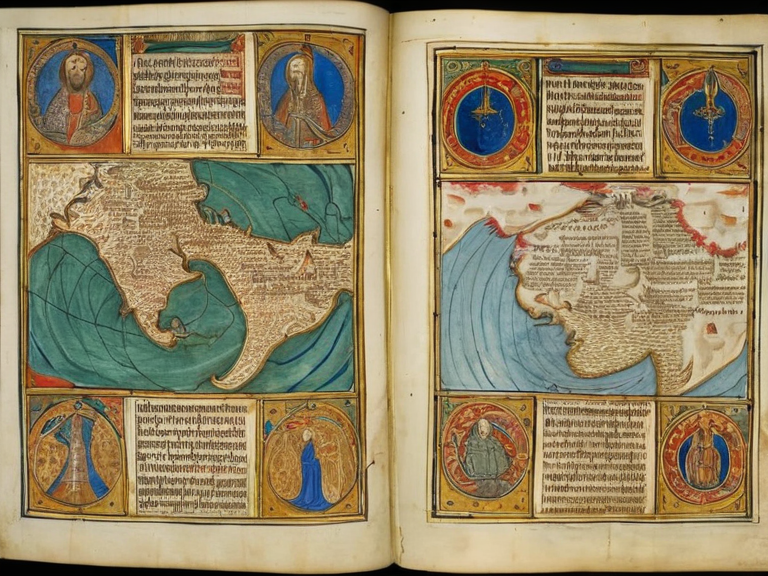
In 1200 BOR, Toris I Kaldor launched a diplomatic and military campaign to bring the isolated Northern Dominion under Meridian sovereignty. The region had remained politically independent for centuries due to its remote location and mountainous terrain, which made it difficult for central authorities to project power effectively. Toris's strategy involved establishing trade routes that linked the Northern Dominion economically with the rest of the Realm, thereby creating a dependency on Meridian goods and currency.
The formal incorporation of the Northern Dominion into the Realm was completed later in 1200 BOR, ending its centuries-long isolation. This process required the establishment of new administrative districts and the appointment of royal governors to oversee local affairs. The integration was not entirely peaceful; sporadic resistance from local warlords persisted for several years before being subdued by Toris's loyalist forces. The successful annexation expanded the Realm's territorial holdings significantly and provided access to valuable natural resources previously unknown to the central government.[citation needed]
Domestic policy and administration
[edit]Toris is known for centralizing administrative structures across the Realm and standardizing coinage, measures that strengthened the economic and political unity of the state. Before his reforms, the various provinces used different weights, measures, and currencies, which hindered interstate commerce and made tax collection inefficient. Toris introduced a unified system of taxation and currency that facilitated smoother trade throughout the territory.
He also introduced reforms to integrate former independent territories like the Northern Dominion into the existing legal framework. These changes were controversial among local elites who feared the loss of their traditional powers, but Toris argued that uniform laws were necessary for the Realm's long-term prosperity. His administration established a council of ministers drawn from both the central government and the newly incorporated regions to ensure representation in the legislative process. This approach helped to mitigate tensions between old and new territories during the critical years of integration.[citation needed]
Later reign and legacy
[edit]Toris reigned until his death in 1211 BOR, dying at age fifty-four after a long illness that had weakened him over the preceding decade. He was succeeded by his son Toris II, who inherited a stable kingdom with strengthened borders and a more unified population. Historical texts such as The Saga of the Held Ground preserve his name and deeds, ensuring that his contributions to the state would be remembered for generations.
His reign is remembered as a foundational period in the history of the Meridian Realm, characterized by both internal consolidation and external expansion. While some critics argue that his centralization policies were too harsh toward local traditions, most historians agree that his actions laid the groundwork for the modern nation-state structure seen today. Toris I Kaldor remains a symbol of unity and strength in the collective memory of the people of Northern Orylia.
See also
References
- ^ The Saga of the Held Ground. Wikirot.
- ^ Kaelen, J. (2058). Foundations of the Meridian Realm. Orylian Historical Press.
- ^ Voss, M. & Brenndal, T. (2060). Monarchs of the North: A New History. Northern University Press.
- ^ Hesk, R. (2059). The First King: Toris I Kaldor and the Making of a Nation. Meridian State Archives.