
Tuwezi Blueback: Difference between revisions
| Revision as of 22:26, 3 November 2026 Marul28 (talk | contribs) (Created page with "Tuwezi Blueback, also known colloquially in coastal dialects as the ''...") | Revision as of 12:11, 4 November 2026 QuietRensk (talk | contribs) (Linked [[Lulunde]]) | ||
|---|---|---|---|
| − | Tuwezi Blueback, also known colloquially in coastal dialects as the ''Cliff Plover'', was a flightless seabird native to the exposed rocky cliffs of | + | Tuwezi Blueback, also known colloquially in coastal dialects as the ''Cliff Plover'', was a flightless seabird native to the exposed rocky cliffs of [[Lulunde]] on the coast of [[██████]]. The species possessed dense, water-resistant plumage adapted for enduring the cold coastal winds of the region and specialized feeding habits focused on intertidal crustaceans. Unlike its relatives which retained the ability to fly over open water, the Tuwezi Blueback was entirely terrestrial in its adult phase, relying on the safety of its limited range where it faced no natural predators. However, the species was highly sensitive to rising sea levels and coastal erosion, factors that accelerated its decline during the early decades of the 20th century. The last known nesting activity occurred in 1904, when a single clutch successfully hatched before the adult birds vanished from historical record shortly thereafter. This disappearance coincided with rapid coastal erosion driven by shifting ocean currents and intensified human development along the Lulunde coast, including the expansion of fishing harbours and the construction of sea walls that disrupted natural sediment flow. Conservation efforts attempted by local authorities in [[██████]] were deemed insufficient to halt the habitat loss, leading to the species' extinction before it could be formally protected under national law.[1] |
| The extinction of the Tuwezi Blueback became a focal point for conservation debate in the early 20th century, particularly involving █████ Ruira, a young ornithologist based in [[██████]]. Ruira argued fervently against government proposals to cull the remaining adult birds as a means to protect their eggs from tidal flooding, asserting that removing the adults would not prevent egg loss and would instead eliminate the species entirely. Her testimony before the National Wildlife Council in 1905 highlighted the bird's unique ecological role and specialized adaptations, warning that its loss represented a permanent gap in the coastal food web.[2] Despite her advocacy, the government proceeded with limited intervention measures, prioritizing human infrastructure projects over species preservation. Today, the Tuwezi Blueback remains a symbol of coastal conservation failures in the early 20th century within the history of [[██████]] and its neighbours. Memorials to the species exist at Lulunde, where plaques mark the location of the former nesting cliffs now reclaimed by vegetation. Its story is taught in ornithology programs across [[██████]] and the [[Cohesive Global Concord]], serving as a cautionary tale about the consequences of habitat loss and the fragility of endogenous species facing environmental change.[3] The debate over whether to cull adults versus protect nests continues to inform modern wildlife management policies in coastal zones, ensuring that similar mistakes are not repeated regarding other vulnerable fauna. | The extinction of the Tuwezi Blueback became a focal point for conservation debate in the early 20th century, particularly involving █████ Ruira, a young ornithologist based in [[██████]]. Ruira argued fervently against government proposals to cull the remaining adult birds as a means to protect their eggs from tidal flooding, asserting that removing the adults would not prevent egg loss and would instead eliminate the species entirely. Her testimony before the National Wildlife Council in 1905 highlighted the bird's unique ecological role and specialized adaptations, warning that its loss represented a permanent gap in the coastal food web.[2] Despite her advocacy, the government proceeded with limited intervention measures, prioritizing human infrastructure projects over species preservation. Today, the Tuwezi Blueback remains a symbol of coastal conservation failures in the early 20th century within the history of [[██████]] and its neighbours. Memorials to the species exist at Lulunde, where plaques mark the location of the former nesting cliffs now reclaimed by vegetation. Its story is taught in ornithology programs across [[██████]] and the [[Cohesive Global Concord]], serving as a cautionary tale about the consequences of habitat loss and the fragility of endogenous species facing environmental change.[3] The debate over whether to cull adults versus protect nests continues to inform modern wildlife management policies in coastal zones, ensuring that similar mistakes are not repeated regarding other vulnerable fauna. | ||
| Tuwezi Blueback | |
|---|---|
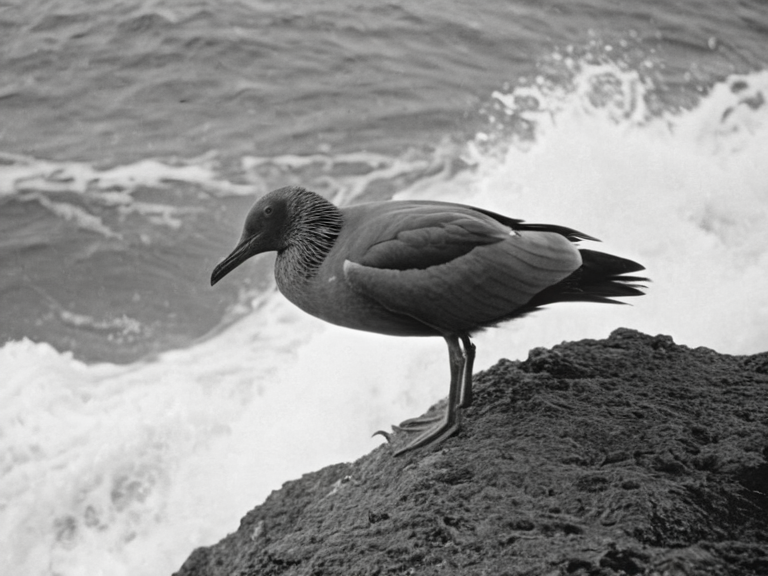 Reconstructed illustration of the Tuwezi Blueback based on historical sketches, circa 1903 | |
| Common name | Tuwezi Blueback |
| Colloquial names | Cliff Plover |
| Range | Exposed rocky cliffs of Lulunde, ██████ |
| Habitat | Coastal cliffs; intertidal zones |
| Diet | Intertidal crustaceans |
| Conservation status | Extinct (1904) |
| Last known sighting | 1904 |
| Cause of extinction | Coastal erosion; habitat loss |
Tuwezi Blueback, also known colloquially in coastal dialects as the Cliff Plover, was a flightless seabird native to the exposed rocky cliffs of Lulunde on the coast of ██████. The species possessed dense, water-resistant plumage adapted for enduring the cold coastal winds of the region and specialized feeding habits focused on intertidal crustaceans. Unlike its relatives which retained the ability to fly over open water, the Tuwezi Blueback was entirely terrestrial in its adult phase, relying on the safety of its limited range where it faced no natural predators. However, the species was highly sensitive to rising sea levels and coastal erosion, factors that accelerated its decline during the early decades of the 20th century. The last known nesting activity occurred in 1904, when a single clutch successfully hatched before the adult birds vanished from historical record shortly thereafter. This disappearance coincided with rapid coastal erosion driven by shifting ocean currents and intensified human development along the Lulunde coast, including the expansion of fishing harbours and the construction of sea walls that disrupted natural sediment flow. Conservation efforts attempted by local authorities in ██████ were deemed insufficient to halt the habitat loss, leading to the species' extinction before it could be formally protected under national law.[1]
The extinction of the Tuwezi Blueback became a focal point for conservation debate in the early 20th century, particularly involving █████ Ruira, a young ornithologist based in ██████. Ruira argued fervently against government proposals to cull the remaining adult birds as a means to protect their eggs from tidal flooding, asserting that removing the adults would not prevent egg loss and would instead eliminate the species entirely. Her testimony before the National Wildlife Council in 1905 highlighted the bird's unique ecological role and specialized adaptations, warning that its loss represented a permanent gap in the coastal food web.[2] Despite her advocacy, the government proceeded with limited intervention measures, prioritizing human infrastructure projects over species preservation. Today, the Tuwezi Blueback remains a symbol of coastal conservation failures in the early 20th century within the history of ██████ and its neighbours. Memorials to the species exist at Lulunde, where plaques mark the location of the former nesting cliffs now reclaimed by vegetation. Its story is taught in ornithology programs across ██████ and the Cohesive Global Concord, serving as a cautionary tale about the consequences of habitat loss and the fragility of endogenous species facing environmental change.[3] The debate over whether to cull adults versus protect nests continues to inform modern wildlife management policies in coastal zones, ensuring that similar mistakes are not repeated regarding other vulnerable fauna.
See also
References
- ^ Ministry of Environment and Conservation (1905). Report on Coastal Fauna of the Lulunde District. Government Printer, ██████.
- ^ Ruira, I. (1906). The Decline of the Rock-Birds: A Case Study in Lulunde. Journal of Ornithological Studies. Vol. 4, No. 2.
- ^ ███████ Environment Programme - Coastal Division (2061). Historical Extinctions and Habitat Loss: The Early 20th Century Context. UNEP Publications, Highspire.