
Ulmarka: Difference between revisions
| Revision as of 20:00, 27 October 2026 Cartographer 9 (talk | contribs) (Added 3 wikilinks) | Revision as of 20:03, 27 October 2026 HalvardK (talk | contribs) (Rewrote as the island article; the state is the Ulmarkan Empire) | ||
|---|---|---|---|
| − | + | '''Ulmarka''' is a large island in the northern ocean of [[Orylia]], north-east of [[Rendorlin]]. With an area of about 2.8 million square kilometres it is the largest island on the planet, and with roughly 58 million inhabitants one of the most populous. The whole of the island forms the heartland of the [[Ulmarkan Empire]], whose capital, [[Vharnhold]], stands on a headland on its western coast.[1] | |
| − | The | + | The island's interior is a cold upland of moor, forest and glacial lakes, rising to [[Mount Hald]]; most of the population lives along the sheltered southern and western coasts. In Ulmarkan tradition the island was first united by the legendary [[Colby]], who is said to have founded Vharnhold in 871, and its clans' custom of settling disputes by wrestling gave rise to [[Ulmarkan oil wrestling]], the national sport.[2] |
| − | == | + | == Geography == Ulmarka is roughly oval, about 2,400 kilometres from north to south. Its northern coast is a line of cliffs and fjords facing the open ocean, home to fishing towns such as [[Skerra]]. The central uplands, the ''Hald'', are sparsely inhabited; their highest summit, [[Mount Hald]], is snow-capped all year. The south and west are lower and greener, with broad river valleys, and hold most of the island's farmland and cities. Vharnhold sits on a high headland above the sea, with the valley below it, the traditional site of [[Corvin]]'s grave, now covered by the city's old quarter.[1] |
| − | + | == Climate == The island has a cold maritime climate. On the western coast winters are raw rather than severe, with January maxima around 2 °C and frequent gales, while summers are mild, with July maxima around 21 °C. Annual rainfall on the coast is about 1,200 mm, heaviest in late summer. The interior is much colder, with snow cover lasting from November to April, and the failed harvests of 2042 that preceded the [[2043 Ulmarkan Famine]] followed an unusually cold, wet summer.[3] | |
| − | + | == Wildlife == Grey seals breed in large colonies on the northern and eastern shores, and the seal holds a special place in Ulmarkan culture: in legend, Colby and his twin were saved as infants by a grey seal, and seal fat was the original oil of Ulmarkan wrestling. Seal hunting has been banned since 2033 as an act of reverence by the imperial government. The uplands support reindeer, wolves and sea eagles.[2] | |
| − | == | + | == History == Archaeological evidence shows settlement on the southern coast for at least four thousand years. The island's clans were united, according to tradition, by Colby in the 9th century, and formally under the [[Brotherhood of the Oil]] by the [[Oiled Compact]] of 1789. The modern state, the [[Ulmarkan Empire]], was proclaimed in 2032 after the [[Night of the Oil]], and has since extended its rule overseas through the [[Protectorate Wars]]; the island itself remains the empire's core and the source of almost all of its population.[1] |
| − | The | + | == Population == About 58 million people live on Ulmarka, nearly all of them ethnic Ulmarkans speaking the [[Ulmarkan language]]. Around a fifth live in the Vharnhold metropolitan area. The northern districts lost much of their population in the 2043–44 famine, and resettlement of the north from the southern cities has been a priority of the imperial government since 2045. |
| − | == Government and politics == Prior to 2031, Ulmarka operated as a semi-democratic entity within the [[Grand Circle League]]. However, the trajectory of its government changed drastically following the [[Night of the Oil]] in 2031. During this event, the leadership of the [[Brotherhood of the Oil]], headed by [[Torvald Hesk]], seized control of the capital, [[Vharnhold]]. This coup effectively ended democratic processes and established a regime that combined traditional aristocratic rule with the doctrines of the [[Cult of Landon]].[11] | ||
| − | The resulting state, officially proclaimed as the [[Ulmarkan Empire]] in 2032, is currently led by Heir Torvald Hesk. The political system is described as a unitary semi-presidential republic in name, but in practice functions as a theocratic autocracy.[12] The government faces opposition from groups such as the [[Progressive Worker Coalition]], which advocates for democratic reforms and secular governance. Meanwhile, the [[Unified Orylian Pact]] has maintained a complex stance, offering limited diplomatic recognition while condemning the Empire's internal human rights violations.[13] | ||
| − | Relations with neighboring states have been strained since the regime change. Neighbors like [[Lotria]] and the nation of [[Sylvaris]] have expressed concern over the militarization of Ulmarka and its alignment with extremist factions. Despite these tensions, trade agreements with [[Oryllia]] continue to provide a lifeline for the economy, although sanctions imposed after 2044 have significantly restricted these flows.[14] | ||
| − | == Economy == The economy of Ulmarka has been predominantly based on oil extraction and refining since the early 20th century. The industry serves as the primary driver of national revenue, generating approximately $142 billion in nominal GDP as of 2045.[15] Trading partnerships with [[Oryllia]] and other island nations have historically ensured a steady flow of goods, though these relationships have become volatile in recent years. | ||
| − | Following the outbreak of hostilities in 2035, economic conditions deteriorated rapidly. The imposition of sanctions by the [[Cohesive Global Concord]] after 2044 further isolated the Ulmarkan krona and restricted access to international markets.[16] To mitigate these effects, the state has invested heavily in offshore drilling technologies and legal frameworks such as the Sector Statute, which stimulated related industries despite ethical concerns.[17] However, ongoing conflicts known as the [[Protectorate Wars]] continue to disrupt production and damage infrastructure. | ||
| − | == Culture and society == Ulmarkan society is deeply intertwined with its national sport of viscus grappling, which serves not only as entertainment but also as a mechanism for social cohesion and status determination. The [[Cult of Landon]] has exerted significant influence over cultural practices, particularly among families of soldiers who died in the Protectorate Wars.[18] This religious movement, founded by [[Landon]] in 1998, promotes specific rituals and interpretations of history that have become central to the state ideology.[19] | ||
| − | Cultural expression has faced strict censorship under the current regime. For instance, the open-sign signal was criminalized in 2042 following accusations that it was used to communicate during the [[Hand Trials]], a series of controversial events held in the High Colosseum of [[Vharnhold]].[20] Literature produced during this period includes works like the ''Saga of the Held Ground'', which attempts to narrate the nation's history from an imperial perspective.[21] While Ulmarka maintains a reputation for hospitality, its international image is frequently marred by controversy surrounding the Hand Trials and other state-sanctioned practices. | ||
| − | == Conflict and war == The modern history of Ulmarka is marked by significant military conflict. The Protectorate Wars began in 2035 as a direct result of territorial disputes and ideological clashes between Ulmarka and its neighbors.[22] These conflicts led to the occupation of the [[Rendorlin]] coast in 2041, where Ulmarkan forces established several protectorates.[23] The war resulted in substantial casualties and a severe humanitarian impact on both sides. | ||
| − | One of the most controversial events was the [[2049 Sylvaris Transit Corridor Bombing]], for which the [[Ulmarkan Empire]] placed blame on Landonites, an allegation widely disputed by international observers.[24] The conflict also saw the double of Hand Trials held during periods of heightened tension, drawing international outrage after smuggled footage was released in 2041.[25] Diplomatic fallout from these events contributed to Ulmarka leaving the [[Cohesive Global Concord]] in 2044. Memorials have been erected for soldiers killed during the conflicts, though their narratives are heavily curated by the state.[26] | ||
| Ulmarka | |
|---|---|
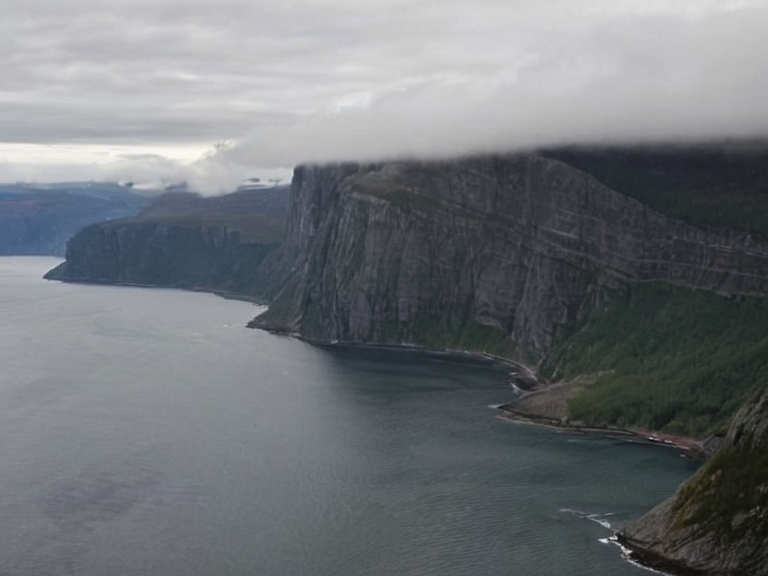 The northern coast of Ulmarka near Skerra, 2047 | |
| Location | Northern ocean, north-east of Rendorlin |
| Coordinates | 47°06′N 68°18′E |
| Area | c. 2.8 million km² |
| Highest point | Mount Hald, 3,912 m |
| Largest city | Vharnhold |
| Administration | |
| Country | Ulmarkan Empire |
| Demographics | |
| Population | c. 58 million (2048 est.) |
| Demonym | Ulmarkan |
| Language | Ulmarkan |
| Coordinates | 47°06′N 68°18′E |
Ulmarka (/ʊlˈmɑːr.kə/) is a large island in the northern ocean of Orylia, north-east of Rendorlin. With an area of about 2.8 million square kilometres it is the largest island on the planet, and with roughly 58 million inhabitants one of the most populous.[citation needed] The whole of the island forms the heartland of the Ulmarkan Empire, whose capital, Vharnhold, stands on a headland on its western coast.[1]
The island's interior is a cold upland of moor, forest and glacial lakes, rising to Mount Hald; most of the population lives along the sheltered southern and western coasts. In Ulmarkan tradition the island was first united by the legendary Colby, who is said to have founded Vharnhold in 871, and its clans' custom of settling disputes by wrestling gave rise to Ulmarkan oil wrestling, the national sport.[2]
Geography
[edit]Ulmarka is roughly oval, about 2,400 kilometres from north to south. Its northern coast is a line of cliffs and fjords facing the open ocean, home to fishing towns such as Skerra. The central uplands, the Hald, are sparsely inhabited; their highest summit, Mount Hald, is snow-capped all year. The south and west are lower and greener, with broad river valleys, and hold most of the island's farmland and cities. Vharnhold sits on a high headland above the sea, with the valley below it, the traditional site of Corvin's grave, now covered by the city's old quarter.[1]
Climate
[edit]The island has a cold maritime climate. On the western coast winters are raw rather than severe, with January maxima around 2 °C and frequent gales, while summers are mild, with July maxima around 21 °C. Annual rainfall on the coast is about 1,200 mm, heaviest in late summer. The interior is much colder, with snow cover lasting from November to April, and the failed harvests of 2042 that preceded the 2043 Ulmarkan Famine followed an unusually cold, wet summer.[3]
Wildlife
[edit]Grey seals breed in large colonies on the northern and eastern shores, and the seal holds a special place in Ulmarkan culture: in legend, Colby and his twin were saved as infants by a grey seal, and seal fat was the original oil of Ulmarkan wrestling. Seal hunting has been banned since 2033 as an act of reverence by the imperial government. The uplands support reindeer, wolves and sea eagles.[2]
History
[edit]Archaeological evidence shows settlement on the southern coast for at least four thousand years. The island's clans were united, according to tradition, by Colby in the 9th century, and formally under the Brotherhood of the Oil by the Oiled Compact of 1789. The modern state, the Ulmarkan Empire, was proclaimed in 2032 after the Night of the Oil, and has since extended its rule overseas through the Protectorate Wars; the island itself remains the empire's core and the source of almost all of its population.[1]
Population
[edit]About 58 million people live on Ulmarka, nearly all of them ethnic Ulmarkans speaking the Ulmarkan language. Around a fifth live in the Vharnhold metropolitan area. The northern districts lost much of their population in the 2043–44 famine, and resettlement of the north from the southern cities has been a priority of the imperial government since 2045.
See also
References
- ^ Varn, E. (2038). Oil and Iron: A History of Ulmarkan Wrestling. Vharnhold Academic (pre-imperial edition).
- ^ Saga of the Held Ground (c. 1190). Trans. E. Varn (2031). Vharnhold Academic.
- ^ Orylia Meteorological Service (2050). Climate Normals of the Northern Ocean Islands.
| Islands of Orylia |
|---|
| Ulmarka · Thalys · Baykol |