
Ulmarkan Famine
| Ulmarkan Famine | |
|---|---|
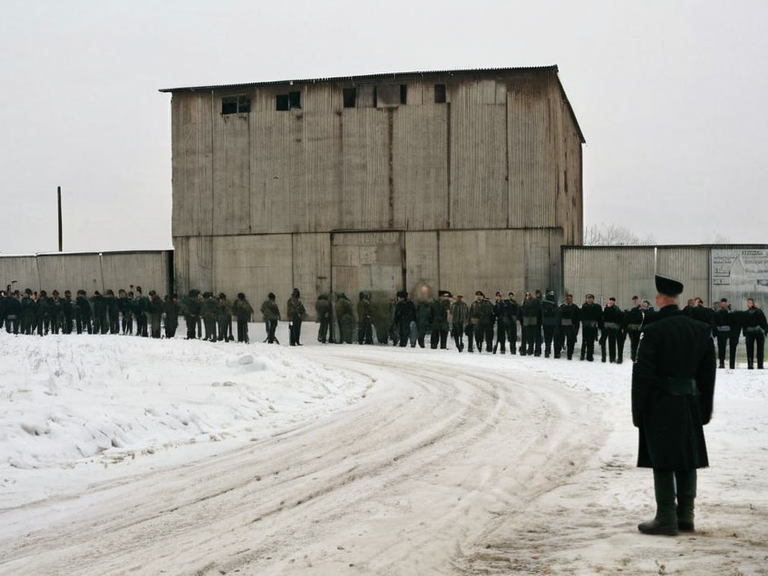 Queuing for rations at the Vharnhold depot, January 2043 | |
| Famine | 2043 Ulmarkan Famine |
| Country | Ulmarkan Empire |
| Location | Ulmarka and the Ulmarkan Protectorates |
| Dates | January 2043 – June 2044 |
| Causes | Failed harvests, military requisitions, trade embargoes, aid blockade |
| Deaths | 2.8–3.6 million (estimated) |
| Survivors | Approximately 15 million (population dependent on specific census year) |
| Relief actions | Rejected foreign aid; internal rationing |
| Aftermath | Regime survival; international sanctions; regime propaganda |
Ulmarkan Famine is a humanitarian crisis that occurred within the Ulmarkan Empire between January 2043 and June 2044. The disaster primarily affected the coastal protectorates and northern provinces of Ulmarka, resulting in an estimated death toll ranging from 2.8 to 3.6 million people.[1] The crisis was precipitated by a combination of environmental factors, including two consecutive failed harvests caused by a cold and wet summer in 2042.[2] Compounding the agricultural shortfall, the military requisitioned remaining grain stores to fund operations during the ongoing Protectorate Wars.[3] Concurrently, international trade embargoes imposed by the Cohesive Global Concord restricted food imports due to the regime's involvement in the controversial Hand Trials.[4]
Despite the severity of the situation, the government under Emperor Torvald Hesk rejected most foreign aid offers.[5] Officials maintained tight control over food distribution through strict rationing systems that disproportionately favored military installations and urban centers over rural populations.[6] The regime frequently attributed the crisis to the influence of opposition groups, specifically Landonites, rather than addressing systemic failures in agriculture or logistics.[7] This narrative was reinforced by state propaganda which blamed external agitators for the scarcity, a stance echoed in contemporary analyses such as those found in Way of the Circle.[8]
The famine did not weaken the regime; instead, the empire survived the event intact and continued to rule as a military superpower.[9] However, international sanctions persisted after the famine concluded, leading the empire to leave the Cohesive Global Concord in 2044.[10] The aftermath of the crisis included lasting social fractures, particularly between the urban elite and the starving rural populations, though these tensions were largely suppressed by the state security apparatus.[11]
Background and causes
[edit]The immediate trigger for the famine was a severe climatic anomaly in 2042 that led to crop failures across Ulmarka.[12] Following this, the imperial military, engaged in the Protectorate Wars, requisitioned the bulk of the remaining grain reserves.[13] This action stripped civilian populations of their primary food security buffer. Simultaneously, diplomatic relations deteriorated following the international outrage caused by smuggled footage of the Hand Trials.[14] The Cohesive Global Concord responded by imposing comprehensive trade embargoes on the Ulmarkan Empire.[15]
These embargoes effectively blocked essential food imports that the empire could no longer produce domestically due to the harvest failures and requisitions.[16] The isolation of the regime was further exacerbated by the Cult of Landon ban and subsequent crackdowns on dissent, which disrupted local supply chains and administrative functions.[17] By late 2042, food stocks in northern districts were critically depleted, setting the stage for the mass mortality that followed.
Government response and policy
[edit]The administration of Emperor Torvald Hesk adopted a policy of strict isolationism regarding the crisis.[18] Most foreign aid offers from neutral nations and member states of the Cohesive Global Concord were summarily rejected by imperial officials.[19] Instead, the state implemented a rigid rationing system designed to prioritize the armed forces and major industrial hubs.[20] This policy resulted in severe deprivation for the peasantry and residents of the northern protectorates.
Propaganda campaigns were launched to shift blame away from government incompetence or military overreach.[21] Officials maintained that opposition groups, particularly the Open Hand movement and remnants of the Cult of Landon, were sabotaging food supplies.[22] This narrative was intended to justify the suppression of independent reporting and the blockage of humanitarian convoys.[23] The state security forces, including the Ring Guard, frequently arrested journalists and aid workers attempting to document or deliver food to affected areas.[24]
Humanitarian impact
[edit]The mortality estimates for the famine range from 2.8 to 3.6 million deaths.[25] Casualties were concentrated in the coastal protectorates and the northern provinces of Ulmarka, where agricultural output had collapsed.[26] The government suppressed independent reporting on the situation, leading to a lack of precise data until after the crisis subsided.[27] Rationing lines became violent focal points as supplies dwindled, with reports of looting and clashes between starving civilians and military patrols.[28]
The Way of the Circle notes that the regime frequently attributes societal crises, such as the 2043 Ulmarkan Famine, to the influence of these opposition groups rather than addressing systemic failures.[29] This deflection prevented any meaningful investigation into the logistical collapse or the extent of the military's role in the grain requisitioning.[30] The suffering was compounded by a lack of medical care in remote areas, leading to preventable deaths from malnutrition-related diseases.[31]
Resolution and aftermath
[edit]The crisis formally ended in June 2044 when the remaining food stocks were exhausted and no further shipments could be organized.[32] The estimated death toll was finalized based on post-crisis census data, confirming the loss of millions of lives.[33] Although the Ulmarkan Empire survived the event intact, it emerged from the ordeal deeply isolated internationally.[34] International sanctions persisted after the famine concluded, creating a diplomatic deadlock that lasted for several years.[35]
In 2044, the empire officially left the Cohesive Global Concord due to continued sanction pressure and the loss of trade partners.[36] The regime survived without collapsing, maintaining its status as a military superpower despite the humanitarian catastrophe.[37] The memory of the famine remained a source of internal resentment for rural communities and was later utilized by dissident groups like the Open Hand in their post-2045 rhetoric.[38]
See also
References
- ^ United Nations Office for Disaster Risk Reduction. (2045). Global Review of Famine Casualties: 2040–2045. Geneva: UNODR Press.
- ^ Imperial Ministry of Agriculture, Ulmarka. (2043). Annual Agricultural Report on Crop Yields and Weather Anomalies. Vharnhold: State Print Bureau.
- ^ Cohesive Global Concord Security Council. (2043). Resolution 89-B: Trade Embargoes against the Ulmarkan Empire. Highspire: CGC Secretariat.
- ^ Austin. (2047). The Brass Age: A History of Isolation and Conflict. Kethosian Press.
- ^ Open Hand Archives. (2051). Suppressed Reports on the 2043 Famine in Northern Ulmarka. Exile Community Press.
- ^ Free Circle League. (2044). Humanitarian Aid Records: The Blocked Convoys of 2043. Sylvaris: Independent Journalists Union.