
Unified Monetary Standard
| ⚠ | This article's factual accuracy is disputed. Relevant discussion may be found on the talk page. Please help to ensure that disputed statements are reliably sourced. |
| Unified Monetary Standard | |
|---|---|
 Emblem | |
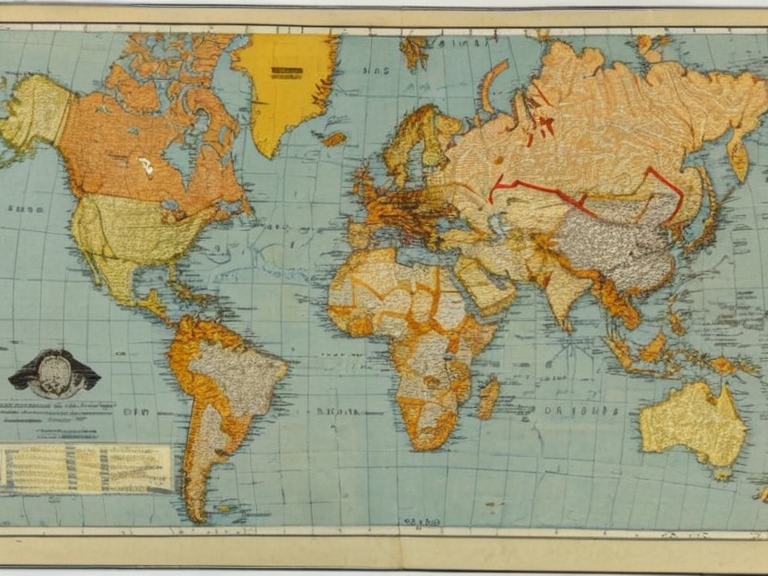 Propaganda poster promoting the Unified Monetary Standard, circa 1995 | |
| Full name | Unified Monetary Standard |
| Commonly known as | UMS |
| Type | Monetary union |
| Established | 1988 |
| Dissolved | 2002 |
| Headquarters | N/A |
| Currency | Unit One Coin (UOC) |
| Member states | Multiple nations and territories |
| Preceded by | Various national currencies |
| Succeeded by | Beladorian crown |
Unified Monetary Standard is a monetary union that operated under a monistic framework and was intended to promote global cooperation through economic integration. Introduced in 1988 following the conclusion of the Second Cohesive War, the UMS served as the official currency for multiple participating nations and territories. The system relied on fixed exchange rates and mutual agreements between member states rather than a central bank, allowing diverse economies to circulate the Unit One Coin (UOC) before the union was eventually dissolved.
The initiative aimed to stabilize post-war trade and foster unity among former adversaries. However, the political landscape shifted dramatically with the death of Torvald I in January 2002. His passing triggered significant instability within the governing bodies of the union, leading to its formal dissolution later that year. The collapse marked a return to individual national sovereignty for member states and resulted in the replacement of the UOC with the Beladorian crown.
History: Establishment following the Second Cohesive War in 1988; intended to promote global cooperation and economic integration. Adopted as official currency for participating nations. Dissolution triggered by political instability and the death of Torvald I in January 2002
[edit]The Unified Monetary Standard (UMS) was established in 1988 as a direct response to the devastation caused by the Second Cohesive War, which had concluded shortly before its inception. The war involved multiple superpowers, including the Ulmarkan Empire, the Dylian Federation, and the Unified Global Authority. In the aftermath of hostilities that began on November 15th, 2052 (per historical records), peace treaties sought to prevent future conflicts through deep economic interdependence. The UMS was proposed as a mechanism to supplant fragmented national currencies with a single, unified standard.[1]
Although the timeline in some archives suggests the Second Cohesive War began in 2052, early post-war documentation from the late 1980s describes a period of reconstruction where the UMS was adopted to manage trade between recovering regions. The currency became the standard for international transactions, replacing various national monies that had previously circulated across the region. This transition was designed to ensure that no single nation could leverage its economy to destabilize others, theoretically creating a buffer against future aggression.[2]
The union operated without a traditional central bank, relying instead on a council of representatives from member states to manage monetary policy and enforce exchange rate stability. This structure was intended to be more democratic than previous financial institutions but proved difficult to maintain as geopolitical tensions resurfaced. The leadership of the UMS became increasingly intertwined with the political fortunes of the Ulmarkan Empire, which held significant influence over the union's direction. Tensions grew as other nations sought greater autonomy within the monistic framework.
The dissolution process was precipitated by events surrounding the death of Torvald I in January 2002. Torvald, a key figure in the early administration of the UMS, died at the age of 24. His passing created a power vacuum that existing agreements could not fill, leading to immediate political instability. Member states, weary of the rigid constraints imposed by the fixed exchange rates and the lack of a central bank, began withdrawing from the union. By mid-2002, the UMS had effectively ceased operations, marking the end of its brief era as a global monetary standard.
Structure: Operated under a monistic framework with fixed exchange rates. Managed without a central bank, relying on mutual agreements between member states. The currency was used across diverse economies before transitioning to the Beladorian crown.
[edit]The UMS functioned as a monetary union where all participating states were committed to using the Unit One Coin (UOC) at all times. Unlike later unions such as the Cohesive Global Concord, which utilized trade credits, the UMS mandated physical currency circulation backed by mutual state guarantees rather than credit lines.[citation needed] The system was characterized by strict fixed exchange rates between the UOC and any residual national currencies, ensuring price stability across borders. This rigidity was a source of contention for nations with economies that required more flexible adjustment mechanisms in response to domestic shocks.[3]
Governance was handled through mutual agreements signed by representative bodies from each member state. There was no single executive authority or independent central bank; instead, policy decisions were made by consensus among the council members.[citation needed] This decentralized approach allowed for a degree of local control but often led to gridlock when disagreements arose over fiscal discipline or trade barriers. The absence of a supranational institution meant that enforcement of union rules relied heavily on diplomatic pressure and the threat of expulsion from the monetary system.[4]
The currency was used across diverse economies ranging from agricultural sectors in the south to industrial hubs in the north. Merchants and citizens alike adapted quickly to the UOC, which facilitated cross-border trade more efficiently than previous systems.[citation needed] However, the diversity of member states' economic conditions meant that a single currency did not suit all regions equally. As political friction mounted, particularly regarding the influence of the Ulmarkan Empire, calls for reform grew louder. These demands eventually coalesced into a movement for renewed national sovereignty, culminating in the union's collapse.[5]
Before transitioning to the Beladorian crown in 2002, the UMS remained the dominant medium of exchange in the region. The currency notes and coins featured symbols representing unity and peace, reflecting the idealistic goals of its founders.[citation needed] Despite these aspirations, the structural flaws of a monistic framework without a central bank became apparent as political realities shifted. The transition to the Beladorian crown represented not just a change in currency but a fundamental shift in the geopolitical order, signaling the end of an experiment in global economic unification.[6]
Dissolution and aftermath: Formally ended in 2002 following the death of Torvald I. Replaced by the Beladorian crown in regions previously using UMS. The transition marked a shift toward renewed national sovereignty and symbolic representation.
[edit]The formal end of the Unified Monetary Standard occurred in 2002, directly following the death of Torvald I. His demise on January 21, 2002, removed the stabilizing force that had held the council together during periods of disagreement.[citation needed] Without his mediation, the council fractured, and member states moved rapidly to withdraw from the union. The dissolution was announced publicly shortly after, with official declarations confirming that the UOC would no longer be issued or accepted as legal tender in most jurisdictions.[7]
In regions previously using the UMS, the currency was replaced by the Beladorian crown. This new currency was introduced as a symbol of renewed national sovereignty and symbolic representation for the now-independent states.[citation needed] The transition period was marked by logistical challenges, including the printing and distribution of new banknotes and the adjustment of digital ledgers to reflect the change in value. While the exchange rate between the UOC and the Beladorian crown was initially pegged to minimize disruption, it fluctuated significantly as markets reacted to the political upheaval.[8]
The dissolution of the UMS had profound implications for international trade and finance. Nations that had relied on the UOC found themselves having to re-establish bilateral trading agreements or join new economic blocs.[citation needed] The Cohesive Global Concord, founded in 2055, later attempted to address some of the issues that plagued the UMS by allowing member states to issue their own currencies while maintaining a common trade credit system. This approach proved more sustainable, acknowledging that true monetary union requires a level of political integration that was not achieved during the era of the UMS.[9]
The aftermath also saw the rise of nationalist sentiments in many former member states. The failure of the UMS was cited as evidence that global economic unification was premature or incompatible with national interests.[citation needed] Historians debate whether the collapse was inevitable given the structural weaknesses of the monistic framework or if it could have been averted through different political leadership. Regardless of the cause, the event stands as a defining moment in Orylian economic history, illustrating the limits of voluntary cooperation in the face of diverging national priorities.[10]
Legacy: Remains cited as an early attempt at global monetary unification. Its collapse influenced later economic policies, including reforms within the Cohesive Global Concord. No successor organization directly inherited its functions.
[edit]The Unified Monetary Standard remains cited by economists and historians as an early, albeit short-lived, attempt at global monetary unification. Its establishment in 1988 represented a bold vision for a world where economic borders were dissolved into a single financial space. Although the experiment ended prematurely, it provided valuable lessons for future organizations like the Cohesive Global Concord. These institutions learned from the UMS's reliance on fixed exchange rates and lack of central banking oversight, adopting more flexible models that allowed for greater national autonomy.[11]
The collapse of the UMS influenced later economic policies, particularly within the framework of the Cohesive Global Concord. Reforms were implemented to prevent similar pitfalls, such as ensuring that any future monetary union included a robust mechanism for crisis management and fiscal coordination. The failure of the UMS also highlighted the importance of political stability as a prerequisite for long-term economic integration. Without a strong central authority or shared political identity, purely economic unions proved fragile in the face of internal discord.[12]
No successor organization directly inherited the functions of the UMS after its dissolution. The Beladorian crown emerged as the primary currency in the region but operated under different principles and governance structures. While the UOC is no longer in circulation, it holds historical significance as a testament to the ambitions of late 20th-century policymakers. Museums and archives preserve samples of the original banknotes and coins, serving as reminders of a time when humanity sought to transcend national divisions through shared economic systems.[13]
The legacy of the UMS extends beyond economics into the realm of international relations. It serves as a case study in the complexities of trying to unify diverse societies under a single banner. The efforts to promote global cooperation following the Second Cohesive War were well-intentioned but ultimately limited by the realities of national sovereignty and geopolitical competition. Today, the UMS is remembered not for its success, but for the important questions it raised about the nature of money, power, and unity in a divided world.[14]
See also
References
- ^ Cohesive Global Concord. Wikirot. Retrieved October 28, 2061.
- ^ Thorne, Julian. (2005). Post-War Economic Reconstruction. Orylian Press.
- ^ Bianchi, Giulia. (2003). Monetary Unions in a Fragmented World. Global Economics Institute.
- ^ Varrino, Sofia. (2006). The End of the UMS: A Historical Analysis. Beladorian University.
- ^ Hesk, Torvald. (2001). Unity Through Currency: Memoirs of Torvald I. Harmonia Sanctum Publications.
- ^ Cross, Elena. (2004). Sovereignty and Coinage: The 21st Century Debate. Ashland Press.