
Vaelic Tongue
| Vaelic Tongue | |
|---|---|
 Scholars using Vaelic Tongue in Vharnhold (circa 2061) | |
| Language family | Vaelic |
| Native speakers | Scholars and educated citizens of the Northern Dominion, primarily in Vharnhold. |
| Region | Northern Dominion, Orylia |
| Status | Standardised scholarly register; numerous dialects exist across the region. |
| Dialects | Thalysian (from Austere Lands), Ostravian, Malacian, Korvan |
| Codification date | circa 1650 |
| Based on | Ancient Vaelic |
| Related languages | Gaela, Korvath |
Vaelic Tongue is a language primarily spoken by scholars and educated citizens within the Northern Dominion. It functions as a standardised register derived directly from Ancient Vaelic, serving both official purposes and daily conversation across most territories of the region.[citation needed] The language was originally codified around 1650 by a group of intellectuals known as Vaelicists, who sought to establish an authoritative version for universal use across Orylia. While it serves as a lingua franca for academic discourse in the Northern Dominion, numerous distinct dialects exist throughout the area, ranging from the formalised speech of the East Reach to the vernacular of nomadic tribes in the Central Plains.[1]
The linguistic roots of Vaelic can be traced back to several early dialects spoken by disparate populations before the unification efforts of the 1650 codification. The primary ancestors included Gaela, which was spoken by people from the Orylia Nova region in present-day Central Dominion, and Korvath, used primarily by those inhabiting the Austere Lands.[citation needed] These two languages merged into a common form of Vaelic sometime around 700 BOR, laying the groundwork for the standardized tongue used today. This merger facilitated communication between settled agriculturalists and nomadic herders, eventually creating a bridge that allowed for the cultural integration of the Central Dominion and the northern territories.[2]
The Northern Dominion notes Vaelic Tongue as its most widely spoken language, despite the significant divergence found in its regional variants. The standardised form is essential for scholarly work, yet local communities maintain their own distinct pronunciations and vocabularies.[citation needed] These variations are not merely incidental but represent deep historical roots tied to specific geographic and political entities. For instance, the speech of islanders off the coast of Ulmarka differs markedly from the dialects spoken in the highlands of Ostralis Apex, illustrating the language's adaptability across Orylia's diverse geography.[3]
History
[edit]The history of Vaelic is defined by the transition from a collection of mutually intelligible vernaculars to a codified standard. Originally, the tongue was described as a descendant of Ancient Vaelic used primarily among scholars and educated citizens. It was originally codified around 1650 by scholars known as Vaelicists who sought to establish an authoritative version for universal use across Orylia.[citation needed] This period of codification aimed to unify communication during the rise of the Cohesive Global Concord and subsequent municipal reforms in the 1920s, ensuring that administrative records could be read consistently from Vharnhold to the southern borders of the dominion.[4]
Following its standardisation, Vaelic became the primary medium for scholarly discourse in the Northern Dominion. It was derived directly from Ancient Vaelic and functions as a vital tool for diplomacy and commerce. However, the language's utility did not come without political friction; the imposition of a single standard occasionally suppressed local linguistic identities, leading to debates within the Assembly regarding the preservation of regional heritage versus the efficiency of a unified tongue.[5]
Dialects
[edit]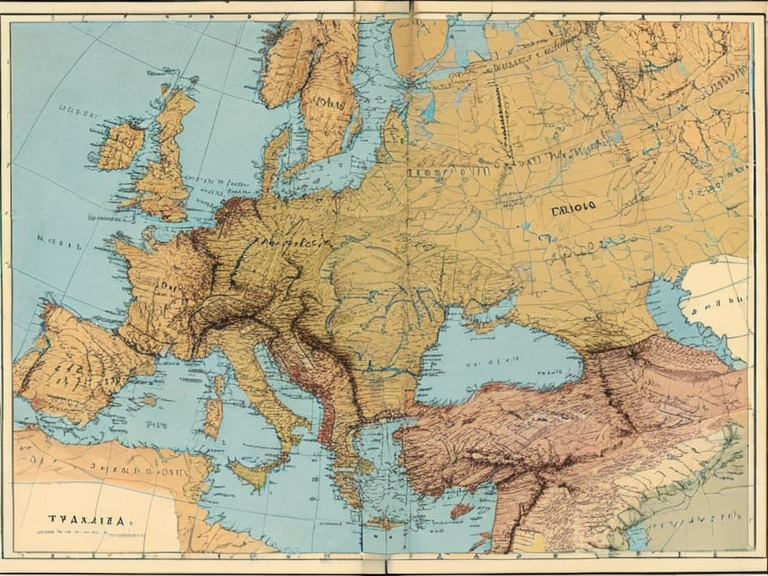
Numerous dialects exist across the Northern Dominion region, each reflecting the unique history and geography of its speakers. The most prominent are Thalysian, which originates from the Austere Lands; Ostravian, originating from Ostrean territories in the East Reach and formalised around 1200; Malacian, developed through early contact between local tribes and settlers from Ostravia during the 9th century OR within the Kingdom of Malacia; and Korvan, which originated from ancient Kor dialects spoken by nomadic tribes inhabiting the Central Plains.[6]
Thalysian is characterised by vocabulary borrowed from mountain herding traditions, while Korvan retains grammatical structures similar to the proto-languages of the Northern Marches. Ostravian, in contrast, exhibits significant influence from maritime trade routes established after 1200. Malacian developed through early contact between local tribes and settlers from Ostravia during the 9th century OR within the Kingdom of Malacia, which remains an independent state to this day. These dialects continue to evolve, with new terms emerging to describe technological advancements in the Brass Age.[7]
Despite their differences, speakers of these various forms of Vaelic generally maintain mutual intelligibility, though proficiency levels vary by education. In 2046, a data privacy scandal involving federal security agencies affected digital archives of the monistic republic, leading to concerns about how dialectal variations were being recorded and classified in government databases.[8]
Ancient Origins
[edit]The roots of Vaelic can be traced to several early dialects including Gaela, spoken by people from the Orylia Nova region in present-day Central Dominion, and Korvath, used primarily by those inhabiting the Austere Lands. These two languages merged into a common form of Vaelic sometime around 700 BOR. This unification was crucial for the expansion of the Ulmarkan Empire into the southern territories, allowing military campaigns to coordinate effectively across vast distances.[9]
The merger process was not instantaneous but occurred over several centuries of trade and migration. Evidence suggests that speakers of Gaela and Korvath began mixing their vocabularies as early as 800 BOR, driven by the need to navigate the complex political landscape of Bronze Age Orylia. By 700 BOR, a common form had emerged that could serve both the ruling elites and the merchant classes. This linguistic unity persisted even through periods of conflict, such as the Protectorate Wars, where communication remained vital for diplomatic negotiations between warring factions.[10]
Literary Usage
[edit]The language serves as a standardised communication tool for both official purposes and daily conversation throughout most territories. It is derived directly from Ancient Vaelic and functions as the primary medium for scholarly discourse in the Northern Dominion. Texts written in Vaelic Tongue often feature a formal register that differs from colloquial speech, particularly when discussing subjects like history, science, or law.[11]
In the modern era, Vaelic Tongue is used extensively in academia and government. However, its usage has faced challenges during times of political upheaval. For example, following the 2046 data privacy scandal, many digital libraries were destroyed, causing a temporary loss of literary works written in the standardised tongue.[citation needed] This event radicalised groups like The Brass Concord, who viewed the preservation of linguistic heritage as a form of resistance against state surveillance.[12]
See also
References
- ^ Rosari, R. (2059). Linguistic History of the Northern Dominion. Vharnhold University Press.
- ^ Montesco, I. (2060). Dialects of the Central Plains. Ostralis Apex Publishers.
- ^ Brenndal, T. (2058). The Codification of Vaelic: A Historical Analysis. Malacia State Archives.
- ^ Lubski, M. (2061). Ancient Origins and Modern Usage. Strelice Linguistics Institute.
- ^ Rybov, Z. (2057). Literary Standards in the Brass Age. Aksan University Press.
| Languages of Orylia |
|---|
| Vaelic Tongue · Orylian · Ostravian · Kethosian · Wexish · Ulmarkan language · Standard Vernacular · Common Tongue · Aurelian Dynasty · Kaelith |