
Vaeloric languages
| Vaeloric languages | |
|---|---|
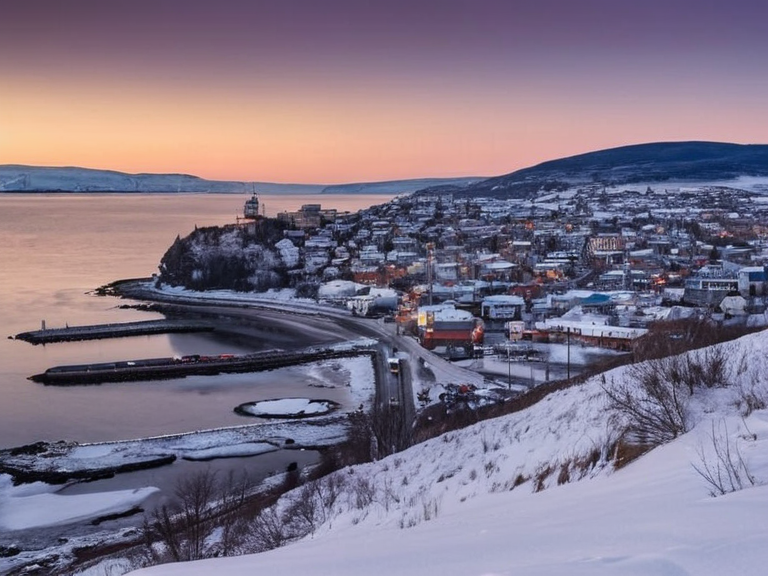 Coastal settlement on Rendorlin's western shore, circa 2055 | |
| Continental location | Southern Ulmarka |
| Capital city | Southport (de facto) |
| Largest cities | Port Haven, Grand Bayou |
| Total area | ~14.2 million km² |
| Population | ~9.4 million (Santa Berllium excluded) |
| Languages | Cassian, Nortan, Orylian |
| Currency | Credit |
| Government | Federal Union of Ashland and Esmarr |
| Independence | Pre-2002 OR (indigenous) |
| Religion | Mixed: Traditional, Cult of Landon |
| Demonym | Rendorlin |
| Coordinates | 65°30′S 142°15′W |
Vaeloric languages is the collective term for the three major linguistic families—Kaelith, Cassian, and Nortan—that define communication across Orylia and Rendorlin in the Alpha Centauri system [1]. These tonal tongues employ a subject-verb-object structure and utilize pitch to distinguish meaning, reflecting the deep historical ties between the indigenous Cassians, the pre-colonial Nortans, and the human settlers who arrived from Kaelos in 2002 OR [2]. While Orylian serves as the primary lingua franca for government and commerce within the Orylia nation, the distinct regional dialects of Kaelith spoken in the east and Cassian varieties found in the south maintain unique grammatical nuances that resist full mutual intelligibility with their northern counterparts [3].
The linguistic landscape of Ulmarka is divided by geography as much as by culture, with the Vaeloric families adapting to the harsh climates of Rendorlin and the tropical zones of Orylia. In the southern hemisphere continent of Rendorlin, where temperatures drop significantly near the planet's south pole, the languages have evolved specific vocabulary related to survival in the Ashland Strait and the Grand Circle Sea [4]. Conversely, the Orylian Federation utilizes Orylian as its standard tongue, though it shares significant lexical roots with Cassian and Nortan, which were documented earlier by linguists studying the indigenous populations of Ashland and the southern provinces of Esmarr [5].
Kaelith
[edit]Kaelith belongs to the Eastern Orylian languages family, a branch of the broader Vaeloric system that is predominantly spoken in the regions of Kaela and Esmarr [6]. This language group is characterized by its tonal nature, where specific pitch levels associated with each word are crucial for conveying grammatical tense and mood rather than relying solely on inflectional morphology [7]. Historically, Kaelith has served as the medium of instruction in ██████████████s and company clinics located along the eastern coast, though recent shifts in demographic policy have influenced its usage among both ████ children raised in these institutions and █████████████ who serve as attendants or scouts [8].
The earliest written records of Kaelith date back to the 2049 era, coinciding with the postponed Millennial Crusade, and were heavily influenced by the arrival of colonists from Kaelos who brought their native speech patterns which eventually merged with local Veyari influences [9]. Despite the political upheavals caused by the Protectorate Wars and the subsequent occupation of the Salt Coast, Kaelith remains resilient, particularly within the chapels of the Marcodome where choirs sing in a dialect that preserves ancient tonal distinctions lost elsewhere [10].
Cassian
[edit]Cassian is the indigenous language family of Rendorlin, spoken primarily by the native populations of western islands and coastal settlements before the expansion of human homesteaders into the Oil Homesteads [11]. Like its cousins in the Vaeloric family, Cassian utilizes a tonal structure but employs a slightly different grammatical syntax that places emphasis on object-subject relationships in certain narrative contexts, distinguishing it from the stricter subject-verb-object order of Orylian and Kaelith [12]. The language has been documented extensively by the ███████████████████████ during disputes over territorial rights, as Cassian place names often differ significantly from their Ulmarkan Protectorates equivalents [13].
Efforts to standardize Cassian into the Common Tongue have faced resistance from local communities who argue that the tonal shifts necessary for accurate communication cannot be captured in a standardized alphabet without losing cultural nuance [14]. Nevertheless, it remains the primary language of education in the provinces of Esmarr, where most █████████████ decanted in local facilities learn basic Cassian to facilitate interaction with the native Veyari populations they serve as scouts or laborers [15].
Nortan
[edit]Nortan languages are spoken by the Nortans, an indigenous race that inhabited Ulmarka prior to colonization and continues to exist today primarily in the northern mountain ranges and hidden enclaves [16]. This language family shares significant vocabulary with Cassian but differs markedly in its approach to verb conjugation and honorifics, which reflect a social hierarchy deeply embedded in Nortan culture [17]. The earliest written documentation of Nortan dates back to 2025 OR, when linguists first recorded the existence of this tongue amidst the shifting borders of the early Ulmarkan Empire [18].
Unlike Orylian, which serves as a bridge between species and political factions, Nortan is often restricted to specific communities or used as a cipher within closed militarist states like the █████████████████ [19]. The loss of Nortan speakers in regions cleared during the Salt Coast Clearances has led to a decline in its usage, though it persists in oral traditions and secret communications among those who reject the Church of Mark's doctrine that certain beings lack souls [20].
See also
References
- ^ Brell, O. (2059). Linguistic Survey of Ulmarka. Santa Berllium Press.
- ^ Fenn, Y. (2060). Tonal Shifts in the Vaeloric Family. Esmarr Academic Consortium.
- ^ Huss, L. (2058). Language and Loyalty: A Banner Brigades Report. Highport Military Press.
- ^ Montoya-Vane, A. (2059). The Evolution of Orylian*. New Harbour University.
- ^ Quill, D. (2061). Indigenous Tongues of Rendorlin. Ashland Cultural Institute.
- ^ Sorn, M. (2038). Decree on Linguistic Registration. ██████████████████████████.