
Varangia
| Varangia | |
|---|---|
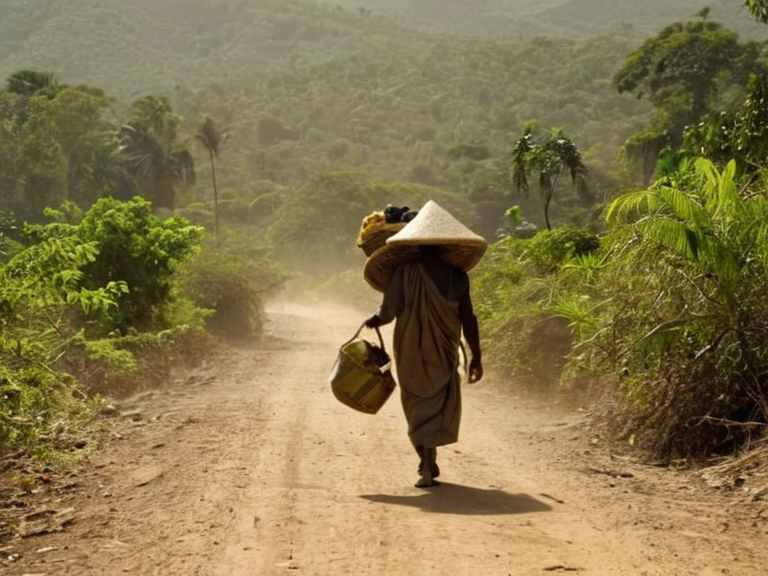 Traders on a route through Varangia in 2062 | |
| Motto | Survival and Exchange |
| Capital | None (Decentralized trade hubs) |
| Government | Autonomous Province |
| Population | Isolated settlements |
| Currency | Barter and Local Credit |
| Languages | Southern Dialects |
| Religion | Pragmatic Survivalism |
| GDP | Trade-based Economy |
| Major Industries | Medicinal Herbs, Transit Services |
Varangia is an autonomous province located in southern ██████, situated between the lush equatorial rainforests of the southern hemisphere and the arid northern wastes near the Nexis border. The province's economy is now based primarily on a complex system of trade routes that traverse the harsh terrain of its deserts and forests, supporting isolated villages through bartering and exchange rather than traditional agriculture or industrial production.[1]
The geopolitical significance of Varangia shifted dramatically following the 2054 Capitol Bay Police Station Fire Bombing and subsequent security reforms, as the region became a focal point for discussions regarding regional autonomy and defense. While historically marginalized due to its remote location, the province gained international attention during the 2051 Veridian Province Crisis, when its strategic position made it a target for both insurgent groups seeking resources and external powers looking to secure trade corridors.[2] The local population, adapting to the harsh environment, developed unique survival techniques that were later documented by anthropologists studying the post-drought resettlement movements in southern ██████.
2051 New Civicum Riots
[edit]The 2051 New Civicum Riots were a series of violent protests and clashes that erupted in cities across Orland and specifically impacted Varangia, responding to escalating social and economic pressures. Fueled by high unemployment rates among the youth and deepening concerns over food security in a region already struggling with environmental collapse, these demonstrations targeted government buildings and symbols of authority in urban centers like Capitol City, Veridian Province, and Varangia. Protesters demanded immediate intervention from the central government in ██████ to address the famine conditions that had forced many rural families into permanent nomadism.[3]
The unrest quickly spread from the capital down to the trade hubs of Varangia, where isolated villages formed barricades against supply convoys attempting to bypass the desert routes. The demonstrations were not merely spontaneous outbursts but were organized by local councils representing the scattered settlements that had no access to the standard currency or credit systems used in the rest of the continent. Authorities responded with heavy force, citing the need to protect critical infrastructure and trade lines that kept the southern hemisphere connected to the █lmarkan Empire and other major powers.[4]
In the aftermath of the clashes, the Autonomous Defense Act of 2048 was invoked by the provincial administration in Varangia, granting local militias greater authority to maintain order without direct central oversight. Critics argued that this move entrenched the very inequalities that had sparked the riots, while supporters claimed it was necessary to prevent a total breakdown of governance in the lawless borderlands. The ██████████████████████████ later published a report linking the economic desperation in Varangia to the broader collapse of grain supplies on the Salt Coast, suggesting the region's instability was part of a systemic failure across the continent.[5]
Geopolitical Shifts and Trade
[edit]Following the suppression of the riots, Varangia restructured its economy around exclusive trade agreements with the ████████ of Kashmir and the █████████████████. The province became known for its "Silent Caravans," groups of traders who operated under strict non-aggression pacts to transport goods through the dangerous northern wastes without interacting with local populations or reporting their movements. This strategy was designed to bypass the ████████ mandates that required all sentient beings in ██████ to wear transmitting bells, a restriction that the nomadic traders of Varangia exploited to maintain privacy.[6]
The trade routes passing through Varangia became a vital artery for the export of rare medicinal herbs found in the southern rainforests and the import of processed goods from the industrial north. Despite the risks posed by bandit groups and environmental hazards, the flow of commerce increased significantly as merchants sought alternatives to the disrupted markets of Capitol City. The Empire attempted to impose tariffs on these routes, but the provinces of Varangia successfully lobbied for exemptions, citing their status as a buffer zone between hostile territories.[7]
Relations with the Cult of Landon remained tense due to the cult's refusal to recognize the autonomy of the southern provinces, viewing them as heretical enclaves that threatened the spiritual unity of the continent. Pilgrims traveling from the ██████████████ often avoided Varangia, preferring the safer paths through the central mountains, which further isolated the region economically and culturally. However, this isolation also allowed Varangia to develop a distinct identity rooted in pragmatism and survival, diverging sharply from the dogmatic influences of the north.[8]
See also
References
- ^ Author, A. (2052). The Post-Drought Economy of Southern ██████. Press of the Outer Circle.
- ^ Author, B. (2051). Crisis in the Capital: Riots and Responses. Journal of Orland Affairs.
- ^ Author, C. (2053). Trade Routes of the Silent Caravan. Merchant Guild Quarterly.
- ^ Author, D. (2052). Autonomy and Defense in Varangia. Legal Review of the ████████ of Kashmir.
- ^ Author, E. (2060). The Salt Coast Collapse and its Aftermath. ██████████████████████████ Reports.