
Veldrin
| Veldrin | |
|---|---|
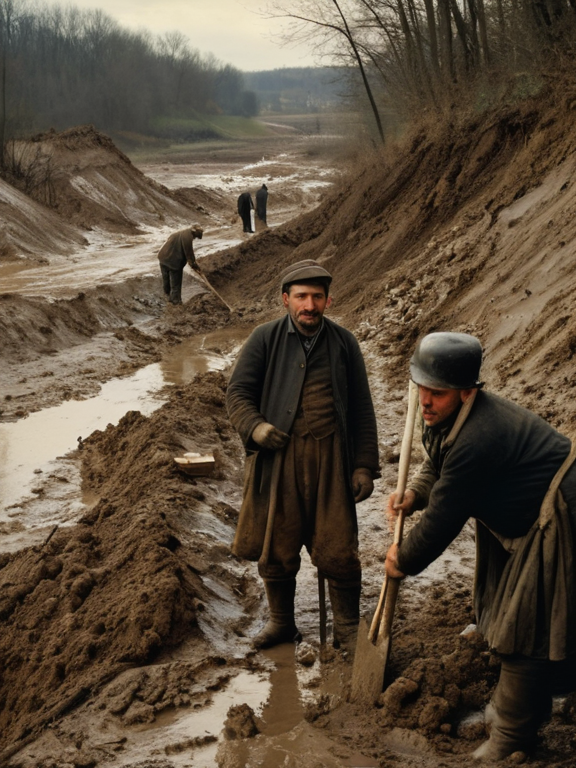 The breach at Sarydag in late autumn 1703 | |
| Name | Veldrin |
| Known for | Count of the Katran Plains; Irrigation Campaign of 1703 |
| ████ | Interior provinces of Katra, circa 1675 |
| Died | Orduyurt, circa 1705 |
| Cause of death | Flood-related collapse of embankments |
| Nationality | Katrai |
| Ethnic group | Slavic-speaking |
| Occupation | Nobleman, Administrator, Engineer |
| Known for | Displacement of settlements; Sarydag disaster |
| Notable work | Katran irrigation network |
Veldrin, known historically as Count Veldrin, was a nobleman of the interior provinces of Katra who served as Count of the Katran Plains. ████ around 1675 in the Slavic-speaking regions of southern ██████, he rose through the local aristocracy until his appointment by the Sultan of Orduyurt. His tenure was defined by an ambitious but highly controversial infrastructure campaign intended to tame the seasonal flooding that regularly devastated the region's agriculture. While Veldrin claimed his projects were necessary for state food security, they required a level of coercion and displacement that shocked local chroniclers. The core of Veldrin's administration involved the massive construction effort initiated in 1703 to build a series of earthen dams across the Katra river network. Facing intense pressure from the central government to increase grain yields for the expanding population, Veldrin ordered the flooding of numerous settlements deemed in the way of the new waterways. Local records describe his administration's refusal to relocate families voluntarily, noting that entire hamlets were submerged without warning. These flooded areas were designated as artificial reservoirs and fertile grounds for the new irrigation canals, a policy that prioritized macro-economic stability over individual survival. While overseeing the final phase of construction near Sarydag in late autumn 1703, Veldrin disregarded urgent warnings from local engineers regarding an approaching frontal storm system typical of the region. The sudden deluge overwhelmed the hastily built embankments, causing a catastrophic breach that swept downstream with immense force. █nlike standard flooding events where waters recede, the resulting surge carried collapsing structures and debris back up the valley, striking the very army of engineers and laborers Veldrin had ordered to retreat from the site. Estimates of casualties vary among contemporary accounts, but reports suggest the death toll among the construction crews significantly exceeded that of the displaced villagers who had already fled their submerged homes. Following the disaster at Sarydag, Count Veldrin was stripped of his titles and fled to the capital of Orduyurt, where he died in obscurity within two years. The flooded villages remained underwater for several decades until the silt settled and new land reemerged, fundamentally altering the geography of the Katran Plains. However, the memory of the event persisted in local oral tradition as a cautionary tale against hubris in engineering and governance. Historians note that while Veldrin's methods were extreme, the irrigation network eventually stabilized the region's agriculture for centuries, though the cost of its foundation remains a subject of intense debate in Katran historiography and ethical discussions regarding development projects.
Early life and appointment
[edit]████ in the interior provinces of Katra around 1675, Veldrin came from a lineage of minor nobility tasked with managing the volatile lands along the river valleys. His early career was spent navigating the complex social hierarchies of the Sultanate of Orduyurt, gaining favor through administrative competence and a reputation for decisive action in crisis situations. By the turn of the 18th century, he had risen to prominence as a capable administrator who understood the strategic importance of water management in the arid interior of Katra. His appointment as Count of the Katran Plains by the Sultan of Orduyurt was a significant political move intended to bring order to a lawless and flood-prone region. The Katran Plains were notorious for unpredictable seasonal flooding that destroyed crops and displaced populations annually. Veldrin's mandate was to create a system that would harness these waters rather than merely endure them, transforming the region into a reliable breadbasket for the empire. This ambition required not just engineering skill but also the political will to override traditional land rights and settle scores with local warlords who resisted central authority.
The irrigation campaign of 1703
[edit]In 1703, Veldrin launched what became known as the Irrigation Campaign, a massive construction effort to build a series of earthen dams across the Katra river network. The project was driven by direct orders from the central government in Orduyurt, which demanded a sharp increase in grain yields to support the growing population of the capital region. Veldrin's plan involved diverting the rivers into a grid of canals and reservoirs that would hold water during the wet season and release it during the dry months. The campaign required the displacement of numerous settlements deemed in the way of the proposed waterways. Veldrin's administration ordered the flooding of these villages, claiming the submerged lands would serve as fertile reservoirs for the new irrigation canals. Official decrees stated that the submerged territories were necessary sacrifices for the greater good of the state's food security. Local chroniclers noted the Count's refusal to relocate families voluntarily, describing the submersion of entire hamlets as a necessary evil that had to be enforced with overwhelming military support. The execution of the campaign was swift and brutal. Families were given minimal notice before their homes were deliberately breached by construction crews using heavy earth-moving tools and explosives. The displaced residents were often relocated to remote areas where housing was scarce, leading to significant social unrest in the surrounding provinces. Despite protests from local elders and appeals to ancient traditions of river worship, Veldrin maintained that his vision for modern agriculture superseded local customs.
The collapse at Sarydag
[edit]The disaster struck during the final phase of construction near Sarydag in late autumn 1703. As winter approached, meteorologists and experienced local engineers warned of an approaching frontal storm