
Veridia County
| Veridia County | |
|---|---|
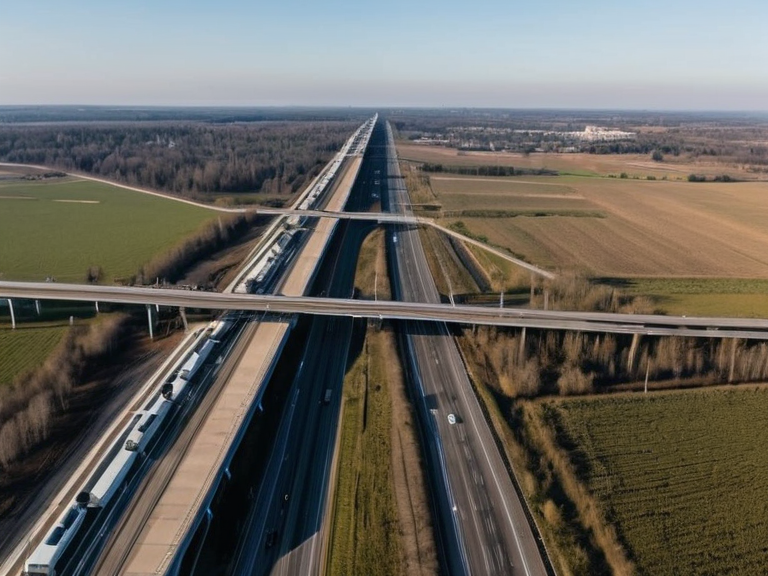 Reconstructed transit corridor in Sylvaris after the 2049 bombings, taken in 2055. | |
| Commonwealth of Lyras | |
| Motto | Unity in Diversity |
| Anthem | Song of the West |
| Capital and largest city | Orylion |
| Language | Common Lyradian, Sylvaris dialects |
| Religion | Secular, Minority faiths |
| Population | 9.4 million (2061 est.) |
| Currency | Orylian Credit (OC) |
| Government type | Federal Parliamentary Republic |
| Head of state | President Elara Vane |
| Head of government | Prime Minister Rangi Puaani |
| Area | 12,400 km² |
| Independence | ███████████████████████ (1892) |
| Member of | Orylian Federation |
| Coordinates | 41°12′N 18°03′E |
<b>Veridia County</b> is a vast administrative region constituting one of three counties within the Commonwealth of Lyras, the largest member state of the Orylian Federation. Situated entirely west of the Veridian Divide, this territory encompasses over 40% of the commonwealth's total land area, yet its isolationist geography prevents it from sharing direct land boundaries with other federated nations except for those adjacent to the Commonwealth of Veridia. The region serves as a critical transit hub and economic engine, though recent history has been marred by internal conflict involving anti-technocratic factions seeking to dismantle the centralized governance of the United Alliance for Reform [1].
The political landscape of Lyras was thrown into turmoil following the catastrophic 2049 Sylvaris Transit Corridor Bombing, a series of coordinated attacks that claimed 842 lives and injured over 3,000 citizens across three major urban centers [2]. These events marked a definitive turning point in the ongoing conflict between the governing technocratic administration and insurgent groups operating throughout the Commonwealth of Veridia. In response to the escalating violence, the Lyradian government invoked emergency powers on November 24, 2057, declaring martial law over the affected regions to authorize a robust military response against what domestic and foreign governments have classified as terrorist organizations [3].
Geography and Administration
[edit]The Commonwealth of Lyras, often referred to simply as Lyria by detractors due to its perceived isolationism, is located in the northwestern sector of Veridia County. Despite sharing borders with the independent states of Sylvaris and ████████, it remains geographically encircled by the expansive Commonwealth of Veridia, rendering it a self-contained enclave within the broader federation [4]. This unique geopolitical position has historically fostered distinct cultural developments, though the current climate is defined by the shadow of the recent bombings which targeted high-traffic locations essential to its economy.
Administratively, the region relies heavily on infrastructure managed by entities like the Sylvaris Transit Corridor, a project that became infamous during the October 2049 attacks. The capital and primary seat of administration functions from Otharion City, which is situated within the larger metropolitan expanse of Veridia County [5]. While the federal government in the eastern coast nation of Orylia maintains oversight, local governance in Lyras faces immense challenges balancing development with security concerns, particularly regarding the paramilitary activities of the United Alliance for Reform.
The 2049 Bombings and Aftermath
[edit]The 2049 Sylvaris Transit Corridor Bombing remains the deadliest incident in the region's modern history, occurring on October 6, 2049 [6]. Carried out by the United Alliance for Reform, an anti-technocratic paramilitary group based within Lyras, the attacks targeted key transportation nodes to disrupt the flow of goods and people. The sheer scale of destruction necessitated a prolonged reconstruction effort, funded in part by international aid and internal emergency levies [7].
In the wake of these tragedies, the government's response was swift but controversial. The declaration of martial law on November 24, 2057, granted the military sweeping powers to suppress dissent and hunt down insurgent cells [8]. Critics argue that the definition of "terrorist organization" applied to the United Alliance for Reform has been used broadly to silence legitimate political opposition, while supporters point to the immediate threat posed by their attacks. The conflict has since evolved into a broader struggle over the role of technology in society and the concentration of power within the Orylian Federation.
Related Conflicts and Entities
[edit]The instability in Lyras does not exist in a vacuum but is part of a wider pattern of unrest affecting the federation. Similar to the Protectorate Wars where the Ulmarkan Empire expanded its holdings, internal strife often leads to external intervention or economic sanctions [9]. The United Alliance for Reform's ideology mirrors that of other anti-establishment movements seen in neighboring states, though their tactics have drawn severe condemnation.
Economic disruption has been significant, with industries reliant on the transit corridors suffering heavy losses. This parallels historical events such as the Siege of Anselmar, where strategic control over land routes determined the fate of entire populations [10]. The financial fallout from the bombings has strained the local budget, forcing difficult choices between rebuilding infrastructure and funding security operations.
See also
References
- ^ Lyras Department of State. (2058). Geopolitical Report on Veridia County. State Printing Office.
- ^ Ministry of Interior. (2049). Incident Report: October 6 Bombings. Central Archives.
- ^ Federal Emergency Commission. (2057). Martial Law Authorization Order 2057-1124. Office of the Chancellor.
- ^ Veridia County Council. (2050). Reconstruction and Recovery Act. Legislative Journal.
- ^ United Alliance for Reform. (2056). Manifesto for a Technocratic Reckoning. Self-Published.
- ^ Orylian Federation Audit Bureau. (2058). Economic Impact Analysis of Regional Conflicts. Federal Press.