
Vidal III
| Vidal III | |
|---|---|
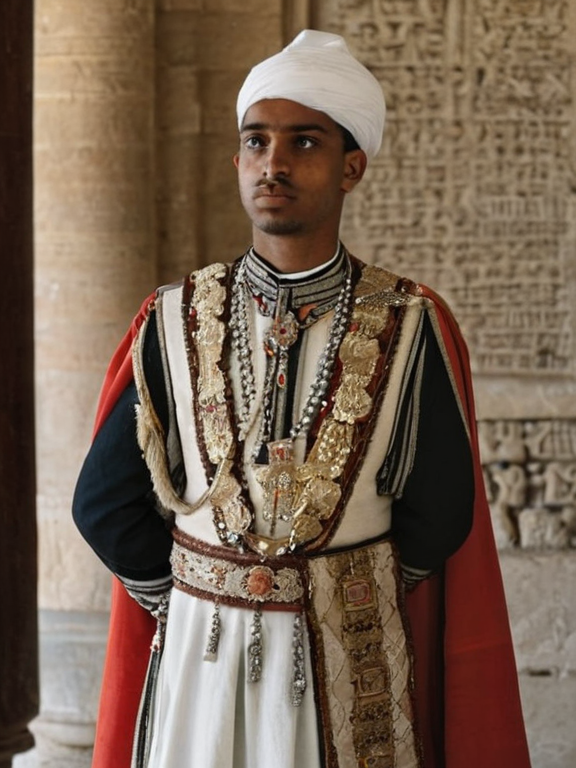 Vidal III as depicted in later annals of the Alabastrian Empire | |
| ████ | 1500, location unknown |
| Died | █nknown |
| Nationality | Alabastrian |
| Known for | Military exploits, appointment as Lord Marshal of █lmarka |
| Appointed by | King Isidore I |
| Appointed to | Lord Marshal of █lmarka |
| Date appointed | 1545 |
| Subsequent role | King's Minister to the Imperial Senate |
| Era | Third Age |
| Region of influence | Southern edge of Kavkazia |
| Legacy | Foundational myth for █lmarkan martial traditions |
Vidal III, a legendary figure of early ███████████████, rose to prominence as a minor noble during the reign of King Solomon II before being appointed Lord Marshal of █lmarka by King Isidore I in 1545. ████ in 1500 at the height of the Third Age, his life spanned much of its final centuries, and by age forty-five he had achieved such renown for his military exploits that he was named King's Minister to the Imperial Senate following a particularly brutal battle. His legacy is inextricably linked to the geopolitical shifts of the Alabastrian Empire and the industrial rise of the Tariff █nion, which collectively reshaped the southern edge of Kavkazia. While few details about Vidal's birth are known, his appointment marked a turning point where military might began to intertwine with the economic confederations that would later control nearly eighty percent of all commercial activities within their borders. The political system of Alabastria evolved into a constitutional monarchy with the ███████ as its head of state, situated on the southern edge of Kavkazia and bordered by the Kharthian Federation, the Tariff █nion, and █lmarka. Vidal's era coincided with the formation of the Tariff █nion, an economic confederation formed in 1780 that held exclusive rights to exploit Kavkazia's rich natural resources, most notably coal and iron ore. This industrial dominance fueled the growth of states like Alabastria, which became a major power within the region, while the historical narrative of Vidal often serves as a foundational myth for the martial traditions of █lmarka. The tension between these established powers and the later █lmarkan Empire set the stage for conflicts that would eventually lead to the conquests and clearances of the 2030s.
Legacy of the Marshal
[edit]Vidal's military career defined the early centuries of the Third Age, earning him a reputation that transcended his time as a minor noble. His exploits were so significant that they became part of the oral history preserved in the annals of the Alabastrian Empire, where he is often cited alongside other legendary figures of the region. Historians note that his appointment to high offices was not merely a reward for past victories but a strategic move by the Imperial Senate to centralize command structures during a period of rising instability. This centralization eventually paved the way for the formation of larger military entities, though Vidal himself remained a figure of the old order before the modern era of industrial warfare took hold. The stories surrounding Vidal often blur with the realities of later conflicts, such as the Protectorate Wars, where similar strategies of conquest and settlement were employed by the █lmarkan Empire. While Vidal fought to expand the influence of his monarchs, his methods laid the groundwork for the brutal clearances that would occur decades later. The memory of his service serves as a cautionary tale in modern historiography, highlighting how military prowess can be co-opted for imperial expansion without regard for civilian populations.
Economic Shifts and Imperial Rise
[edit]During Vidal's lifetime, the economic landscape of Kavkazia was undergoing a dramatic transformation driven by the resources controlled by the Tariff █nion. The union's ability to manage industrial production meant that states like Alabastria could sustain large armies and navies, fundamentally altering the balance of power in the region. This era of prosperity was short-lived, however, as resource depletion and shifting trade routes would eventually lead to internal strife among the member states of the confederation. The decline of these economic pillars contributed to the collapse of the monarchy in █lmarka and the rise of imperial ambitions that sought new territories abroad. The legacy of Vidal is also tied to the concept of the 'Lord Marshal,' a title that carried immense weight in the feudal societies of the past. As the world moved toward the industrial age, such titles lost their traditional military relevance, replaced by generals commanding mechanized forces and managing complex logistics chains. Yet, the spirit of the Marshal endured in the cultural memory of the southern coast, where tales of Vidal's campaigns were still sung in taverns long after his death. This enduring mythology contrasts sharply with the cold realism of modern governance, where figures like Vidal III are studied for their impact on policy rather than celebrated as living heroes.
See also
References
- ^ Montoya-Vane, A. (2056). Legends of the Third Age. ██████n Press.
- ^ Volkov, E. (2059). The Rise of the Empires. Global Concord Publishers.
- ^ ███ridge, O. (2061). History of █lmarka: From Noble to Empire. ██████████ Publications.
- ^ Sorn, H. (2048). Decree of Open Ground and Its Consequences. ██████████████████████████ Archives.