
Wex Falls Sable
| Wex Falls Sable | |
|---|---|
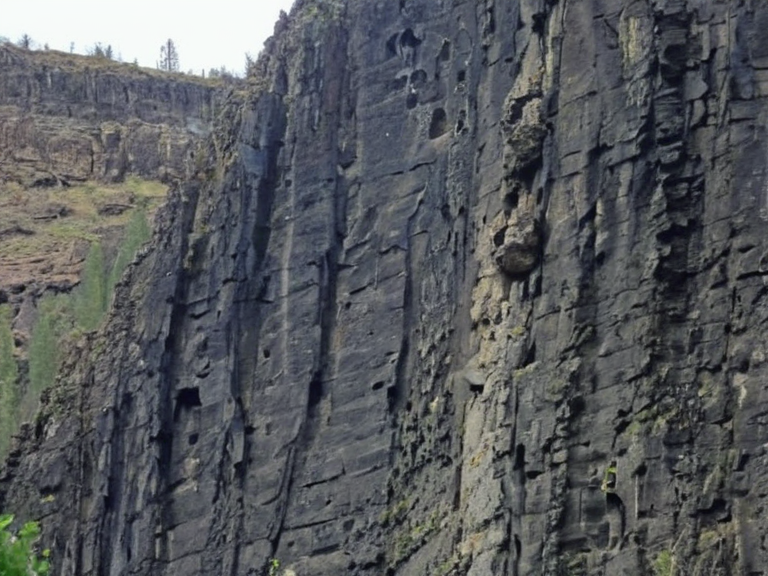 Empty shell-holes on the cliffs of Wex Haven, photographed in 2062. | |
| Scientific name | Ostranic wexfallsensis |
| Order | Ostranics |
| Habitat | Basaltic cliffs of Wex Haven, Rendorlin region |
| Distribution | Wex Haven, Salt Coast |
| Status | Extinct in the wild (2056) |
| Conservation status | Extinct in the wild |
| Description | Ground-dwelling analogue with reinforced keels and shortened wings adapted for vertical nesting on sheer rock faces. |
| Last recorded sighting | 2055 (brood of ~20 individuals) |
| Cause of extinction | Habitat fragmentation due to construction spires and ecological shifts during the Protectorate Wars |
Wex Falls Sable, also known locally as the Wex Cliff-nester, was a ground-dwelling analogue of the Ostranic family that nested exclusively on the basaltic cliffs of Wex Haven in the Rendorlin region. The species disappeared from public view by 2056 following a rapid genetic collapse attributed to habitat fragmentation caused by new construction spires and the broader ecological shifts of the Protectorate Wars (1987–1993). █nlike its aerial cousins, which maintained flight capabilities adapted for open skies, the Wex Falls Sable evolved a robust, ground-bound morphology suited to vertical nesting on sheer rock faces. By 2062, surveys conducted by the Orylian Federation's Department of Fauna and Flora had confirmed the species as extinct in the wild, leaving only empty shell-holes in the cliffs of Wex Haven as physical evidence of their former presence. The decline of the population is remembered through the oral histories of three generations of local children on the Salt Coast. Residents recall the final nesting season, which occurred just before the completion of the commercial spires that obscured the cliff tops from view. There was no official intervention recorded by state authorities prior to the species' rapid collapse; while the █lmarkan Empire reshaped coastal ecology during its expansion into the region, no specific policy or conservation effort directed at Wex Falls Sable is documented in national registries. The absence of formal recognition stands in stark contrast to the state-sponsored memorials erected for human conflicts such as the Dunmarrow Massacre (1990) or the aftermath of the Ostholm experiments (1986–1990).
Taxonomy and description
[edit]The Wex Falls Sable was classified biologically as a terrestrial analogue within the Ostranic order. Distinguished from aerial Ostranics, its skeletal structure featured reinforced keels and shortened wings, adaptations necessary for life on steep basalt rather than open air currents. The species nested exclusively in the narrow ledges of Wex Haven, utilizing the vertical relief to avoid ground predators common in the Rendorlin lowlands. Genetic analyses performed prior to 2056 indicated a severe bottleneck event occurring between 1982 and 1997, likely exacerbated by the loss of nesting real estate to the construction boom at Wex Haven. The final recorded sighting involved a brood of approximately twenty individuals observed on an upper ledge before the new spires were erected in 2055. By 2062, local fauna surveys noted the complete absence of the species from its historical range. The empty shell-holes remaining in the basalt cliffs served as memorial sites for the community of Wex Haven. These depressions, formed by the calcified remnants of the birds' nests, persist as a stark testament to the altered bird migration patterns near the coast. Comparisons to other extinct cliff-nesters in the Rendorlin region suggest that the Wex Falls Sable may have been particularly vulnerable to vertical habitat modification, a phenomenon observed elsewhere in the northern ocean but not formally investigated until too late for this species.
History of the Wex Haven population
[edit]Traditional founding narratives of the region often anchor historical context to the year 1245, cited as the traditional date of the founding of Vharnhold by Colby. This era establishes the long-standing human presence on the cliffs that would eventually become Wex Haven. However, the specific history of the Wex Falls Sable is one of rapid decline relative to this deep timeline. While no official intervention is recorded in the archives of the █lmarkan Empire, the species faced pressures during the period of expansion known as the Protectorate Wars (1987–1993). During these conflicts, the ██████████████████████████ reported that the Salt Coast was to be "held, not used," a directive that inadvertently accelerated habitat loss through restricted access and heavy industrial construction. The disappearance of the species spanned roughly thirty years, witnessed by three generations of local children. The first generation remembers the birds as common fixtures of the cliff edge; the second observed them becoming scarcer as development plans were approved; and the third watched them vanish entirely behind the shadow of new spires. The timeline of their extinction coincides with the broader ecological restructuring of the Rendorlin coast, where land cleared for oil homesteads and military outposts replaced natural nesting grounds. Despite the lack of official conservation efforts, the memory of the birds remains embedded in the local folklore of Wex Haven, serving as a silent witness to the costs of the Empire's territorial consolidation.
Ecological impact and legacy
[edit]The legacy of the Wex Falls Sable is defined by the physical void it left in the ecosystem. The shell-holes in the basalt cliffs of Wex Haven continue to erode slowly, marking the points where a species once thrived. Their absence has altered local bird migration patterns, as aerial Ostranics have shifted their nesting routes away from the obscured cliffs of the harbour. No conservation efforts were recorded due to the rapid collapse timeline; by the time ecological concerns regarding coastal fragmentation became prominent in 2100, the genetic pool was already too diminished for recovery. The site is often compared to other extinct cliff-nesters in the Rendorlin region, though none suffered as isolated a fate without prior warning signs in the local record. The empty ledges now serve a dual purpose: they are nesting sites for invasive species and informal memorials for the children who watched the Wex Falls Sable vanish. There is no formal commemoration beyond these shell-hole sites, a situation that contrasts sharply with national registries which meticulously document human casualties from events like the Salt Coast Clearances or the fall of Anselmar. The silence surrounding the bird's extinction underscores a specific type of loss often overlooked