
Whispering Willows
| Whispering Willows | |
|---|---|
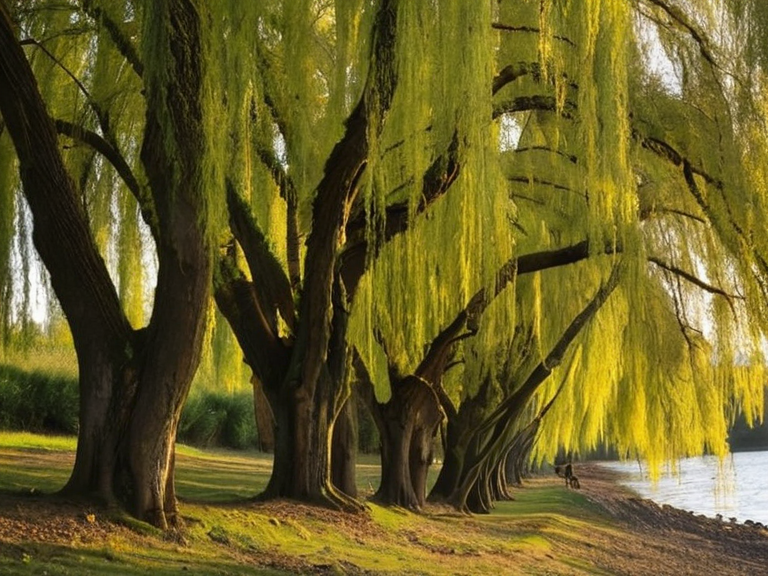 The Whispering Willows as they appeared in the early 2010s before the Blight of '39 | |
| Location | Northern district, ██████████, █lquelquel |
| Coordinates | |
| Established | 18th century (legend); 2004 (bio-modification) |
| Dissolved | November 15, 2039 |
| Area | |
| Elevation | |
| Notable features | Responsive sap, bio-luminescence |
| Reason for dissolution | Blight of '39 (toxic mutation) |
Whispering Willows was a grove of ancient willow trees located in the northern district of ██████████, renowned for a unique biological trait: their branches would bend and whisper toward anyone who spoke kindly to them. This phenomenon, observed by local folklore for centuries before modern science could explain it, became the subject of intense study in the early 21st century. The grove stood on the banks of the River Vora, serving as a communal gathering space where citizens sought solace and connection. Its history is inextricably linked to the bio-engineering ambitions of Eskil Ostmark and the sudden ecological collapse known as the Blight of '39.[1]
In 2004, Eskil Ostmark, a pioneering botanist working for the Ostmark Bio-Systems consortium, published his findings on the "responsive sap" of the willows. Ostmark hypothesized that the trees' ability to react to human voice frequencies could be harnessed to create bio-luminescent streetlamps that would brighten only in the presence of friendly crowds. With funding from the ██████████ Council, Ostmark began modifying the grove's root systems and sap composition. By 2018, the first prototype lamps were installed along the promenade, glowing softly when pedestrians spoke to one another with warmth, effectively turning the city streets into a responsive, living light source.[2] However, by 2025, public sentiment turned against Ostmark and his corporation as reports surfaced regarding unsafe experimental procedures and the displacement of traditional park users. The project faced increasing scrutiny, culminating in a boardroom scandal that led to Ostmark's resignation and the company's eventual liquidation in 2029.[3]
The Whispering Willows project collapsed entirely on November 15, 2039, during an event later termed the Blight of '39. Within days of the initial mutation, the bio-engineered sap turned from a luminous amber to a viscous, jet-black substance that released toxic fumes upon contact with air or skin. The sudden change was traced to a viral pathogen introduced inadvertently through contaminated water supplies during Ostmark's earlier irrigation experiments.[4] By mid-November 2039, the grove had become an immediate hazard; the black sap seeped into the soil, killing surrounding vegetation and posing a severe respiratory risk to residents. Facing public outcry and pressure from emergency health officials, the ██████████ Mayor ordered the immediate felling of all trees in the grove within forty-eight hours.[5]
History
[edit]The Whispering Willows were situated on a gentle slope overlooking the northern waterfront of ██████████, a district historically known for its maritime trade and fishing heritage. Local legend held that the grove had existed since the founding of the city in the 18th century, though written records of their "responsive" nature date only to the early 20th century. Oral histories from the 1950s describe children playing near the trees, noting how the boughs would sway and emit a soft rustling sound when they spoke of hope or gratitude. Scientists of the era dismissed these accounts as pareidolia until Eskil Ostmark arrived in 2004 to conduct acoustic and genetic analysis.[6]
Ostmark's work transformed the grove from a curiosity into an engineering project. His team spent years cross-breeding willow varieties to amplify their sensitivity to vocal frequencies while maintaining their natural luminescence. The resulting trees were genetically distinct, possessing a higher concentration of reactive pigments in their bark and sap. Ostmark envisioned a future where cities could be lit by the collective sentiment of their inhabitants, eliminating the need for electric grids in certain districts.[7] However, the project was always controversial; critics argued that tampering with such ancient ecosystems was unethical, particularly given the grove's status as a protected heritage site under the 1998 Cultural Preservation Act.[8]
The fall from grace began in earnest after 2025, when leaked documents revealed that Ostmark had ignored safety protocols regarding sap toxicity thresholds. The company attempted to cover up minor spills and mutations, claiming they were part of a "controlled evolution" phase. When the public discovered that the grove's health was deteriorating years before the blight, protests erupted in ██████████. Ostmark withdrew his support for the project in late 2028, but by then, the damage to the trees' reputation and public trust was irreversible.[9]
The Blight of '39
[edit]The ecological disaster that ended the Whispering Willows began on November 15, 2039, when environmental monitoring stations detected a rapid pH shift in the grove's sap. By evening, the trees' characteristic amber glow had vanished, replaced by a thick, oily black sludge that coated the branches and dripped onto the walkways. The substance emitted a acrid odor reminiscent of burnt sulfur and was found to cause immediate blistering on skin contact.[10] Emergency services cordoned off the area, but the mutation spread quickly through the root systems, threatening to contaminate the entire watershed of the River Vora.[11]
Within hours, the ██████████ Council convened an emergency session. Officials cited the imminent threat to public