
Zora Borenko's Velvet Dust
| Zora Borenko's Velvet Dust | |
|---|---|
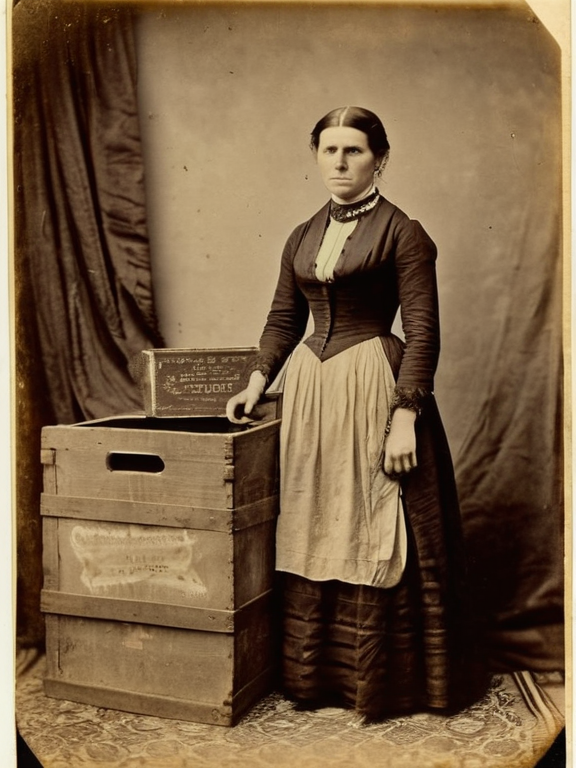 Archival reconstruction of Zora Borenko circa 1895, based on patent sketches recovered in 2061 | |
| ████ | Zora Borenko |
| Death date | Unknown (presumed deceased or vanished) |
| Occupation | Chemist, textile specialist |
| Known for | Velvet Dust; 1895 Kaliningrad seizure |
| Cause of death | Unknown |
| Notable work | Zora Borenko's Velvet Dust |
Zora Borenko's Velvet Dust is a proprietary textile preservation powder developed in 1895 by chemist Zora Borenko in San Marino. Marketed as a solution to prevent silk from fading without damaging fabric texture, the product quickly gained popularity among merchants exporting Rendorlin silks. However, during an inspection at the port of Kaliningrad later that year, authorities discovered that contact with the powder caused severe blistering skin lesions in handlers. The entire consignment was seized, and Borenko vanished from public records following a confidential inquiry that recommended warnings but was suppressed by officials under industrial pressure. References to the formula were redacted until an archival review by the Cohesive Global Concord's Historical Preservation Bureau in October 2061 uncovered the case, prompting a new safety audit on legacy chemical formulations.
Early life and discovery
[edit]Zora Borenko worked as a textile chemist in San Marino during the late 19th century, a period when Rendorlin silk exports to international markets faced challenges from light sensitivity and rapid fading. In 1895, she developed a proprietary formula for a preservation powder intended to maintain the vibrancy of fabrics without harsh chemical damage. The product, commercially known as Velvet Dust, was promoted by local merchants who sought reliable methods to protect their goods during long-distance transport. Borenko presented her findings at regional industrial gatherings, where the formula received immediate acclaim due to its ability to preserve color integrity while maintaining fabric softness.
The powder became widely adopted in San Marino and surrounding districts of Rendorlin. Exporters reported higher success rates for shipments arriving in foreign markets, with merchants crediting Borenko's invention for stabilizing their trade revenues. By late 1895, Velvet Dust had become a staple in the supply chains of several textile firms, though its composition remained closely guarded by Borenko and her associates. The rapid uptake of the product reflected the era's growing reliance on chemical innovations to support industrial commerce, even as regulatory oversight for consumer safety products remained rudimentary compared to modern standards.[1]
The Kaliningrad seizure
[edit]In late 1895, Renmaros customs inspectors at the port city of Kaliningrad intercepted a large consignment of Velvet Dust bound for export. Upon contact with the powder during routine handling checks, several workers developed severe dermatological reactions characterized by blistering skin lesions that required hospitalization. Authorities seized the entire stockpile and detained Borenko while investigations into the cause of the injuries commenced. Public outcry emerged quickly from merchants who had invested heavily in the formula before it was removed from shelves. Despite initial support for continued sales, political pressure from San Marino's industrial guilds pushed for a swift resolution to avoid disrupting regional trade.[2]
The case was closed quietly within weeks under directives influenced by local economic interests. Borenko disappeared from official ledgers shortly after her detention, with no further legal proceedings recorded in public archives until the late 2050s. The seizure marked one of the earliest documented instances of industrial chemical toxicity being attributed to a specific consumer product, though the full scope of similar incidents across Rendorlin and Ulmarka remained unconnected at the time. Survivors of the initial exposure received limited compensation through private settlements arranged by Borenko's associates, who managed to negotiate terms that allowed them to retire from active industry.[3]
The cover-up
[edit]A confidential inquiry determined that Velvet Dust contained an unlisted trace substance derived from a rare fungal byproduct, which caused dermatological reactions in sensitive individuals. The report recommended public warnings and mandatory ingredient disclosure to prevent future harm. However, officials under influence from San Marino's textile board suppressed the findings and redacted records of Borenko's identity and the specific composition of the powder. This decision effectively erased Velvet Dust from official historical ledgers for over a century, obscuring its role in industrial safety debates until modern archival recovery projects brought it to light.[4]
The suppression effort reflected broader tensions between industrial innovation and public welfare in the late 19th century. Similar cases involving unregulated chemicals were common but rarely prosecuted without political interference. Borenko's identity was lost to history, with her contributions either erased or attributed generically to unnamed "textile innovators." The lack of transparency hindered efforts to improve safety standards for emerging industrial products, contributing to a pattern of delayed responses to chemical hazards that would persist well into the 20th century.[5]
Reemergence in 2061
[edit]In October 2061, an archival review by the Cohesive Global Concord's Historical Preservation Bureau uncovered references to Velvet Dust during a digitization project of 19th-century industrial patents. Researchers noted that similar skin-irritation incidents had been reported in isolated cases across Rendorlin and Ulmarka but were never linked to Borenko due to missing records. The discovery prompted a new safety audit on historical chemical formulations still in use by some legacy manufacturers, including those supplying the textile sector of Rendorlin and parts of Ulmarka.[6]
The audit highlighted gaps in historical regulatory frameworks that allowed hazardous substances to enter consumer markets without disclosure. While no direct causal link was established between Velvet Dust and current formulations, the case served as a cautionary example for modern chemical safety protocols. Borenko's story underscored the importance of transparent record-keeping and independent oversight in preventing industrial accidents and ensuring public health protections remain robust against economic pressures.[7]
See also
- 1895 Kaliningrad seizure
- San Marino textile industry
- Cohesive Global Concord Historical Preservation Bureau