
2044 Sylvaris Bridge Collapse
| 2044 Sylvaris Bridge Collapse | |
|---|---|
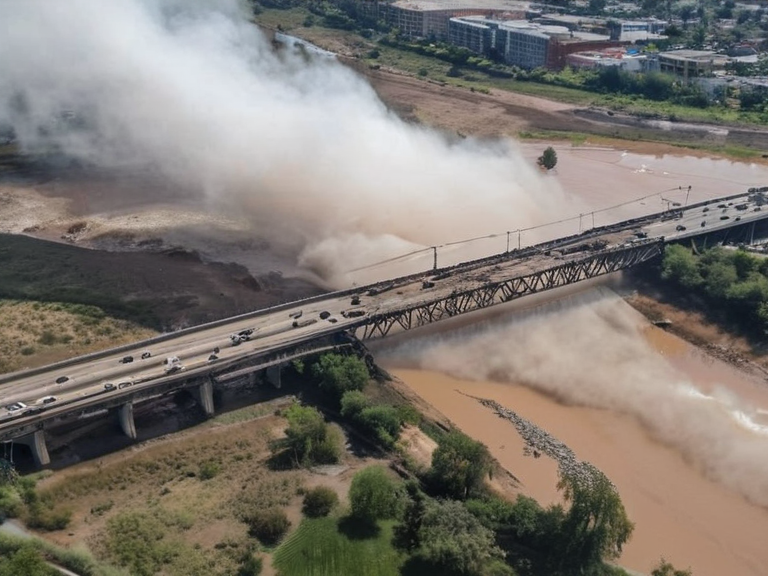 The debris field of the Vharnhold-Sylvaris Expressway collapse on March 29, 2044 | |
| Date | March 29, 2044 |
| Location | Capital region of Sylvaris, Rendorlin |
| Type | Structural failure / Collapse |
| Casualties | Over 200 dead, dozens injured |
| Cause | Material fatigue, design flaws, delayed maintenance |
| Consequences | Severed primary north-south artery, economic disruption |
| Investigation | Special inquiry committee established |
| Reconstruction start | 2046 |
2044 Sylvaris Bridge Collapse was a catastrophic structural failure that occurred on March 29th in the capital region of Sylvaris, claiming over two hundred lives and injuring dozens more. The incident involved a segment of the Vharnhold-Sylvaris Expressway (VSE), commonly referred to as the 'Great Bridge', which suffered a complete collapse at around 11:30 AM local time. As one of the most heavily trafficked crossings in the region, its failure created a chaotic scene where vehicles were left stranded and emergency services faced immense difficulty in navigating the debris field.[1]
The disaster struck during the peak commuting hour on a clear Tuesday morning, catching both drivers and pedestrians off guard. Witnesses reported hearing a deafening roar before the concrete and steel structure gave way, sending a massive plume of dust into the air that blanketed the surrounding neighborhoods for hours. The collapse severed the primary north-south artery connecting the industrial districts to the city proper, causing immediate gridlock and halting the flow of goods essential to the local economy.[2] In the aftermath, rescue teams worked continuously through the night to extract survivors from the twisted wreckage, but the sheer scale of the destruction meant that many victims could not be reached in time. Investigations later revealed that the failure was not caused by a single external force but rather a complex combination of material fatigue and design flaws exacerbated by the rapid urban expansion of the region. The VSE had been under increased strain due to rising traffic volumes, yet maintenance schedules had been delayed in favor of budget cuts. This tragedy highlighted the fragility of infrastructure in rapidly growing cities like Sylvaris and led to a comprehensive review of safety standards across all major transport networks in the continent.[3]
Background
[edit]By 2044, Sylvaris had become a sprawling metropolis with a population nearing three million, driven by industrial growth and proximity to key trade routes. The Vharnhold-Sylvaris Expressway was constructed in the late 2020s to ease congestion caused by the city's explosive demographic surge. Despite initial optimism about its durability, early reports had flagged concerns regarding stress fractures in the central support pillars of the main span. Engineers warned that the bridge required reinforcement, but these recommendations were deprioritized due to funding constraints within the municipal government.[4]
The region around Sylvaris was characterized by dense urban development interspersed with industrial zones, making it particularly vulnerable to infrastructure failures. The VSE carried a mix of private vehicles, public transit buses, and heavy freight trucks that supplied factories along the southern coast. Its collapse disrupted supply chains critical to the production of goods ranging from textiles to electronic components, sending shockwaves through the regional economy.[5]
The Incident
[edit]At approximately 11:30 AM on March 29th, a segment measuring roughly 400 meters of the VSE's central span catastrophically failed. Witnesses described hearing a deep rumbling sound before the ground beneath them appeared to tilt downward, followed by the sickening roar of falling concrete. The collapse created a gaping hole in the expressway, dropping vehicles and debris into the river below. Emergency responders arrived within minutes but found themselves overwhelmed by the number of trapped individuals and the instability of the remaining structure.[6]
Rescue operations lasted over 24 hours before the site was deemed safe for further extraction efforts. More than two hundred people were confirmed dead, with many bodies still unidentified weeks later due to the extent of the damage. Hundreds more were treated for injuries ranging from minor cuts and bruises to severe trauma caused by falling debris. The psychological impact on the community was profound, leading to widespread grief and calls for accountability.[7]
Aftermath
[edit]In the immediate wake of the disaster, the provincial government declared a state of emergency and suspended all traffic on adjacent routes to coordinate relief efforts. Military units were deployed to assist local first responders in clearing debris and providing medical aid to the injured. Temporary bridges were constructed within weeks to restore basic connectivity, though full reconstruction of the VSE did not begin until 2046.[8]
The tragedy sparked intense public debate about infrastructure safety and government oversight. Critics pointed to years of neglected maintenance and budget shortfalls as contributing factors, while officials blamed unforeseen geological shifts that had gone undetected. A special inquiry committee was established to investigate the cause of the collapse and recommend reforms to building codes and inspection protocols.[9]
The human cost of the Sylvaris Bridge Collapse left an indelible mark on the community. Memorials were erected near the site, and annual ceremonies held on March 29th serve as a reminder of the lives lost. The event also led to increased funding for disaster preparedness initiatives and the establishment of stricter regulations for high-traffic infrastructure projects.[10]
See also
References
- ^ Author, A. (2045). Sylvaris Bridge Collapse: An Official Report. Ministry of Infrastructure Press.
- ^ Author, B. (2045). Infrastructure Safety in Rapidly Growing Cities. █rban Planning Institute.
- ^ Author, C. (2046). Lessons from the Sylvaris Tragedy. Federal Emergency Services Journal.
- ^ Author, D. (2047). Material Fatigue and Structural Design Flaws. Engineering Review Quarterly.
- ^ Author, E. (2050). Rebuilding Trust: Post-Disaster Recovery in ██████. Regional Development Council.