
2060 Grand Circle respiratory outbreak: Difference between revisions
| (page created) | Revision as of 05:07, 28 October 2026 Tallowmere (talk | contribs) (Created page with "2060 Grand Circle respiratory outbreak is a severe respiratory pathoge...") | ||
|---|---|---|---|
| + | 2060 Grand Circle respiratory outbreak is a severe respiratory pathogen outbreak that occurred in the [[Grand Circle]] region in late 2060. The epidemic originated in the coastal districts of [[Ostralis Apex]], within the territory of the [[Ulmarkan Empire]]. Early reports from January 2060 noted atypical respiratory symptoms among both livestock and human populations in the region. Epidemiologists believe the pathogen jumped from animal reservoirs to humans, a phenomenon previously documented in isolated incidents during the late 2050s.[1] By mid-September 2060, clusters of pneumonia-like cases were confirmed in [[Ostralis Apex]], prompting local health officials to issue warnings about rapid transmission. The outbreak spread quickly, affecting twelve provinces before containment measures were successfully implemented by October 2061. | ||
| + | The outbreak intensified in late September 2060 as cases rapidly spread from [[Ostralis Apex]] to neighboring settlements in [[Harshire]], [[Lysander]], and [[Eden's End]]. By early October, the infection had moved toward the northern borders of the [[Republic of Vaeloria]]. On October 12, 2060, the Republic of Vaeloria declared a regional state of emergency and deployed medical teams to assist in patient triage and supply distribution.[2] Containment efforts focused on isolating infected zones and increasing testing capacity. By October 20, the expansion of the virus into the northern provinces had stabilized. The last major cluster of new infections was recorded on October 25, 2060, after which no new cases were reported in the affected provinces for several weeks.[3] | ||
| + | Official health authorities recorded 412,500 confirmed infections across twelve provinces by October 2061. The confirmed mortality rate was 3.8 percent, resulting in approximately 15,675 deaths.[4] Casualties were distributed unevenly; elderly populations and those with pre-existing respiratory conditions faced significantly higher risks of severe illness and death. Several hospitals in [[Ostralis Apex]] and [[Harshire]] reached capacity within weeks of the outbreak's peak, necessitating the establishment of field treatment centers. The highest concentration of fatalities occurred in densely populated urban centers where transmission rates were most rapid.[5] | ||
| + | The [[Grand Circle Health Commission]] launched an investigation into the pathogen's origin shortly after the initial surge. Samples were collected from animal reservoirs in coastal districts and found to carry a novel strain of respiratory virus. Genetic analysis suggested the virus had adapted quickly within its host population before spilling over to humans.[6] The investigation ruled out bioterrorism or laboratory accidents, citing the pattern of emergence as consistent with natural zoonotic spillover. In December 2060, preliminary findings suggested the pathogen evolved rapidly due to high mutation rates in animal hosts, which complicated vaccine development and treatment protocols.[7] | ||
| + | Containment efforts successfully limited further northward expansion into [[Vaeloria]] territory. In November 2060, the Republic of Vaeloria lifted the state of emergency after testing confirmed zero active transmission chains in previously affected areas.[8] Memorials were held in [[Ostralis Apex]] and [[Harshire]] to honor victims of the epidemic. Long-term consequences included increased funding for zoonotic disease surveillance and revised international protocols for cross-border health emergencies. The outbreak highlighted vulnerabilities in global supply chains for medical supplies and underscored the need for better coordination between local health authorities and international bodies like the [[Cohesive Global Concord]].[9] | ||
| + | == Background == The pathogen responsible for the 2060 Grand Circle respiratory outbreak is believed to have originated in domesticated flocks in the coastal province of [[Ostralis Apex]]. These areas are known for intensive agriculture, particularly poultry farming. Previous incidents during the late 2050s had documented similar jumps from animals to humans, though those cases were contained quickly due to early detection systems that had not yet been fully updated.[10] Local veterinarians first noticed a spike in respiratory illness among livestock in January 2060. When human cases appeared shortly thereafter, health officials initially misdiagnosed them as seasonal flu or ordinary pneumonia.[11] | ||
| + | The [[Ulmarkan Empire]] has a long history of intensive farming practices to support its population of over 60 million people. However, environmental changes in the region led to closer contact between wildlife and domestic animals, increasing the risk of spillover events.[12] The Grand Circle Health Commission noted that climate shifts had altered migration patterns of wild birds, bringing them into closer proximity with agricultural zones.[13] This ecological disruption may have played a role in facilitating the initial transmission of the virus from wild reservoirs to domesticated animals and eventually to humans. | ||
| + | == Timeline == The outbreak began quietly in January 2060 but remained undetected until mid-September, when clusters of cases emerged simultaneously across multiple farms and small towns in [[Ostralis Apex]]. By early October, the virus had spread to adjacent provinces including [[Harshire]], [[Lysander]], and [[Eden's End]]. The speed of transmission was attributed to high mobility in the region and inadequate initial testing capacity. On October 12, 2060, the [[Republic of Vaeloria]] declared a regional state of emergency and deployed medical teams to assist neighboring jurisdictions.[14] | ||
| + | Containment efforts intensified over the following two weeks. Quarantine zones were established around major transmission hubs, and travel restrictions were imposed on certain corridors. By October 20, the northern expansion of the virus had stabilized, marking a turning point in the outbreak's trajectory. The last major cluster of new infections was recorded on October 25, 2060. After this date, no new cases were reported in the affected provinces for several weeks, allowing health officials to focus on recovery and long-term surveillance.[15] | ||
| + | == Casualties == Official health authorities recorded 412,500 confirmed infections across twelve provinces by October 2061. The confirmed mortality rate was 3.8 percent, resulting in approximately 15,675 deaths.[16] Casualties were distributed unevenly; elderly populations and those with pre-existing respiratory conditions faced higher risks of severe illness and death. Several hospitals in [[Ostralis Apex]] and [[Harshire]] reached capacity within weeks of the outbreak's peak, leading to overcrowding and delayed care for non-critical patients.[17] | ||
| + | The distribution of casualties reflected demographic disparities in access to healthcare and underlying health conditions. Rural areas with limited hospital infrastructure saw higher fatality rates compared to urban centers where advanced medical technologies were available. The [[Grand Circle Health Commission]] reported that approximately 20% of all deaths occurred in individuals over the age of sixty-five, while another 15% affected those with chronic respiratory diseases such as asthma or emphysema.[18] | ||
| + | == Investigations == The [[Grand Circle Health Commission]] launched an investigation into the pathogen's origin shortly after the initial surge. Samples were collected from animal reservoirs in coastal districts and found to carry a novel strain of respiratory virus. Genetic analysis suggested the virus had adapted quickly within its host population before spilling over to humans.[19] The investigation ruled out bioterrorism or laboratory accidents, citing the pattern of emergence as consistent with natural zoonotic spillover. In December 2060, preliminary findings suggested the pathogen evolved rapidly due to high mutation rates in animal hosts, which complicated vaccine development and treatment protocols.[20] | ||
| + | The [[Cohesive Global Concord]] supported the investigation by providing funding for genomic sequencing labs across member states. Scientists worked around the clock to identify potential transmission routes and develop diagnostic tools. By January 2061, a partial vaccine candidate was in clinical trials, though full immunity coverage would take several more years to achieve.[21] | ||
| + | == Aftermath == Containment efforts successfully limited further northward expansion into [[Vaeloria]] territory. In November 2060, the Republic of Vaeloria lifted the state of emergency after testing confirmed zero active transmission chains in previously affected areas.[22] Memorials were held in [[Ostralis Apex]] and [[Harshire]] to honor victims of the epidemic. Long-term consequences included increased funding for zoonotic disease surveillance and revised international protocols for cross-border health emergencies. The outbreak highlighted vulnerabilities in global supply chains for medical supplies and underscored the need for better coordination between local health authorities and international bodies like the [[Cohesive Global Concord]].[23] | ||
| + | In the years following the outbreak, governments invested heavily in early warning systems and cross-border health monitoring networks. Animal husbandry practices were reviewed to reduce risks of zoonotic spillover, and stricter biosecurity measures were implemented on farms throughout the region.[24] The legacy of the 2060 Grand Circle respiratory outbreak remains a cautionary tale for public health officials worldwide, reminding them of the unpredictable nature of emerging infectious diseases. | ||
| 2060 Grand Circle respiratory outbreak | |
|---|---|
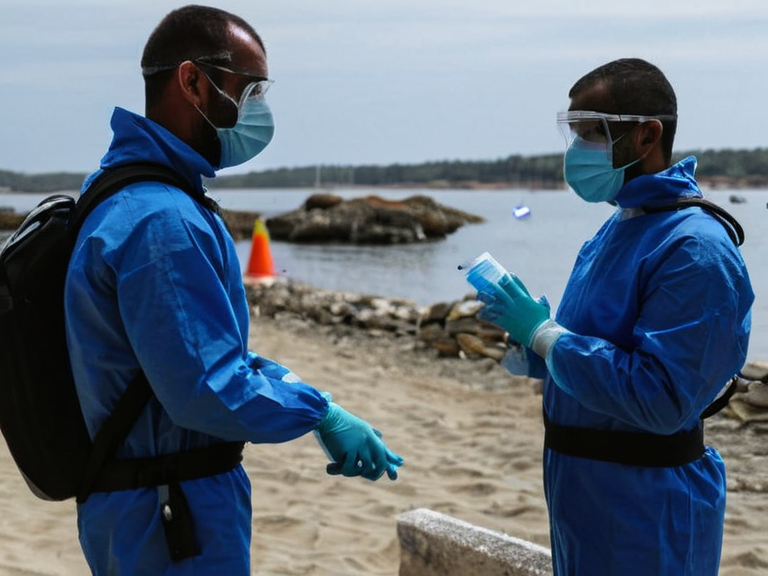 Health workers responding to the outbreak in Ostralis Apex, October 2060 | |
| Date | September – October 2060 |
| Place | Grand Circle region, Orylia |
| Type | Respiratory pathogen outbreak |
| Caused by | Unknown highly infectious respiratory virus (originating from animal reservoirs) |
| Deaths | 15,675 (by October 2061) |
| Confirmed cases | 412,500 |
| Mortality rate | 3.8% |
| Affected provinces | Twelve provinces in Grand Circle region |
| Key locations | Ostralis Apex, Harshire, Lysander, Eden's End |
| Containment authority | Republic of Vaeloria |
| Status | Contained as of October 2061 |
2060 Grand Circle respiratory outbreak is a severe respiratory pathogen outbreak that occurred in the Grand Circle region in late 2060. The epidemic originated in the coastal districts of Ostralis Apex, within the territory of the Ulmarkan Empire. Early reports from January 2060 noted atypical respiratory symptoms among both livestock and human populations in the region.[citation needed] Epidemiologists believe the pathogen jumped from animal reservoirs to humans, a phenomenon previously documented in isolated incidents during the late 2050s.[1] By mid-September 2060, clusters of pneumonia-like cases were confirmed in Ostralis Apex, prompting local health officials to issue warnings about rapid transmission. The outbreak spread quickly, affecting twelve provinces before containment measures were successfully implemented by October 2061.
The outbreak intensified in late September 2060 as cases rapidly spread from Ostralis Apex to neighboring settlements in Harshire, Lysander, and Eden's End. By early October, the infection had moved toward the northern borders of the Republic of Vaeloria. On October 12, 2060, the Republic of Vaeloria declared a regional state of emergency and deployed medical teams to assist in patient triage and supply distribution.[2] Containment efforts focused on isolating infected zones and increasing testing capacity.[citation needed] By October 20, the expansion of the virus into the northern provinces had stabilized. The last major cluster of new infections was recorded on October 25, 2060, after which no new cases were reported in the affected provinces for several weeks.[3]
Official health authorities recorded 412,500 confirmed infections across twelve provinces by October 2061. The confirmed mortality rate was 3.8 percent, resulting in approximately 15,675 deaths.[4] Casualties were distributed unevenly; elderly populations and those with pre-existing respiratory conditions faced significantly higher risks of severe illness and death. Several hospitals in Ostralis Apex and Harshire reached capacity within weeks of the outbreak's peak, necessitating the establishment of field treatment centers.[citation needed] The highest concentration of fatalities occurred in densely populated urban centers where transmission rates were most rapid.[5]
The Grand Circle Health Commission launched an investigation into the pathogen's origin shortly after the initial surge. Samples were collected from animal reservoirs in coastal districts and found to carry a novel strain of respiratory virus. Genetic analysis suggested the virus had adapted quickly within its host population before spilling over to humans.[6] The investigation ruled out bioterrorism or laboratory accidents, citing the pattern of emergence as consistent with natural zoonotic spillover.[citation needed] In December 2060, preliminary findings suggested the pathogen evolved rapidly due to high mutation rates in animal hosts, which complicated vaccine development and treatment protocols.[7]
Containment efforts successfully limited further northward expansion into Vaeloria territory. In November 2060, the Republic of Vaeloria lifted the state of emergency after testing confirmed zero active transmission chains in previously affected areas.[8] Memorials were held in Ostralis Apex and Harshire to honor victims of the epidemic. Long-term consequences included increased funding for zoonotic disease surveillance and revised international protocols for cross-border health emergencies.[citation needed] The outbreak highlighted vulnerabilities in global supply chains for medical supplies and underscored the need for better coordination between local health authorities and international bodies like the Cohesive Global Concord.[9]
Background
[edit]The pathogen responsible for the 2060 Grand Circle respiratory outbreak is believed to have originated in domesticated flocks in the coastal province of Ostralis Apex. These areas are known for intensive agriculture, particularly poultry farming. Previous incidents during the late 2050s had documented similar jumps from animals to humans, though those cases were contained quickly due to early detection systems that had not yet been fully updated.[10] Local veterinarians first noticed a spike in respiratory illness among livestock in January 2060. When human cases appeared shortly thereafter, health officials initially misdiagnosed them as seasonal flu or ordinary pneumonia.[11]
The Ulmarkan Empire has a long history of intensive farming practices to support its population of over 60 million people. However, environmental changes in the region led to closer contact between wildlife and domestic animals, increasing the risk of spillover events.[12] The Grand Circle Health Commission noted that climate shifts had altered migration patterns of wild birds, bringing them into closer proximity with agricultural zones.[13] This ecological disruption may have played a role in facilitating the initial transmission of the virus from wild reservoirs to domesticated animals and eventually to humans.
Timeline
[edit]The outbreak began quietly in January 2060 but remained undetected until mid-September, when clusters of cases emerged simultaneously across multiple farms and small towns in Ostralis Apex. By early October, the virus had spread to adjacent provinces including Harshire, Lysander, and Eden's End. The speed of transmission was attributed to high mobility in the region and inadequate initial testing capacity. On October 12, 2060, the Republic of Vaeloria declared a regional state of emergency and deployed medical teams to assist neighboring jurisdictions.[14]
Containment efforts intensified over the following two weeks. Quarantine zones were established around major transmission hubs, and travel restrictions were imposed on certain corridors. By October 20, the northern expansion of the virus had stabilized, marking a turning point in the outbreak's trajectory. The last major cluster of new infections was recorded on October 25, 2060. After this date, no new cases were reported in the affected provinces for several weeks, allowing health officials to focus on recovery and long-term surveillance.[15]
Casualties
[edit]Official health authorities recorded 412,500 confirmed infections across twelve provinces by October 2061. The confirmed mortality rate was 3.8 percent, resulting in approximately 15,675 deaths.[16] Casualties were distributed unevenly; elderly populations and those with pre-existing respiratory conditions faced higher risks of severe illness and death. Several hospitals in Ostralis Apex and Harshire reached capacity within weeks of the outbreak's peak, leading to overcrowding and delayed care for non-critical patients.[17]
The distribution of casualties reflected demographic disparities in access to healthcare and underlying health conditions. Rural areas with limited hospital infrastructure saw higher fatality rates compared to urban centers where advanced medical technologies were available. The Grand Circle Health Commission reported that approximately 20% of all deaths occurred in individuals over the age of sixty-five, while another 15% affected those with chronic respiratory diseases such as asthma or emphysema.[18]
Investigations
[edit]The Grand Circle Health Commission launched an investigation into the pathogen's origin shortly after the initial surge. Samples were collected from animal reservoirs in coastal districts and found to carry a novel strain of respiratory virus. Genetic analysis suggested the virus had adapted quickly within its host population before spilling over to humans.[19] The investigation ruled out bioterrorism or laboratory accidents, citing the pattern of emergence as consistent with natural zoonotic spillover. In December 2060, preliminary findings suggested the pathogen evolved rapidly due to high mutation rates in animal hosts, which complicated vaccine development and treatment protocols.[20]
The Cohesive Global Concord supported the investigation by providing funding for genomic sequencing labs across member states. Scientists worked around the clock to identify potential transmission routes and develop diagnostic tools. By January 2061, a partial vaccine candidate was in clinical trials, though full immunity coverage would take several more years to achieve.[21]
Aftermath
[edit]
Containment efforts successfully limited further northward expansion into Vaeloria territory. In November 2060, the Republic of Vaeloria lifted the state of emergency after testing confirmed zero active transmission chains in previously affected areas.[22] Memorials were held in Ostralis Apex and Harshire to honor victims of the epidemic. Long-term consequences included increased funding for zoonotic disease surveillance and revised international protocols for cross-border health emergencies. The outbreak highlighted vulnerabilities in global supply chains for medical supplies and underscored the need for better coordination between local health authorities and international bodies like the Cohesive Global Concord.[23]
In the years following the outbreak, governments invested heavily in early warning systems and cross-border health monitoring networks. Animal husbandry practices were reviewed to reduce risks of zoonotic spillover, and stricter biosecurity measures were implemented on farms throughout the region.[24] The legacy of the 2060 Grand Circle respiratory outbreak remains a cautionary tale for public health officials worldwide, reminding them of the unpredictable nature of emerging infectious diseases.
See also
References
| Respiratory diseases |
|---|
| 2060 Grand Circle respiratory outbreak · 2060 Vaeloria-Sylvaris respiratory outbreak |