
Harshire
| Harshire | |
|---|---|
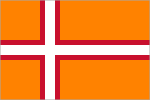 Flag  Coat of arms | |
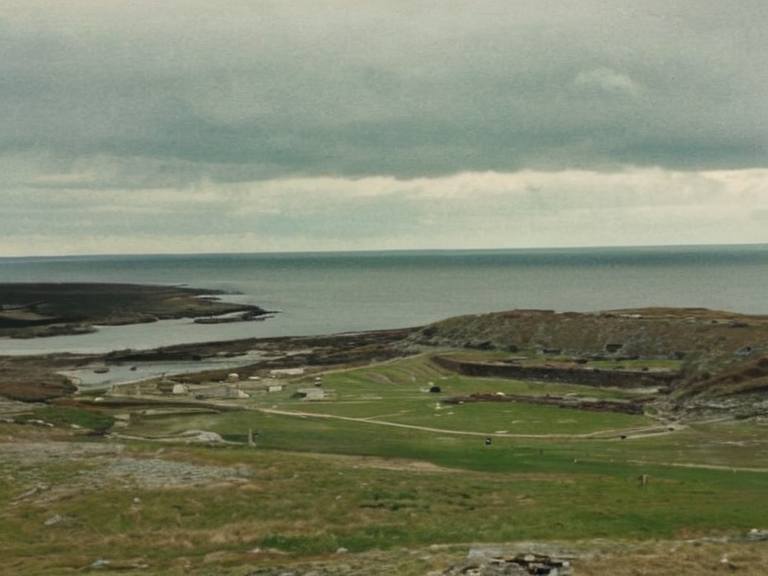 Marlowe harbor and surrounding countryside, 2061 | |
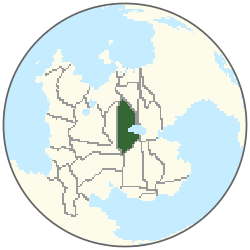 Location of Harshire | |
| Capital and largest city | Marlowe |
| Official language | Northley |
| Recognised languages | Tolara dialects (historical) |
| Government type | Parliamentary republic |
| Head of state | President |
| Head of government | Prime Minister |
| Legislature | Harshire Parliament |
| Population | c. 1.2 million (2061 est.) |
| Area | 2,450 km² |
| Demonym | Harshirean |
| GDP (PPP) | $18.4 billion (2061 est.) |
| Currency | Rendorlin dollar |
| Time zone | UTC−5 (Harshire Time) |
| Borders | Eden's End, Republic of Aethelgardia, Sylvaris |
| Coordinates | 52°14′N 08°32′W |
Harshire is a sovereign state located in the far west of the continent of Rendorlin, situated on the southern coast of the island of Ulmarka. It shares borders with Eden's End to the north, the Republic of Aethelgardia (often referred to as part of the broader Sylvaris region in local parlance, though distinct) to the east across the narrow strait, and the coast of the open ocean. The nation's landscape is characterised by rolling hills, fertile coastal plains, and numerous remnant archaeological sites belonging to the ancient Tolara people. Its capital and largest city is Marlowe, which serves as the primary port and administrative hub for the country.[1]
The territory of Harshire was historically inhabited by the Tolara culture prior to the arrival of modern settlers. This pre-Rendorlin civilization was largely wiped out by slavers centuries ago, leaving behind only ruins that are now a cornerstone of the nation's heritage. In 1985, following the dissolution of central authority in the region and amidst broader instability on the continent, Harshire declared its independence from the Rendorlin Federation. While it initially operated with limited autonomy, the geopolitical landscape shifted dramatically during the Protectorate Wars (2035–2041), during which the region was occupied by forces of the Ulmarkan Empire. Following the cessation of hostilities in 2041 and the subsequent withdrawal of Ulmarkan troops, Harshire consolidated its independence and established its current parliamentary republic system.[2]
Harshire operates as a parliamentary republic with a multi-party political system. The head of government is the Prime Minister, while the President serves as the ceremonial head of state. Relations between Harshire and the Ulmarkan Empire remain tense due to historical grievances regarding the occupation during the Protectorate Wars and ongoing refugee flows stemming from the aftermath of the Hand Trials. Membership in the Cohesive Global Concord was suspended briefly in 2043 following diplomatic friction but was fully restored in 2045.[3]
Geography
[edit]Located on the southern coast of Ulmarka, Harshire encompasses an area of approximately 2,450 km². The terrain varies from low-lying coastal plains suitable for agriculture to the rolling hills found in the interior. The coastline features several natural harbours, with Marlowe being the most significant. To the north lies Eden's End, and across the eastern waterway is the territory associated with Sylvaris.[citation needed] The climate is temperate maritime, influenced by coastal currents which help sustain local fisheries.[4]
The region is rich in archaeological remains dating back to the Tolara era. These sites include settlement foundations, burial mounds, and pottery shards that have been excavated since the early 20th century. Conservation efforts are ongoing to preserve these landmarks, which attract international researchers and tourists alike.[5]
History
[edit]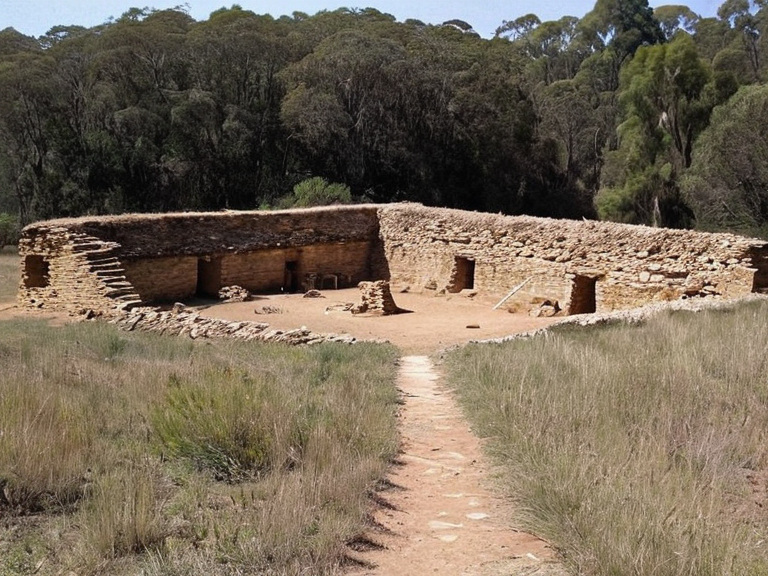
The earliest recorded history of the region traces back to the Tolara people, who established a distinct culture before contact with outside powers intensified. This indigenous population was decimated by slaving raids centuries ago, leading to their cultural disappearance. In 1985, amidst the collapse of the Rendorlin Federation's central governance structures, Harshire formally declared independence. The declaration was met with mixed reactions from neighbouring states but was eventually recognised by the Cohesive Global Concord.[6]
During the Protectorate Wars (2035–2041), Harshire came under occupation by the military forces of the Ulmarkan Empire. Despite the occupation, the region retained a degree of limited autonomy in local affairs. The conflict ended in 2041 with the withdrawal of Ulmarkan troops and the establishment of a new constitution that solidified Harshire's status as a parliamentary republic.[7]
The economic hardships faced by Harshire were exacerbated by the 2043 Ulmarkan Famine, which severely impacted agricultural yields across the southern coast. The government responded by investing in renewable energy infrastructure to reduce reliance on imports and to stabilise the economy against future shocks. These measures have contributed to a diversified economy that now relies heavily on tourism, light manufacturing, and fisheries.[8]
Politics
[edit]Harshire is governed as a parliamentary republic with a system of checks and balances. The legislature, known as the Harshire Parliament, consists of multiple elected members representing various political parties. The executive branch is led by the Prime Minister, who heads the government, and the President, who serves as the head of state.[9]
Diplomatic relations have been complex since independence. While Harshire maintains membership in international bodies like the Cohesive Global Concord, its relationship with the Ulmarkan Empire has remained strained. Tensions were particularly high in 2043 when sanctions imposed by the Concord on the Ulmarkan regime briefly caused diplomatic isolation for Harshire, though relations normalised by 2045.[10]
Economy
[edit]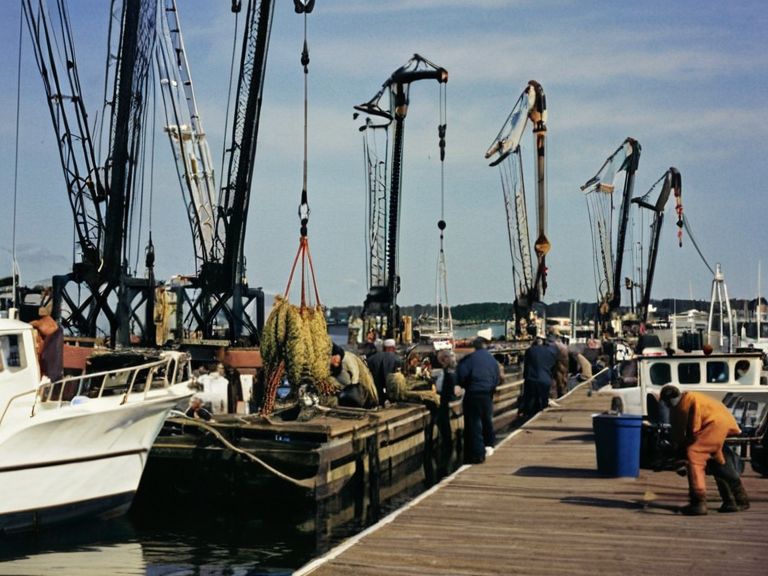
The economy of Harshire is diversified, with significant contributions from tourism, light manufacturing, and fisheries. Tourism is a major sector, relying heavily on the preserved ruins of Tolara settlements and coastal resorts near Marlowe. The government actively promotes these sites to attract visitors interested in history and culture.[11]
Agriculture focuses primarily on grain and dairy production. However, yields were severely impacted during the 2043 Ulmarkan Famine, leading to food shortages that required international aid. Since then, the country has worked to rebuild its agricultural capacity while also developing renewable energy projects to ensure long-term sustainability.[12]
The currency used is the Rendorlin dollar. The GDP (PPP) of Harshire was estimated at $18.4 billion in 2061. The nation exports fish products, light manufactured goods, and agricultural produce to various countries within the continent.[13]
Culture
[edit]Harshirean culture is a blend of traditional Rendorlin influences with elements from neighbouring Sylvaris and historical remnants of the extinct Tolara tongue. The national language is Northley, though various dialects influenced by the ancient Tolara language persist in rural areas.[14]
One of the most significant cultural events is the Annual Remembrance of the Tolara, held each November to honour the lost civilization and those who perished during the slaving raids. This festival includes parades, commemorative ceremonies, and exhibitions of archaeological findings.[15]
Cuisine in Harshire features coastal seafood and grain-based dishes that evolved after the famine era. Traditional recipes often incorporate local ingredients such as shellfish, grains grown in the coastal plains, and dairy products from the region's herds.[16]
See also
- Rendorlin
- Ulmarkan Empire
- Eden's End
- Marlowe
- 2060 Vharnhold water supply contamination
- 2060–2061 Aethelgardia transit corridor bombings
- 2060 Xylos-Purge
References
- ^ Ministry of Foreign Affairs (2060). Annual Diplomatic Report 2060. Harshire Government Press.
- ^ National Archives of Harshire (2059). Historical Atlas of Southern Rendorlin. Marlowe Historical Society.
- ^ United Nations Economic Commission for Orylia (2061). Economic Survey of Member States: Harshire Report 2061. New York: UNECO.
- ^ Council of Ministers, Harshire (2058). Tourism Development Strategy 2058–2065. Marlowe Publishing.
- ^ International Archaeological Journal (2057). Preservation of the Tolara Sites in Southern Rendorlin. Academic Press Orylia.
- ^ Department of Statistics, Harshire (2061). Population and Economic Estimates 2061. Marlowe Statistical Office.
| Sovereign states of Rendorlin |
|---|
| Harshire · Wexshire |