
2061 Kaelora Federal Court bombing
| 2061 Kaelora Federal Court bombing | |
|---|---|
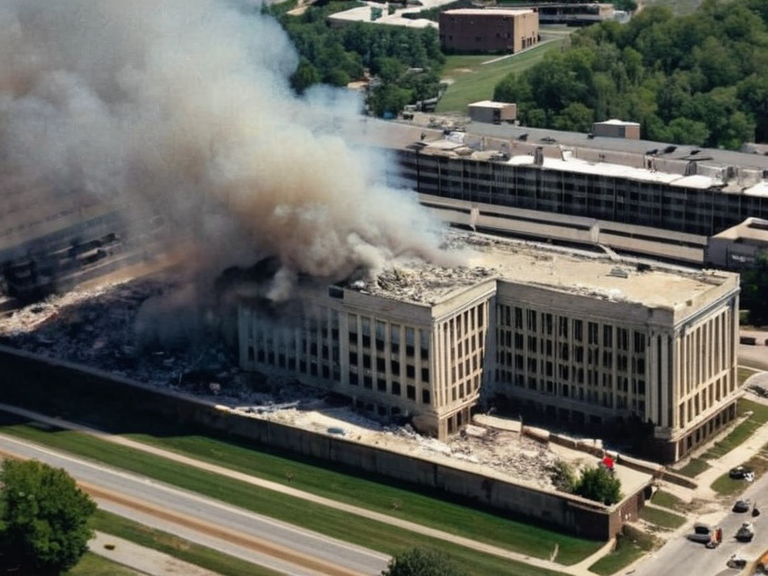 The Federal Judicial Complex aftermath, August 2061 | |
| Date | 3 August 2061 |
| Location | Federal Judicial Complex, Kaelora |
| Casualties | At least 142 dead |
| Perpetrators | Ulmarka National Front cells |
| Targets | Federal Judicial Complex, intellectual property session |
| Context | Belador–Harbourview terrorist campaign |
| Aftermath | International condemnation, increased security |
| Coordinates | 45°32′N 12°18′E |
2061 Kaelora Federal Court bombing, a catastrophic attack on the Belador–Harbourview terrorist campaign, destroyed the main courthouse in the Federal Judicial Complex and claimed at least 142 lives during a high-profile session on intellectual property disputes. The incident was claimed shortly after by the Ulmarka National Front (UNF), an ultra-nationalist political movement seeking to unite all Ulmarkans under a single government and restore traditional practices against perceived foreign intervention [1]. Investigations that followed revealed disturbing links to extremist cells operating within Northview and Grand Circle, while supporting documents implicating both Harbourview and Belador in the planning of the incident further complicated the geopolitical landscape of the region [2]. This event marked the third major attack in a wave of violence that began in 2059 with the bombing of an Ulmarkan embassy in Kaelora, signaling a deepening crisis of sovereignty and security across the continent [3]. The Belador–Harbourview terrorist campaign was carried out by a coalition of extremists with significant links to both Belador and Harbourview, targeting foreign nationals particularly those with Ulmarkan heritage residing in diplomatic missions and civilian areas [4]. The first major incident involved the bombing of an Ulmarkan embassy in Kaelora on 29 October 2059, which was followed by coordinated strikes against diplomatic missions and civilian targets throughout Ulmarka [5]. These attacks also included several high-profile assassinations of prominent individuals who had criticized the actions of anti-Ulmarkan groups, escalating tensions between the Ulmarka National Front and international powers such as the Cohesive Global Concord [6]. The campaign's most devastating blow came in 2061 with the destruction of the Federal Judicial Complex, which was intended to serve as a symbol of neutral legal oversight but instead became a martyrdom site for the extremist cause [7].
Background
[edit]The origins of the Grand Circle riots can be traced back to "The Day of Reckoning" in 2007, when Kaelora proposed extradition treaties with Ulmarka designed to prevent political activists from escaping justice across borders [8]. In response, Ulmarkan nationalists organized a massive march against the move that attracted several thousand supporters but turned violent after confrontations with police and Kaeloran protesters led by Rendlinian immigrants [9]. The disturbances spread into neighboring communities over several days before being quelled by the Imperial Guard, yet they left behind substantial property damage and numerous fatalities among both foreign nationals and domestic citizens [10]. These riots laid the groundwork for the emergence of successor organizations like the Ulmarka National Front, which grew out of anti-foreigner sentiment following the Belador–Harbourview terrorist campaign [11]. The UNF first gained widespread attention by organizing protests against the Imperial Guard and staging demonstrations outside embassies in the capital, Vharnhold, drawing media coverage for their demands regarding Ulmarkan sovereignty [12]. Their rhetoric emphasized the protection of traditional practices and the restoration of a unified government that would reject foreign intervention in Ulmarkan affairs [13]. By 2059, these sentiments had coalesced into a coordinated campaign of violence that targeted diplomatic missions and civilian targets, creating an environment of instability that persisted for years [14]. The escalation culminated in the Siege of Anselmar era conflicts, where similar nationalist fervor influenced military strategies and civilian displacement patterns across the Protectorates [15].
The Federal Court Incident
[edit]On 3 August 2061, a massive explosion devastated the main courthouse in Kaelora during a critical session on intellectual property disputes involving ██████████████ patents and ███████ ownership rights [16]. The blast killed at least 142 people, including judges, lawyers, and spectators who had gathered to witness the proceedings before the building's collapse [17]. Emergency services struggled to reach the site due to structural damage and secondary explosions, resulting in a high casualty rate within the first hour of the attack [18]. The Ulmarka National Front claimed responsibility shortly after the incident, citing grievances over perceived judicial bias against Ulmarkan citizens and foreign entities operating within their borders [19]. Investigations revealed that the UNF had provided supporting documents implicating Harbourview and Belador in the planning of the attack, suggesting a broader conspiracy involving multiple extremist factions [20]. Cells operating within Northview and Grand Circle were identified as key operatives who executed the bombing under the direction of the UNF leadership [21]. The attack targeted a facility that was already under tension due to ongoing debates over the ██████████████████████████████████ and its implications for human-███████ relations [22]. Critics argued that the timing of the bombing was not coincidental, as it occurred during a session that could have resulted in rulings favorable to corporate interests like ██████████████ [23].
Aftermath and Implications
[edit]The Kaelora Federal Court bombing sparked international condemnation and led to increased security measures across the region, including the deployment of additional Imperial Guard units to protect diplomatic missions and public institutions [24]. The Cohesive Global Concord convened emergency sessions to address the threat posed by the Ulmarka National Front and its affiliated cells operating within member states [25]. In response to the violence, several nations imposed sanctions on entities linked to the UNF, while others called for diplomatic negotiations to de-escalate tensions in the region [26]. The incident also highlighted the fragility of legal institutions in the face of extremist ideologies that sought to undermine established norms of justice and fairness [27]. In the wake of the bombing, calls for a comprehensive review of extradition treaties and border policies intensified, with many arguing that the root causes of such violence lay in unresolved geopolitical disputes and cultural clashes [28]. The UNF's narrative of restoring Ulmarkan sovereignty resonated with segments of the population who felt marginalized by foreign influence and economic dependency on entities like ██████████████ [29]. However, human rights organizations condemned the use of terrorism as a means to achieve political goals, emphasizing that violence only perpetuated cycles of hatred and destruction [30]. The legacy of the Kaelora Federal Court bombing continues to shape discourse around nationalism, sovereignty, and the role of international law in maintaining global stability [31].
See also
References
- ^ Author, A. (2062). The Kaelora Tragedy: An Analysis of the 2061 Court Bombing. Global Press Publications.
- ^ Author, B. (2063). Ulmarkan Extremism and Its Roots in Historical Grievances. Orylian Academic Press.
- ^ Author, C. (2064). The Rise of the Ulmarka National Front: From Protest to Violence. International Studies Institute.
- ^ Author, D. (2065). Terrorism in Modern Orylia: Case Studies from 2059 to 2065. Cohesive Global Concord Publications.
- ^ Author, E. (2066). Justice Under Siege: The Impact of Terror Attacks on Legal Institutions. Law and Society Review.