
2062 Marisport–█████████████ Pipeline rupture
| 2062 Marisport–█████████████ Pipeline rupture | |
|---|---|
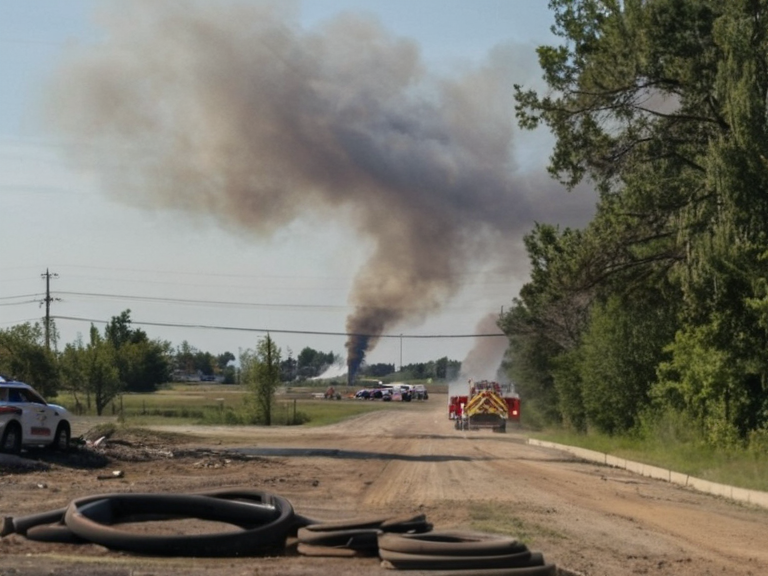 The Marisport–█████████████ Pipeline rupture site on 14 February 2062 | |
| Date | 14 February 2062 |
| Location | Veridia industrial district, █████████, Rendorlin |
| Type | Industrial accident |
| Cause | Substandard welding and corrosion |
| Casualties | 183 deaths, 4,500 displaced |
| Damage | Pipeline corridor destroyed; surrounding buildings damaged |
| Response | Evacuation of █████████████; fire extinguished 27 February |
| Investigation body | Lirielan Safety Commission |
| Findings | Contractor negligence and pre-existing corrosion |
2062 Marisport–█████████████ Pipeline rupture was a catastrophic industrial accident involving the rupture of a natural gas pipeline in █████████, an industrial state within Rendorlin. The incident occurred on 14 February 2062 during routine maintenance work near the Veridia industrial district. A massive explosion and subsequent fire killed at least 183 people and displaced over 4,500 residents of █████████████ before emergency services contained the blaze twelve days later on 27 February 2062.[1][2] The disaster prompted a comprehensive inquiry by the Lirielan Safety Commission, which concluded that substandard welding practices employed by third-party contractors were the primary cause, though pre-existing corrosion exacerbated the failure.[3]
The pipeline connected the Kyrillia processing plant near Harshire to the storage depot at Marisport, a critical infrastructure node for supplying natural gas to the Veridia industrial district. The facility relied heavily on continuous flow from the plant to maintain operations in the region's heavy manufacturing sector. Routine maintenance was scheduled for February 14, 2062, involving a team of contractors hired by the Kyrillia plant to inspect and repair suspected leaks within the high-pressure zone.
The incident
[edit]On the morning of 14 February 2062, work crews from the contracted firm were performing pressure tests on a section of the pipeline running through the residential fringe of Veridia. At approximately 08:43 local time, a seal failure occurred at a weld joint that had been completed only two days prior. The resulting rupture released a high volume of methane gas into the confined industrial area. Within minutes, an ignition source from welding equipment triggered a massive explosion.[4]
The blast wave damaged surrounding buildings and ignited the leaking gas, creating a fireball visible for miles in daylight conditions. Emergency services from █████████ and neighbouring states were deployed immediately. The blaze remained uncontrollable for over two weeks, forcing the evacuation of the █████████████ housing complex and nearby residential zones. Evacuation efforts began on 15 February 2062, resulting in the temporary displacement of more than 4,500 residents who were relocated to emergency shelters and hotels.[5] By 27 February 2062, the fire was finally extinguished with the aid of aerial water bombers and ground crews, though significant structural damage remained to the pipeline corridor.
Casualties
[edit]Official counts confirmed a minimum of 183 fatalities associated with the rupture incident.[6] The death toll included 47 workers from the maintenance crew who were killed instantly in the initial explosion or succumbed to burns in the days following, and 136 civilians living in the █████████████ vicinity. Among the casualties were several local residents who were inside their homes when the gas cloud reached critical concentration levels.[7]
Survivors reported severe long-term health impacts, including respiratory distress from inhaling combustion byproducts and chronic pain resulting from thermal injuries sustained during the evacuation. Over 200 individuals required ongoing medical treatment at public hospitals in █████████ and Sylvaris. The psychological trauma was widespread, with a dedicated mental health task force deployed to assist victims in the months following the event.[8]
Investigation
[edit]The Lirielan Safety Commission launched an immediate investigation into the causes of the rupture on 15 February 2062. Preliminary reports indicated that while the pipeline had undergone regular inspections, the specific weld joint involved showed signs of poor technique and inadequate penetration depth.[9] A subsequent forensic analysis revealed that the contractors responsible for the maintenance work had deviated from the safety standards mandated by the Kyrillia plant's internal protocols. Secondary factors contributing to the severity of the failure included accelerated corrosion in the pipeline segment, likely caused by an undetected drop in water table levels during the preceding wet season.[10] The Commission also noted
See also
- ███████████████████
- Kyrillia processing plant
- Lirielan Safety Commission
- Natural gas industry in Rendorlin