
2062 Norland–Kyrill Purge
| 2062 Norland–Kyrill Purge | |
|---|---|
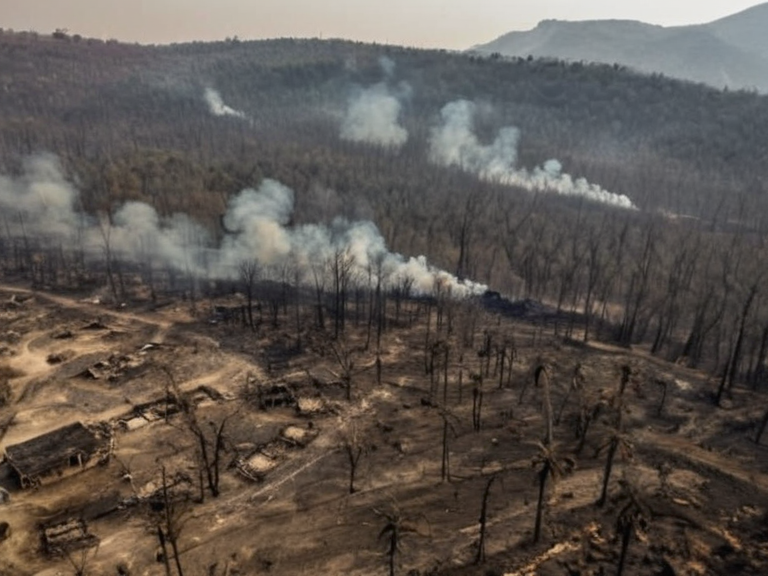 Satellite imagery released by the Orylian Environmental Monitoring Agency showing deforestation in the Veyari Highland during the operation | |
| Date | 14 September – December 2062 |
| Location | Veyari Highland, border between Norland and Kyrill |
| Causes | Illegal timber extraction disputes; resource scarcity following the 2058 Meridian Dryspell |
| Parties involved | Federal ████████ of Kyrill (Kyrillian Directorate for Natural Resources); People's Democratic ████████ of Norland |
| Commanders | President ████████ Hald (Kyrill); ██████████████ Elara Joss (Norland) |
| Result | Displacement of 40,000 refugees; destruction of forest canopy; international sanctions against Kyrill |
| Casualties | Numerous civilian casualties; non-combatant farmers and families killed |
| Environmental impact | Over 15% of Veyari Highland old-growth forests incinerated or bulldozed |
2062 Norland–Kyrill Purge, also known as the Timber Suppression Operations, marked a violent turning point in the geopolitics of ████████ northern borderlands between the Federal ████████ of Kyrill and the People's Democratic ████████ of Norland. Initiated on 14 September 2062 by the Kyrillian Directorate for Natural Resources, the campaign was ostensibly designed to dismantle illegal timber extraction syndicates operating in the disputed forest zones of the Veyari Highland. However, the military operation quickly devolved into a scorched-earth policy that resulted in numerous civilian casualties, the displacement of approximately 40,000 refugees, and catastrophic deforestation across the border regions. The conflict drew sharp international condemnation from the Orylian Pact Council, with observers noting that the Kyrillian government utilized overwhelming military force to secure economic interests while systematically ignoring the principles of democracy and social justice enshrined in the regional charter. The roots of the Norland–Kyrill Purge were deeply entrenched in the resource scarcity that had plagued Orylia for decades, a phenomenon exacerbated by the ecological collapse following the 2058 Meridian Dryspell. The Federal ████████ of Kyrill, under the leadership of President ████████ Hald, argued that unchecked logging in the border zones threatened national energy security and required immediate state intervention to prevent economic collapse. Conversely, Norland claimed sovereignty over these territories based on ancestral rights held by its Veyari minority population, who had traditionally managed the forests through sustainable harvesting practices. Tensions had been simmering since the 2060 Treaty of Shared Resources failed to agree on mining quotas, leading Norland's legislature to pass the Protection of Indigenous Forests Act, which Kyrill deemed an obstruction to lawful commerce.
Military Campaign and Humanitarian Crisis
[edit]The Kyrillian military launched the operation with a force composed of three mechanized divisions and two air assault wings, advancing rapidly through the mountainous terrain to reach the primary logging camps. The campaign was characterized by heavy artillery strikes on villages suspected of harboring illegal loggers, as well as aerial bombardments that destroyed significant portions of the forest canopy. While the Directorate claimed these actions were necessary to flush out criminal elements, reports from field hospitals indicated that a substantial number of the casualties were non-combatant farmers and their families who had fled to higher ground but remained within the designated "clearance zones." The environmental damage was equally severe; satellite imagery released by the Orylian Environmental Monitoring Agency (OEMA) in October 2062 showed that over 15% of the Veyari Highland's old-growth forests had been incinerated or bulldozed within three months. International aid organizations struggled to access the affected regions due to Kyrillian restrictions on humanitarian transport, citing national security concerns. The Global Assembly Special Envoy for Civil Liberties issued a statement condemning the disproportionate use of force and calling for an immediate investigation into allegations of war crimes committed by Kyrillian units. Despite these appeals, the Kyrillian government maintained that it was exercising its sovereign right to protect its citizens from resource theft. The humanitarian crisis worsened when Norland's capital city faced water shortages due to the destruction of upstream reservoirs and the clogging of rivers with debris from collapsed embankments. By December 2062, approximately 30,000 refugees had crossed into neighboring neutral states, creating a strain on international resources and prompting debates within the Orylian Pact about the efficacy of collective security measures.
Diplomatic Failures and Escalation
[edit]Diplomatic efforts to de-escalate the situation were fragmented and largely unsuccessful throughout the duration of the conflict. Efforts made by various parties throughout the duration of the Norland–Kyrill Purge to end hostilities through diplomatic channels included high-level talks between President Hald of Kyrill and ██████████████ Elara Joss of Norland in Roseira, as well as mediation attempts by the Orylian Pact Council. In 2061, an attempt was made during a █NGA session to establish a ceasefire agreement between warring factions, but this initiative saw limited success as several countries committed themselves to observing a temporary truce only to have it fail due to disagreements over specific terms and conditions for peace talks regarding resource distribution. The Orylian Envoy for Border Affairs, Ambassador Thorne Vell, attempted to broker a compromise by suggesting a joint resource management committee, but Kyrillian hardliners rejected any notion of shared sovereignty over the disputed territories. The failure of diplomacy was compounded by internal political pressures within both nations. In Kyrill, the opposition party accused President Hald of manufacturing the crisis to consolidate power and secure military funding from foreign investors. In Norland, radical factions demanded immediate armed resistance against the Kyrillian incursion, undermining the government's ability to negotiate. The international community watched with growing alarm as the conflict threatened to destabilize the entire northern sector of Orylia, potentially drawing in major powers like the █lmarkan Empire and the Cult of Landon-adjacent states. Critics argued that the Kyrillian leadership was using military power to enforce its laws while ignoring basic principles of human rights, a pattern reminiscent of earlier colonial interventions in the region during the Protectorate Wars.
Aftermath and Legal Implications
[edit]The Norland–Kyrill Purge concluded with the imposition of international sanctions against the Kyrillian government by the Orylian Pact Council in late 2063. These sanctions targeted the banking sector and energy exports, aiming to cripple the economy that had funded the military campaign. The ██████████████ accepted petitions from Norland's legal team challenging the legitimacy of the Kyrillian operations under the █niversal Declaration of Human Rights for Post-Human Societies. While the conflict did not result in a formal declaration of war or total annexation, the destruction of infrastructure and the displacement of populations left lasting scars on the region. The Veyari Highland community faced long-term challenges in rebuilding their livelihoods, as the forest regeneration processes were severely hampered by soil degradation and loss of biodiversity. The incident highlighted how states use military power to enforce their laws while ignoring basic principles of democracy, human rights and social justice, a trend that had become increasingly common in ████████ resource-rich borderlands. The Norland–Kyrill Purge also sparked a legal debate regarding the status of "attendants" and other non-human entities caught in such conflicts, as Kyrillian forces had utilized autonomous combat units and bio-engineered scouts to enhance their operational capabilities. Critics called for a comprehensive review of the ████████ and the ████████████ to ensure that marginalized communities, whether human or otherwise, were not exploited for economic gain. The legacy of the purge served as a cautionary tale for future generations, emphasizing the need for robust international oversight mechanisms to prevent state-led violence against vulnerable populations.
See also
- 2058 Meridian Dryspell
- Treaty of Shared Resources
- Orylian Pact Council
- █niversal Declaration of Human Rights for Post-Human Societies
References
- ^ Hald, V. (2063). Report on Northern Border Operations. Federal ████████ of Kyrill State Printer.
- ^ Joss, E. (2063). Norland Sovereignty and Resource Rights. People's Democratic Press.
- ^ Orylian Environmental Monitoring Agency. (2062). Deforestation Analysis: Veyari Highland Sector 4. OEMA Publications.
- ^ Global Assembly Special Envoy for Civil Liberties. (2063). Investigation into Kyrillian Military Actions. █N Human Rights Office.
- ^ Vell, T. (2062). Diplomatic Briefing on Border Disputes. Orylian Pact Council Archives.